Getting a Second Dog: Costs, Space, and Prep Tips
Thinking about getting a second dog? Learn about the costs, space requirements, and step-by-step introduction tips for a smooth multi-dog household.

Is Your Current Dog Ready for a Sibling?
Adding a second dog to your family is an exciting milestone that can bring immense joy, companionship, and entertainment to your home. However, the decision to expand your pack should never be made lightly. Before you start browsing rescue sites or contacting breeders, it is crucial to objectively assess your current dog's readiness for a new sibling. The ideal resident dog is fully house-trained, has a solid recall, and exhibits stable, friendly behavior around other canines. If your current dog struggles with severe leash reactivity, resource guarding, or untreated anxiety, bringing a new dog into the home will likely exacerbate these issues rather than cure them.
Consider the age and energy gap between your dogs. Pairing a bouncy, high-energy ten-week-old puppy with a senior dog suffering from osteoarthritis is a recipe for stress and conflict. Conversely, two young, high-drive dogs might form a "pack mentality" that leads to destructive behavior or fence-running if not properly managed. According to the American Society for the Prevention of Cruelty to Animals (ASPCA), understanding your resident dog's behavioral baseline and triggers is the most critical first step in ensuring a harmonious multi-dog household. A general rule of thumb among behaviorists is to wait until your first dog is at least two to three years old, fully mature, and reliably trained before introducing a second canine companion.
The True Cost of a Multi-Dog Household
Many prospective owners underestimate the compounding financial responsibility of a second dog. While some items, like a large dog bed or a couch, can be shared, the majority of your expenses will effectively double. You must budget for premium nutrition, routine and emergency veterinary care, parasite prevention, and specialized gear. Furthermore, services such as dog walking, boarding, and grooming will charge per dog, significantly impacting your monthly discretionary income.
Below is a comparative breakdown of estimated annual costs for a single medium-sized dog versus a two-dog household. These figures are averages and can vary based on your geographic location and the specific health needs of your pets.
| Expense Category | Single Dog (Annual) | Two Dogs (Annual) | Notes & Considerations |
|---|---|---|---|
| High-Quality Food | $450 | $900 | Costs may vary if dogs require different life-stage or prescription diets. |
| Routine Vet Care | $350 | $700 | Includes annual exams, vaccines, and dental cleanings. |
| Pet Insurance | $600 | $1,200 | Multi-pet discounts (usually 5-10%) may apply. |
| Preventatives | $250 | $500 | Flea, tick, and heartworm medications are weight-based. |
| Boarding / Sitting | $400 | $800 | In-home pet sitters often charge extra per additional dog. |
| Estimated Total | $2,050 | $4,100 | Excludes emergency vet funds and initial adoption fees. |
Space Requirements and Home Preparation
Physical space is a major determining factor in the success of a multi-dog home. While you do not necessarily need a massive house, you do need the ability to create distinct "zones." Dogs require safe spaces where they can retreat from one another to decompress. If your home is an open-concept studio apartment, managing a new puppy and a resident dog will be incredibly challenging without the use of physical barriers.
Before bringing your new dog home, audit your indoor and outdoor spaces. Indoors, identify a secondary room or a large, quiet corner where the new dog's crate and bed will reside. Outdoors, inspect your fencing meticulously. Check for gaps under the fence line, ensure the latch mechanisms on gates are secure, and verify that the fence height is appropriate for the breed you are adopting. For athletic breeds like Huskies or German Shepherds, a minimum six-foot fence with a dig-proof barrier at the base is highly recommended.
Essential Gear for Two Dogs
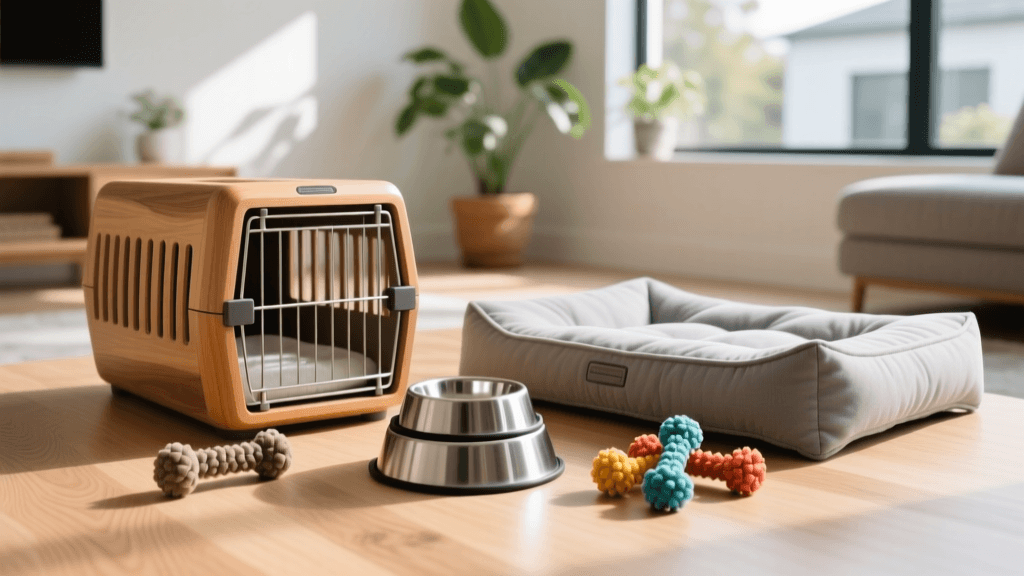
To maintain peace and order, you must invest in specific gear designed for multi-pet management. Sharing resources like food bowls, crates, or toys can trigger resource guarding and territorial disputes. Here is a checklist of essential items to purchase before your new dog arrives:
- Hardware-Mounted Baby Gates: Avoid pressure-mounted gates, which can be pushed over by enthusiastic dogs. Invest in a 30-inch to 36-inch tall hardware-mounted gate, such as the Carlson Pet Products Design Studio Metal Pet Gate, to safely separate rooms and manage visual access.
- Separate, Labeled Crates: Each dog needs their own crate for sleeping and time-outs. Ensure the crates are sized appropriately and placed in different areas of the main living space to prevent barrier frustration.
- Double Dog Leash Coupler or Hands-Free Leash: For walking two dogs simultaneously, a coupler that attaches to a single sturdy leash can prevent tangling. Brands like Kurgo offer excellent dual-dog walking systems that include a traffic handle for close control.
- Microchip Feeders or Separate Feeding Stations: If one dog is a fast eater or requires a prescription diet, an RFID microchip feeder ensures they only eat their designated food. Alternatively, use baby gates to feed them in completely separate rooms.
- Enrichment Toys: Stock up on durable puzzle toys, Kongs, and snuffle mats. Mental enrichment is vital for keeping the resident dog occupied while you focus on training the new arrival.
The Step-by-Step Introduction Process
The initial introduction sets the tone for the entire relationship. Never simply carry the new dog into the living room and drop them in front of your resident dog; this is an invasion of territory and a primary cause of immediate aggression. Instead, follow a structured, phased approach.
Phase 1: Scent Swapping (Days 1-3)
Before the dogs meet face-to-face, allow them to learn each other's scent. Swap their bedding, rub a clean towel on the new dog and place it near the resident dog's food bowl, and allow them to sniff each other's toys. This builds a positive association with the new scent before the physical meeting occurs.
Phase 2: Neutral Territory Meeting (Day 4)
The first physical meeting should occur on neutral ground, such as a quiet park or a neighbor's yard, far away from your home. The Humane Society of the United States strongly recommends neutral territory introductions to prevent territorial guarding. Both dogs should be handled by separate adults using secure, six-foot leather or biothane leashes. Avoid retractable leashes, which offer poor control and can snap under pressure.
Phase 3: Parallel Walking
Begin walking the dogs in the same direction, keeping them parallel but at a safe distance (at least 15 feet apart). Gradually decrease the distance as both dogs remain relaxed, offering high-value treats like boiled chicken or freeze-dried liver for calm behavior. Keep the leashes loose; a tight leash transmits your anxiety and can trigger a defensive reaction in the dogs. Only allow a brief, three-second sniff when both dogs are completely relaxed and displaying loose, wiggly body language.
Managing the First 30 Days
The first month is the critical decompression period. The American Veterinary Medical Association (AVMA) emphasizes that stress can suppress a dog's immune system and exacerbate behavioral issues, making a calm, predictable routine essential. During this time, adhere to the "Two-Week Shutdown" protocol often recommended by rescue organizations. This means limiting the new dog's access to the house, avoiding visitors, skipping the dog park, and keeping walks short and routine.
Supervision must be absolute. Never leave the two dogs alone together in the same room or yard during the first month, even if they seem to be getting along famously. Pick up all high-value items like bully sticks, pig ears, and favorite squeaky toys when the dogs are in the same space to eliminate the risk of resource guarding. Finally, remember to carve out dedicated, one-on-one time with your resident dog. A daily 20-minute solo walk or training session will reassure them that their place in the family is secure, preventing jealousy and fostering a lifelong bond between your canine companions.
marcus-aldridge
All our authors care for dogs every day — read more of their work on the authors page.