Getting a Golden Retriever: Costs, Prep, and First-Year Guide
Discover everything about getting a Golden Retriever puppy. Learn about breed-specific costs, essential gear, training tips, and preparing your home.

Is a Golden Retriever Right for Your Lifestyle?
The Golden Retriever consistently ranks among the most popular dog breeds in the United States, and for good reason. Known for their intelligence, gentle temperament, and striking golden coats, these dogs make exceptional family companions. However, getting a Golden Retriever puppy is a significant commitment that goes far beyond their friendly smiles. According to the American Kennel Club (AKC), Goldens are highly active, deeply social dogs that require substantial daily exercise and mental stimulation. They are not suited for owners who work long hours away from home or prefer a sedentary lifestyle. Adult males typically weigh between 65 and 75 pounds, while females range from 55 to 65 pounds, meaning you must be prepared to handle a large, enthusiastic dog that often forgets its own size. Before bringing one home, evaluate your living space, your daily schedule, and your willingness to manage heavy seasonal shedding and a prolonged puppyhood phase that can last up to two years.
The Financial Commitment: First-Year Cost Breakdown
Many prospective owners underestimate the financial reality of raising a large-breed dog. From premium nutrition to joint-support supplements and oversized gear, the costs add up quickly. Below is a realistic breakdown of the first-year expenses you should anticipate when getting a Golden Retriever puppy from a reputable source.
| Expense Category | Estimated First-Year Cost | Notes & Recommendations |
|---|---|---|
| Puppy Purchase (Reputable Breeder) | $2,500 - $4,000 | Avoid backyard breeders; prioritize health testing. |
| Initial Veterinary Care | $600 - $900 | Includes DHPP, Rabies, Bordetella, microchipping, and spay/neuter. |
| Large-Breed Puppy Food | $450 - $700 | Formulas like Purina Pro Plan Large Breed to support joint health. |
| Essential Gear & Supplies | $300 - $500 | 42-inch crate, orthopedic bed, heavy-duty harness, grooming tools. |
| Puppy Training Classes | $150 - $350 | Crucial for leash manners and bite inhibition. |
| Pet Insurance | $500 - $900 | Highly recommended for breed-specific issues like hip dysplasia. |
| Total Estimated First-Year Cost | $4,500 - $7,350 | Excludes emergency medical care or specialized boarding. |
Health Clearances: What to Demand from Breeders
When getting a Golden Retriever, verifying the health of the parent dogs is non-negotiable. The breed is unfortunately predisposed to several genetic conditions, most notably hip and elbow dysplasia, certain heart conditions, and eye disorders. The Golden Retriever Club of America (GRCA) strongly advises buyers to only purchase puppies from breeders who perform and publish specific health clearances. You should request proof of the following:
- Hip and Elbow Evaluations: Both parents should have excellent or good ratings from the Orthopedic Foundation for Animals (OFA). Do not accept 'vet checked' as a substitute for official OFA radiographs.
- Cardiac Exam: A clearance from a board-certified veterinary cardiologist to rule out congenital heart defects like subvalvular aortic stenosis (SAS).
- Ophthalmologist Evaluation: Annual eye exams registered with the OFA or CERF to check for progressive retinal atrophy (PRA) and cataracts.
- Genetic DNA Testing: Responsible breeders will test for Ichthyosis (ICH-1 and ICH-2), a skin condition common in Goldens, as well as Neuronal Ceroid Lipofuscinosis (NCL).
A reputable breeder will gladly provide you with the OFA numbers for both sire and dam. You can verify these numbers directly on the OFA website to ensure the documentation is legitimate.
Preparing Your Home for a 'Velcro Dog'
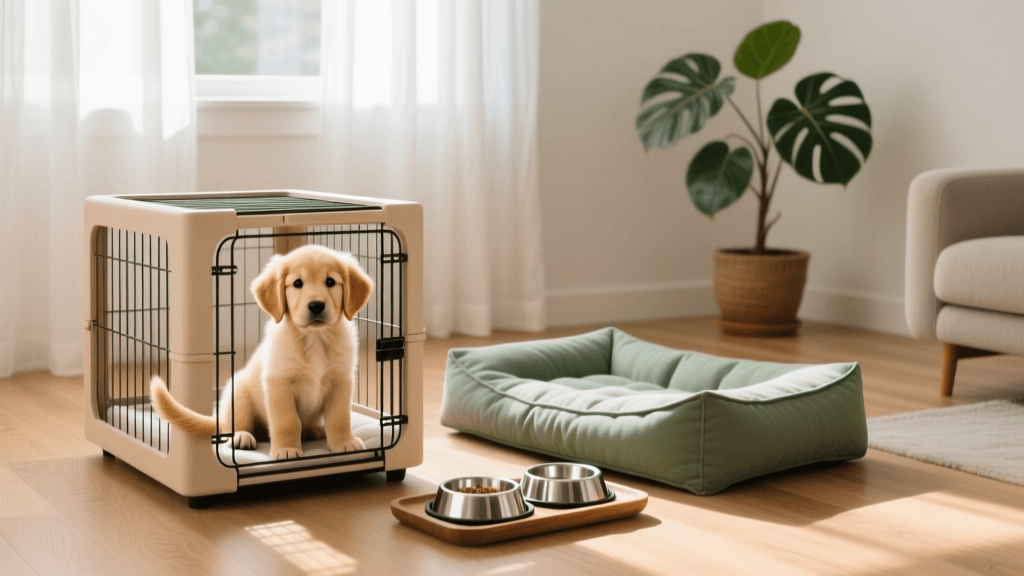
Golden Retrievers are famously known as 'velcro dogs' because they want to be in the same room as their humans at all times. When preparing your home, you must balance creating a safe, puppy-proofed environment with setting up spaces where your dog can relax without being underfoot. Start by investing in a 42-inch heavy-duty wire crate, such as the MidWest Ultima Pro. Even though your puppy will be small, a 42-inch crate accommodates their adult size; simply use the included divider panel to adjust the space as they grow. Place the crate in a high-traffic area like the living room so they do not feel isolated.
Puppy-proofing for a Golden requires extra attention to their intense chewing phase. Goldens explore the world with their mouths and can easily destroy baseboards, drywall, and expensive footwear. Use bitter apple spray on wooden furniture legs, invest in heavy-duty baby gates to block off carpeted staircases (which are hazardous to developing puppy joints), and ensure all toxic houseplants, electrical cords, and small choking hazards are elevated at least four feet off the ground.
Breed-Specific Gear Essentials
Standard dog gear often falls short for the unique needs of a Golden Retriever. Their thick, double-layered water-repellent coat and powerful pulling strength require specialized equipment.
- Grooming Tools: Skip the standard bristle brushes. You will need a high-quality slicker brush, such as the Chris Christensen Big G, to penetrate the dense undercoat and prevent matting behind the ears and on the 'feathering' of their legs. An undercoat rake is also essential for the heavy shedding seasons in spring and fall.
- Walking Harness: Goldens are notorious leash pullers due to their retrieving instincts. A front-clip harness like the Ruffwear Front Range or the 2 Hounds Design No Pull Harness will give you better steering control without putting dangerous pressure on their trachea.
- Chew Toys: Standard plush toys will be decimated in minutes. Invest in the Kong Classic (Red) or Kong Extreme (Black) in the Large or XL size. Stuff them with a mixture of plain Greek yogurt, mashed banana, and kibble, then freeze them overnight to provide long-lasting mental enrichment and soothe teething gums.
- Orthopedic Bedding: To support their growing joints and mitigate future dysplasia pain, avoid cheap poly-fill beds. Opt for a high-density memory foam bed, like the Big Barker 7-inch Pillow Top, which is specifically engineered for large breeds and will not flatten out over time.
The Golden Retriever Training Timeline
While Goldens are highly intelligent and eager to please, they are easily distracted by their environment and mature slowly. A structured training timeline is vital for developing a well-mannered adult dog.
- 8 to 12 Weeks (The Foundation): Focus heavily on bite inhibition. Goldens are 'mouthy' retrievers and will naturally try to carry your hands in their mouths. Redirect this behavior immediately to appropriate chew toys. Begin crate training, potty training, and handling exercises (touching their paws, ears, and mouth) to prepare them for grooming and vet visits.
- 12 to 16 Weeks (Socialization & Kindergarten): Enroll in a positive-reinforcement puppy kindergarten class. This is the critical socialization window. Expose your puppy to different surfaces, sounds, umbrella openings, and people wearing hats. Keep interactions positive and reward-based.
- 4 to 6 Months (Impulse Control): Begin teaching the 'leave it' and 'drop it' commands. Because Goldens are driven to pick up objects, a reliable 'drop it' can literally save their life if they grab something toxic. Start practicing recall in a fenced area using a 30-foot long line to ensure safety while building a rock-solid come-when-called behavior.
- 6 to 12 Months (The Teenage Phase): Expect some regression in training as hormones surge and independence grows. Maintain consistent boundaries, continue daily mental enrichment through puzzle toys and scent work, and consider introductory agility or obedience competitions to burn off their abundant energy.
Getting a Golden Retriever is a deeply rewarding experience that brings unparalleled joy, loyalty, and companionship into your home. By understanding the breed-specific costs, demanding rigorous health clearances, and committing to a structured training and grooming routine, you set the stage for a long, healthy, and beautiful life with your new best friend.
anouk-beaumont
All our authors care for dogs every day — read more of their work on the authors page.