German Shepherd Puppy Care: The Ultimate First Year Guide
Discover essential German Shepherd puppy care tips for the first year. Learn about feeding, joint health, training, and socialization for your GSD.
The German Shepherd Puppy: A Breed-Specific Overview
Bringing a German Shepherd Dog (GSD) into your home is an exhilarating experience. Known for their striking appearance, unwavering loyalty, and high intelligence, German Shepherds are consistently ranked among the most popular dog breeds in the world. According to the American Kennel Club, the GSD is a versatile working dog that thrives on mental and physical stimulation. However, raising a German Shepherd puppy requires a highly structured approach, especially during the critical first twelve months of life. This breed-specific deep dive will walk you through the exact nutrition, training, socialization, and health protocols required to raise a well-adjusted, physically sound German Shepherd.
Nutrition: Fueling a Large-Breed Working Dog
German Shepherds are large, fast-growing dogs, which makes their nutritional needs highly specific. Overfeeding or providing a diet too rich in calcium and calories can lead to rapid bone growth, significantly increasing the risk of developmental orthopedic diseases like hip and elbow dysplasia. You must feed a diet specifically formulated for large-breed puppies. Look for a guaranteed analysis that includes a calcium-to-phosphorus ratio between 1.2:1 and 1.4:1, and a protein content of roughly 26% to 30% from high-quality animal sources.
Excellent commercial options include Royal Canin German Shepherd Puppy or Purina Pro Plan Large Breed Puppy. These formulas are scientifically balanced to support steady, sustainable growth rather than rapid weight gain. Always measure your puppy's food using a standard measuring cup or a digital kitchen scale to avoid accidental overfeeding.
| Puppy Age | Meals Per Day | Food Type | Key Focus |
|---|---|---|---|
| 8 to 12 Weeks | 3 to 4 | Large Breed Puppy Kibble (moistened) | Stable blood sugar, gentle digestion |
| 3 to 6 Months | 3 | Large Breed Puppy Kibble (dry) | Controlled growth, joint support |
| 6 to 12 Months | 2 | Large Breed Puppy or Adult Formula | Muscle development, weight management |
Crate Training and Potty Training Your GSD
German Shepherds are highly intelligent and eager to please, which makes potty training relatively straightforward if you maintain absolute consistency. The cornerstone of this training is proper crate training. A crate provides a safe den for your puppy and leverages their natural instinct to keep their sleeping area clean.
Because a GSD will grow to be a substantial dog, you should purchase a 42-inch crate (typically 42L x 28W x 31H inches), such as the Midwest Homes for Pets iCrate. Crucially, you must use the included divider panel to restrict the space to only what your puppy needs to stand up, turn around, and lie down. If the crate is too large, the puppy may eliminate in one corner and sleep in the other, completely undermining your potty training efforts. Adjust the divider outward as your puppy grows. Take your puppy outside to their designated potty spot immediately after waking up, after every meal, after play sessions, and right before bed. Reward successful outdoor elimination with high-value treats like freeze-dried liver or small pieces of boiled chicken.
Socialization: Navigating the GSD Fear Periods
Early socialization is non-negotiable for a German Shepherd. Because they are naturally aloof with strangers and possess strong protective instincts, a poorly socialized GSD can develop fear-based aggression or severe anxiety. The AKC's guide on puppy socialization emphasizes exposing your puppy to a wide variety of people, environments, sounds, and surfaces during the critical 8 to 16-week window.
However, GSD owners must be acutely aware of breed-specific 'fear periods.' The first fear period typically occurs between 8 and 11 weeks of age. During this time, a traumatic experience can leave a lifelong imprint. Avoid overwhelming your puppy; let them approach new stimuli at their own pace and pair novel experiences with high-value treats. A second fear period often occurs between 6 and 14 months of age, coinciding with adolescence and hormonal changes. Your previously confident puppy may suddenly become fearful of familiar objects like trash cans or mailboxes. Remain calm, do not force interactions, and use positive reinforcement to rebuild their confidence.
Teething and Managing the 'Land Shark' Phase
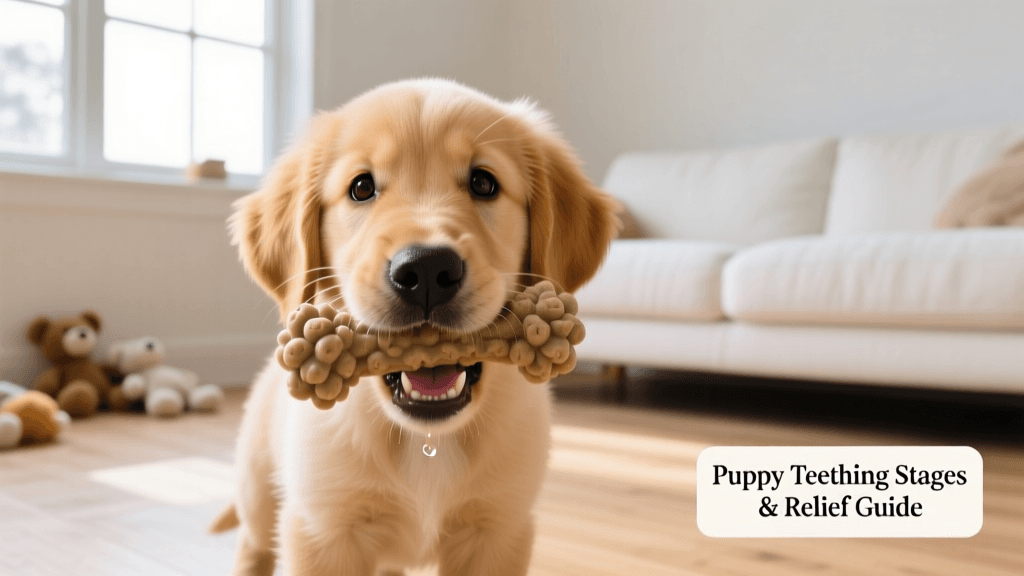
German Shepherd puppies are notoriously mouthy. Between the ages of 3 and 6 months, your puppy will lose their 28 baby teeth and grow 42 adult teeth. This teething process causes significant gum discomfort, leading to the infamous 'land shark' phase where puppies bite and nip at hands, ankles, and furniture.
To manage this, you must proactively teach bite inhibition and provide appropriate outlets for their chewing drive. Never use your hands to wrestle with your GSD puppy. Instead, keep a variety of textured chew toys on hand. The KONG Classic (Red) is an excellent choice; fill it with a mixture of plain canned pumpkin puree, plain Greek yogurt, and their daily kibble allocation, then freeze it solid. The cold temperature soothes inflamed gums, while the mental effort required to extract the food tires them out. For aggressive chewers, the Nylabone DuraChew (Bacon flavor) provides a safe, durable alternative to your baseboards and shoes. If your puppy nips your skin, immediately let out a high-pitched 'yip,' withdraw your attention for 10 seconds, and then redirect them to an approved toy.
First-Year Health Milestones and Costs
German Shepherds are generally robust, but they are genetically predisposed to certain conditions, most notably hip and elbow dysplasia, degenerative myelopathy (DM), and bloat (gastric dilatation-volvulus). To mitigate joint issues, avoid forced exercise like jogging or repetitive frisbee jumping on hard surfaces until your puppy's growth plates have closed, usually around 18 to 24 months. The Orthopedic Foundation for Animals (OFA) recommends preliminary hip and elbow x-rays at 12 months of age to monitor joint development, followed by official certification at 24 months.
Additionally, familiarize yourself with the signs of bloat, a life-threatening emergency where the stomach twists. To reduce the risk, feed your GSD puppy multiple smaller meals a day rather than one large meal, use a slow-feeder bowl to prevent gulping, and strictly enforce a one-hour rest period before and after eating. Budgeting for a large breed puppy is also a critical part of responsible ownership.
| Expense Category | Estimated Cost (USD) | Notes |
|---|---|---|
| Initial Veterinary Care (Vaccines, Microchip, Spay/Neuter) | $500 - $900 | Varies by region and clinic |
| High-Quality Large Breed Food & Treats | $600 - $800 | Based on 25-30 lbs of food per month |
| Supplies (42-inch Crate, Bed, Leash, Toys) | $250 - $400 | Invest in heavy-duty, chew-proof items |
| Puppy Training Classes (Group & Private) | $300 - $600 | Essential for GSD obedience and socialization |
| Pet Insurance (Annual Premium) | $500 - $800 | Highly recommended for large breeds |
Conclusion
Raising a German Shepherd puppy is a profound commitment that requires time, patience, and a willingness to understand the unique developmental needs of the breed. By strictly managing their large-breed nutrition, prioritizing early and ongoing socialization, providing structured crate training, and staying proactive about their orthopedic health, you will lay the foundation for a confident, healthy, and deeply bonded companion. The effort you invest during this crucial first year will reward you with a lifetime of unparalleled loyalty and love from your German Shepherd.
robin-maitland
All our authors care for dogs every day — read more of their work on the authors page.