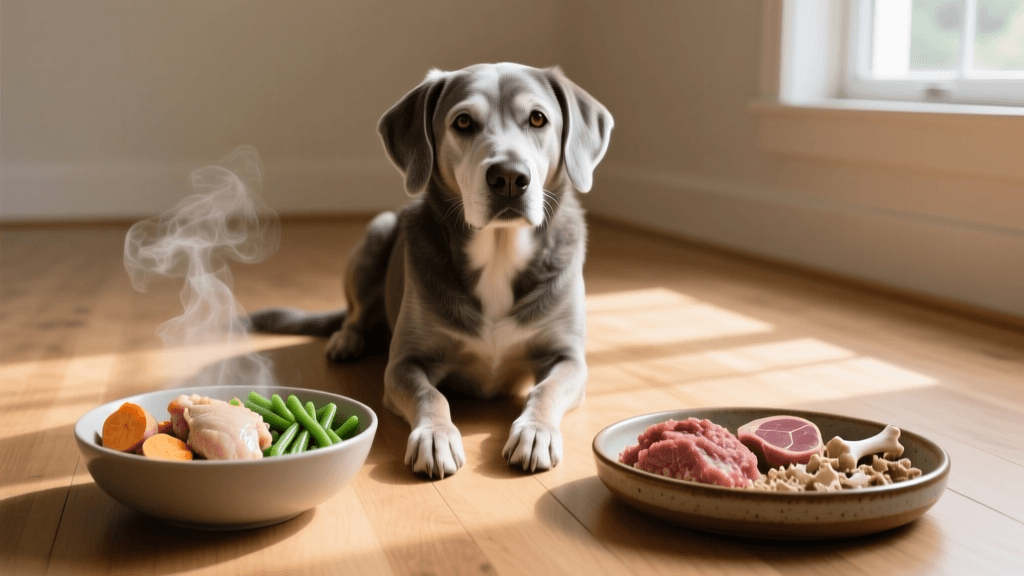
Gently Cooked vs Raw BARF Diets for Senior Dogs 2026
Discover the pros, cons, and 2026 costs of gently cooked fresh diets versus raw BARF diets for senior dogs. Learn how to transition safely today.
The Evolution of Senior Dog Nutrition in 2026
As we navigate the landscape of canine nutrition in 2026, the shift away from highly processed extruded kibble toward raw, fresh, and alternative diets has become a mainstream movement. For senior dogs, whose digestive systems, metabolic rates, and organ functions are naturally declining, the quality and bioavailability of their daily meals are more critical than ever. Pet parents are increasingly torn between two leading alternative feeding philosophies: the Raw BARF (Biologically Appropriate Raw Food) diet and Gently Cooked Fresh diets. Both approaches offer distinct advantages over traditional commercial senior formulas, but they also present unique challenges regarding safety, preparation, and specific age-related health conditions.
Choosing the right path for your aging companion requires a deep understanding of canine physiology, current veterinary consensus, and the practical realities of meal prep. In this comprehensive guide, we break down the nutritional profiles, safety standards, and 2026 market costs of gently cooked versus raw BARF diets to help you make an informed, science-backed decision for your senior dog's golden years.
Understanding the Raw BARF Diet for Aging Dogs
The BARF diet, popularized by veterinarian Dr. Ian Billinghurst, is predicated on the idea that dogs thrive on an evolutionary diet consisting of raw muscle meat, edible bones, organ meats, and a small percentage of dog-safe vegetables and fruits. For senior dogs, proponents argue that raw diets provide superior enzymatic activity, natural glucosamine from raw cartilage, and highly bioavailable proteins that help maintain lean muscle mass in aging bodies.
However, feeding raw to seniors is not without controversy. As dogs age, their immune systems undergo immunosenescence—a natural decline in immune function. This makes older dogs more susceptible to foodborne pathogens. The U.S. Food and Drug Administration (FDA) consistently warns that raw pet food diets carry a higher risk of contamination with harmful bacteria like Salmonella and Listeria, which can be devastating to an immunocompromised senior dog. Furthermore, the high phosphorus content naturally found in raw meaty bones can accelerate the progression of chronic kidney disease (CKD), a common ailment in older canines. If you choose the BARF route in 2026, sourcing human-grade, high-pressure processed (HPP) meats and working with a board-certified veterinary nutritionist to balance calcium-to-phosphorus ratios is non-negotiable.
The Rise of Gently Cooked Fresh Diets
Gently cooked fresh diets have surged in popularity as a middle ground between the convenience of commercial food and the nutritional integrity of raw feeding. These diets involve simmering, steaming, or sous-vide cooking human-grade meats, complex carbohydrates, and fibrous vegetables at low temperatures. This process effectively eliminates dangerous pathogens while preserving a vast majority of heat-sensitive vitamins, amino acids, and natural moisture.
For senior dogs, gently cooked diets offer exceptional digestibility. Cooking breaks down tough cellular walls in vegetables and denatures complex proteins just enough to make them easier for an aging gastrointestinal tract to process. According to the World Small Animal Veterinary Association (WSAVA), ensuring that any alternative diet meets rigorous nutritional adequacy standards is paramount. Reputable gently cooked fresh food brands in 2026 now utilize advanced formulation software to ensure their recipes meet AAFCO profiles for adult maintenance and senior care, often supplementing with targeted synthetic vitamins to replace any nutrients lost during the cooking process. Additionally, the high moisture content of gently cooked meals naturally supports renal hydration, which is vital for seniors prone to urinary and kidney issues.
Head-to-Head Comparison: BARF vs. Gently Cooked
To visualize how these two alternative diets stack up against each other for senior dogs, we have compiled a detailed comparison based on 2026 veterinary data, market pricing, and nutritional metrics.
| Feature | Raw BARF Diet | Gently Cooked Fresh Diet |
|---|---|---|
| Digestibility | Moderate (requires strong stomach acid) | High (pre-broken down proteins/carbs) |
| Pathogen Risk | High (mitigated by HPP or strict sourcing) | Negligible (heat-treated for safety) |
| Dental Health | Excellent (via raw meaty bones) | Poor (requires separate dental care) |
| Kidney Support | Requires careful phosphorus restriction | Easily formulated for low-phosphorus |
| Prep Time (DIY) | High (grinding, weighing, sanitizing) | Moderate (batch cooking, portioning) |
| 2026 Avg Cost (Delivery) | $7.50 - $11.00 per lb | $8.00 - $12.50 per lb |
Addressing Senior-Specific Health Conditions
When managing alternative diets for seniors, you must tailor the macronutrients and supplements to their specific age-related conditions. Experts at Tufts Veterinary Clinical Nutrition emphasize that one-size-fits-all diets are inadequate for geriatric dogs.
Osteoarthritis and Joint Mobility
Senior dogs frequently suffer from joint degradation. While raw BARF diets naturally include cartilage and connective tissue rich in chondroitin, gently cooked diets allow for the precise addition of highly bioavailable Omega-3 fatty acids. In 2026, adding wild-caught Alaskan salmon oil or green-lipped mussel powder to a gently cooked meal is the gold standard for reducing systemic joint inflammation without the caloric density of extra fat.
Cognitive Decline (Canine Cognitive Dysfunction)
Brain aging in dogs can be slowed through targeted nutrition. Medium-chain triglycerides (MCTs) provide an alternative energy source for aging brains that struggle to metabolize glucose. While raw diets can incorporate raw coconut oil, gently cooked diets often integrate emulsified MCT oils or specialized brain-support supplement blends that are easier for seniors to absorb and less likely to trigger pancreatitis.
Gastrointestinal Sensitivities
Many older dogs develop sensitive stomachs or exocrine pancreatic insufficiency (EPI). Gently cooked diets are overwhelmingly preferred here. The cooking process mimics the work of digestive enzymes, reducing the biological workload on the pancreas. If feeding raw to a dog with GI issues, the meat must be finely ground, and the addition of plant-based digestive enzymes or fermented kefir is highly recommended to aid breakdown.
2026 Sourcing and Safety Standards
If you are preparing these meals at home or subscribing to a delivery service, understanding modern safety protocols is essential. For raw diets, look for companies utilizing High-Pressure Processing (HPP). HPP uses immense water pressure to crush the cellular walls of bacteria like Salmonella and E. coli without applying heat, thereby maintaining the raw nutritional profile while making it safe for immunocompromised seniors.
For gently cooked diets, the industry standard in 2026 is the use of human-grade USDA-certified facilities. The ingredients must be legally fit for human consumption before cooking, and the kitchens must adhere to strict FDA hazard analysis protocols. Avoid "feed-grade" gently cooked meals, as the allowable limits for mycotoxins and heavy metals in feed-grade ingredients are too high for the delicate filtering systems of senior dog livers and kidneys.
Step-by-Step Transition Protocol for Seniors
Transitioning an older dog to a fresh or raw diet must be done with extreme patience. A senior dog's gut microbiome is established and fragile; rapid changes can lead to severe diarrhea, dehydration, and subsequent organ stress. Follow this 21-day protocol for a safe transition:
- Days 1-5 (Preparation Phase): Do not change the food yet. Introduce a high-quality, species-appropriate canine probiotic and a teaspoon of bone broth (low sodium, no onions/garlic) to their current kibble to prime the gut lining.
- Days 6-10 (25% Alternative Diet): Replace 25% of their caloric intake with the new gently cooked or raw food. Monitor stool consistency closely. If stools become soft, pause the transition and add 1/4 teaspoon of plain canned pumpkin per 10 lbs of body weight.
- Days 11-15 (50% Alternative Diet): Move to a 50/50 split. For raw diets, introduce the organ meats (liver, kidney) during this phase, as they are the most likely to cause loose stools. Keep organ meat to strictly 10% of the total raw intake.
- Days 16-20 (75% Alternative Diet): Increase the fresh food to 75%. Begin introducing any targeted senior supplements, such as joint support or MCT oils, at half the recommended dose to allow the liver to adapt.
- Day 21+ (100% Alternative Diet): Fully transitioned. Schedule a follow-up with your veterinarian to run a senior blood panel and ensure the new diet is supporting optimal kidney and liver values.
Final Thoughts on Alternative Senior Diets
Ultimately, the choice between a raw BARF diet and a gently cooked fresh diet for your senior dog in 2026 depends on your dog's specific health profile, your household's risk tolerance for pathogens, and your budget. For robust, active seniors with excellent dental health and strong immune systems, a carefully balanced, HPP-treated raw diet can provide unparalleled vitality. However, for the majority of aging dogs—especially those with compromised immunity, dental disease, or chronic kidney concerns—a gently cooked, moisture-rich fresh diet offers a safer, highly digestible, and nutritionally complete path to a vibrant, comfortable senior life.
anouk-beaumont
All our authors care for dogs every day — read more of their work on the authors page.