Top Smart Cameras for Dog Separation Anxiety in 2026
Discover how to use smart pet cameras and desensitization protocols to ease apartment dog separation anxiety in 2026. Expert tips and gear reviewed.
The Modern Challenge of Apartment Separation Anxiety
As urban living continues to evolve in 2026, more dog owners are residing in high-density apartment complexes where a barking or distressed dog can quickly lead to noise complaints and lease violations. Separation anxiety is not merely a behavioral quirk; it is a profound panic disorder. When left alone, dogs suffering from this condition experience a genuine fight-or-flight response, resulting in destructive behavior, inappropriate elimination, and relentless vocalization. Fortunately, the intersection of advanced smart home technology and evidence-based behavioral science offers a powerful new approach to treating this condition.
According to the ASPCA, separation anxiety is triggered when a dog becomes intensely upset because of separation from their guardians, the people they are attached to. While traditional training relies heavily on guesswork regarding what the dog does while alone, modern smart pet cameras allow owners to observe the exact onset, duration, and intensity of the panic cycle. By pairing high-definition monitoring with remote treat-dispensing capabilities, we can implement highly structured, tech-assisted desensitization protocols that were simply impossible a decade ago.
Understanding the Canine Panic Cycle
Before deploying technology, it is crucial to understand the neurology of alone-time panic. When a dog with separation anxiety is left alone, their amygdala hijacks their nervous system, flooding their body with cortisol and adrenaline. This panic typically peaks within the first twenty to thirty minutes of the owner's departure. If a dog is practicing this panicked state daily, the neural pathways associated with being alone become deeply entrenched, making the anxiety progressively worse over time.
The goal of any 2026 separation anxiety protocol is to keep the dog under their 'panic threshold.' This means intervening or providing a positive distraction before the dog's heart rate spikes and vocalization begins. Smart cameras equipped with artificial intelligence can now detect the subtle precursors to panic, such as pacing, lip licking, or whining, allowing for immediate remote intervention.
2026 Smart Camera Comparison Chart
Choosing the right hardware is the foundation of a successful tech-assisted training plan. Below is a comparison of the top three smart pet cameras available in 2026, specifically evaluated for their utility in separation anxiety protocols.
| Camera Model | Resolution & View | Treat Tossing / Dispensing | AI Behavioral Alerts | Avg. Price (2026) |
|---|---|---|---|---|
| Furbo 360 Dog Camera (2026 Edition) | 1080p, 360-degree rotating | Active tossing mechanism | Barking, crying, and vomiting alerts | $249.00 |
| Wyze Cam v4 with Pet AI | 2.5K QHD, 130-degree fixed | None (Audio only) | Pet detection and sound recognition | $35.98 |
| Eufy Security Indoor Cam E30 | 4K Ultra HD, 360-degree pan/tilt | None (Audio only) | Advanced pet tracking and posture alerts | $129.99 |
Furbo 360 Dog Camera (2026 Edition)
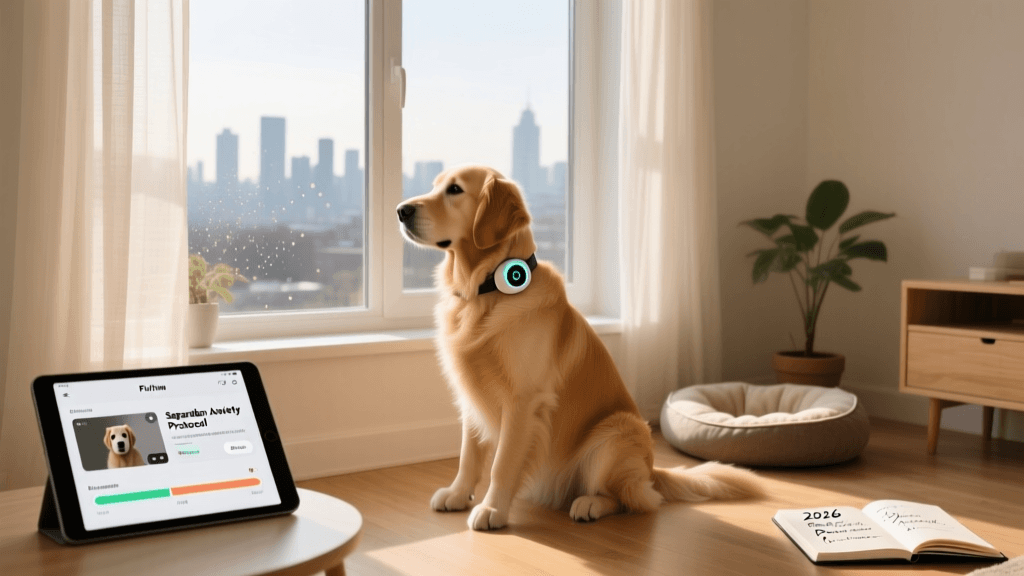
The Furbo remains the gold standard for active separation anxiety intervention. Its 360-degree rotating base ensures that no matter where your dog paces in the apartment, you can track them and launch a treat directly into their path. The 2026 edition features enhanced AI that distinguishes between a playful bark and a distressed howl, sending immediate push notifications to your smartphone so you can intervene via two-way audio and a treat toss before the panic escalates.
Wyze Cam v4 with Pet AI
For budget-conscious owners or those managing multi-dog households requiring multiple camera angles, the Wyze Cam v4 is exceptional. While it lacks a treat-tossing mechanism, its 2.5K sensor and advanced sound recognition are perfect for baseline monitoring. It allows you to map your dog's exact panic threshold by reviewing timestamped clips of when the whining or pacing begins.
Eufy Security Indoor Cam E30
Eufy's 4K resolution and local storage options make it ideal for privacy-focused owners. The advanced pet tracking follows your dog smoothly around the room, and its posture alerts can notify you if your dog is engaging in destructive chewing or scratching at the door, allowing for immediate verbal redirection through the built-in speaker.
Environmental Setup and Pheromone Support
Technology alone will not cure separation anxiety; it must be paired with environmental management. Before beginning your desensitization protocol, set up a 'safe zone' in your apartment. This should be a comfortable area, such as a mat or an open crate, located away from the front door to minimize trigger-stacking from hallway noises.
In 2026, veterinary behaviorists highly recommend pairing camera monitoring with synthetic pheromone diffusers. Plugging an Adaptil Calm diffuser into the outlet nearest to your dog's safe zone releases a synthetic copy of the canine appeasing pheromone, which has been clinically shown to reduce baseline stress levels. Additionally, running a white noise machine near the front door can mask the sound of neighbors walking by, which is a common trigger for apartment dogs.
The 4-Week Tech-Assisted Desensitization Protocol
This protocol utilizes your smart camera to systematically desensitize your dog to your departures. You will need a supply of high-value, pea-sized treats (under 5 calories each) to prevent satiation and weight gain during training sessions.
Week 1: Baseline Monitoring and Threshold Mapping
The first week is strictly about data collection. Do not attempt to train your dog yet. Set up your camera and perform your normal departure routine. Leave the apartment and monitor your dog via the live feed. Note the exact timestamp when your dog begins to show signs of stress (pacing, whining, panting). If your dog panics at minute 12, your current 'threshold' is 10 minutes. Your goal for the following weeks is to never allow your dog to cross this threshold. When you return, do so quietly without making a fuss, reinforcing that departures and arrivals are non-events.
Week 2: Counter-Conditioning via Remote Treat Tossing
Using a treat-tossing camera like the Furbo, you will now change your dog's emotional response to your absence. Perform your departure routine and leave. Before your dog reaches their panic threshold (e.g., at minute 8 of their 12-minute threshold), use the app to toss a high-value treat. Repeat this every few minutes. The goal is to create a positive association: 'Owner leaves = delicious treats appear from the magic camera.' Keep absences short, always returning before the dog shows any distress.
Week 3: Duration Building and Auto-Dispensing
As your dog begins to anticipate the treat toss with excitement rather than anxiety, gradually increase the time between tosses. If your dog remains relaxed, extend your total absence by two to three minutes per session. If you are using a camera without a treat tosser, you can pair it with a smart plug connected to an automated treat dispenser on the floor, scheduling drops via your smart home app at randomized intervals to keep the dog engaged and under threshold.
Week 4: Generalization and Fading the Tech
Once your dog can comfortably handle 45-minute absences with remote treat reinforcement, begin to fade the prompts. Toss treats less frequently, or rely solely on the calming pheromones and white noise. Start varying your departure routines—put on your shoes but sit back down, or pick up your keys and walk to the kitchen instead of the door. This breaks the predictive chain that triggers the initial spike in cortisol. Continue to monitor via the camera to ensure the relaxed behavior holds without the constant food reward.
Dietary Considerations for Remote Treats
When utilizing treat-tossing cameras, calorie management is critical. A dog receiving 20 to 30 treats a day during training can easily consume hundreds of empty calories. Opt for single-ingredient, high-value, low-calorie options. Freeze-dried chicken bites or small pieces of boiled chicken breast (approximately 2 calories per pea-sized piece) are ideal. Avoid hard biscuits, as they can shatter when tossed against hard apartment flooring, potentially startling a noise-sensitive dog or creating a mess that encourages scavenging.
When Technology Is Not Enough
While smart cameras and desensitization protocols are highly effective for mild to moderate cases, severe separation anxiety often requires pharmacological intervention. As noted by the American Kennel Club, dogs in a state of sheer panic cannot learn new behaviors because their cognitive functions are overridden by the amygdala. If your dog is injuring themselves attempting to escape, or if they refuse to eat high-value treats while you are gone, their anxiety is too severe for training alone.
In these cases, consult a board-certified veterinary behaviorist. They may prescribe fast-acting situational medications like trazodone or longer-term SSRIs like fluoxetine to lower the dog's baseline anxiety enough for the camera-assisted desensitization protocol to work. Remember, medication is not a failure of training; it is a vital tool that opens the window of neuroplasticity required for your dog to learn that being alone is safe. For further reading on fear-free handling and anxiety management, resources provided by Fear Free Pets offer excellent supplementary guidance for owners navigating this challenging behavioral issue.
Pro Tip for 2026: Always ensure your smart camera is connected to a 5GHz Wi-Fi network with a dedicated uninterruptible power supply (UPS) for your router. Losing connection to your camera while your dog is mid-panic can prevent you from intervening and accidentally reinforce the distressed behavior.
anouk-beaumont
All our authors care for dogs every day — read more of their work on the authors page.