Smart Dog Proofing Through Canine Spatial Psychology
Discover how to dog-proof your home by understanding canine spatial psychology, den instincts, and foraging behaviors for a safer, stress-free environment.
When bringing a dog into your home, standard dog-proofing often feels like an endless game of whack-a-mole. You hide the shoes, but they find the remote. You block the stairs, but they discover the baseboards. The secret to creating a truly safe, harmonious home environment is not just hiding hazards; it is understanding the canine psychology that drives your dog to interact with their space in the first place. By viewing your home through the lens of canine spatial psychology, den instincts, and evolutionary foraging behaviors, you can proactively design an environment that satisfies your dog's natural drives while keeping them out of harm's way.
The Psychology of the Den: Creating a True Sanctuary
Dogs are descended from den-dwelling ancestors, and modern canines still possess a deep-seated psychological need for a secure, enclosed sanctuary. A crate or a designated 'safe room' is not a punishment zone; it is a vital tool for emotional regulation. When a dog feels overwhelmed by household chaos, loud noises, or guest visits, they instinctively seek a confined space where their back is protected and their environment is controlled.
To properly dog-proof a den area, you must consider spatial dimensions and placement. The ideal crate should be exactly six inches longer than your dog's body (measured from the tip of the nose to the base of the tail) and six inches taller than their head. If the space is too large, it loses the psychological 'hug' effect that reduces anxiety; if it is too small, it creates physical stress. Invest in a heavy-duty wire crate (typically $50 to $150) or an impact crate for severe anxiety cases ($500 to $1,000). Place the den in a low-traffic corner of a main living area. Dogs are social pack animals; isolating their den in a basement or laundry room can trigger separation anxiety and destructive escape behaviors.
Scavenging Instincts: Rethinking Kitchen and Trash Dog-Proofing
One of the most common points of friction between dogs and homeowners is the kitchen trash can. Owners often label dogs as 'naughty' or 'spiteful' when they knock over the garbage, but this behavior is rooted in thousands of years of evolutionary history. Dogs are opportunistic scavengers. In the wild, and in early village settlements, scavenging was a primary survival strategy. When your dog smells a discarded chicken bone or a wrapper that once held cheese, their brain is flooded with dopamine, compelling them to forage.
Understanding this biological imperative means we must rely on environmental management rather than obedience training to protect our dogs. Scavenging can be fatal if a dog ingests toxic human foods. According to the FDA's guide on toxic people foods for pets, items like xylitol (an artificial sweetener found in sugar-free gum and peanut butter), grapes, and onions can cause rapid organ failure even in small amounts. To combat the scavenging instinct, remove the opportunity entirely. Replace open or pedal-bin trash cans with heavy-bottomed, locking-lid bins (such as the simplehuman Step Trash Can, retailing around $150). Alternatively, install magnetic cabinet locks (like the Safety 1st Magnetic Locking System, ~$20) to secure trash bins and cleaning supplies behind closed doors, completely removing the visual and olfactory triggers that spark the foraging drive.
Chewing and Spatial Anxiety: Living Area Modifications
Chewing is a multifaceted behavior. For puppies, it is a necessary mechanism for relieving the pain of teething. For adult dogs, chewing releases endorphins in the brain, acting as a natural stress-reliever and a way to process boredom or mild spatial anxiety. When a dog chews on a baseboard or a power cord, they are often seeking sensory feedback and neurological soothing.
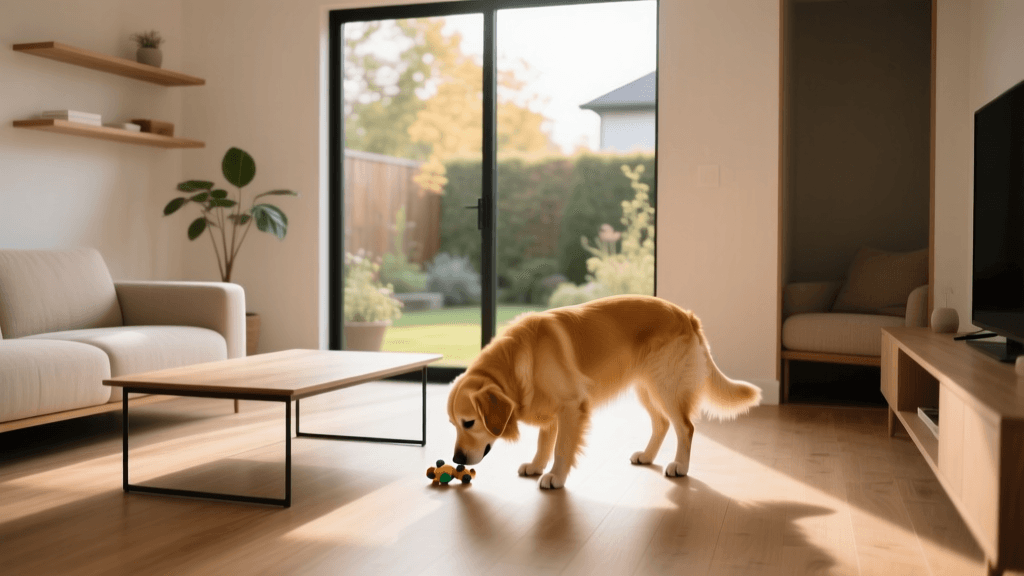
To dog-proof your living room against destructive chewing, you must provide high-value, species-appropriate outlets while simultaneously making household items inaccessible or unappealing. Provide durable chew toys like the KONG Classic ($15) stuffed with frozen, xylitol-free peanut butter, or nylon chew bones that mimic the resistance of real wood without the splintering risk. For environmental hazards like electrical cords, do not rely on bitter apple sprays alone, as many dogs simply tolerate or ignore the taste. Instead, use physical barriers. Purchase split loom tubing or PVC cord concealers from a local hardware store (usually under $15) to encase TV, lamp, and router wires. This not only hides the tempting, snake-like appearance of the cords but also provides a hard, unyielding texture that is deeply unsatisfying for a dog to chew on.
Territorial Frustration: Managing Windows and Entryways
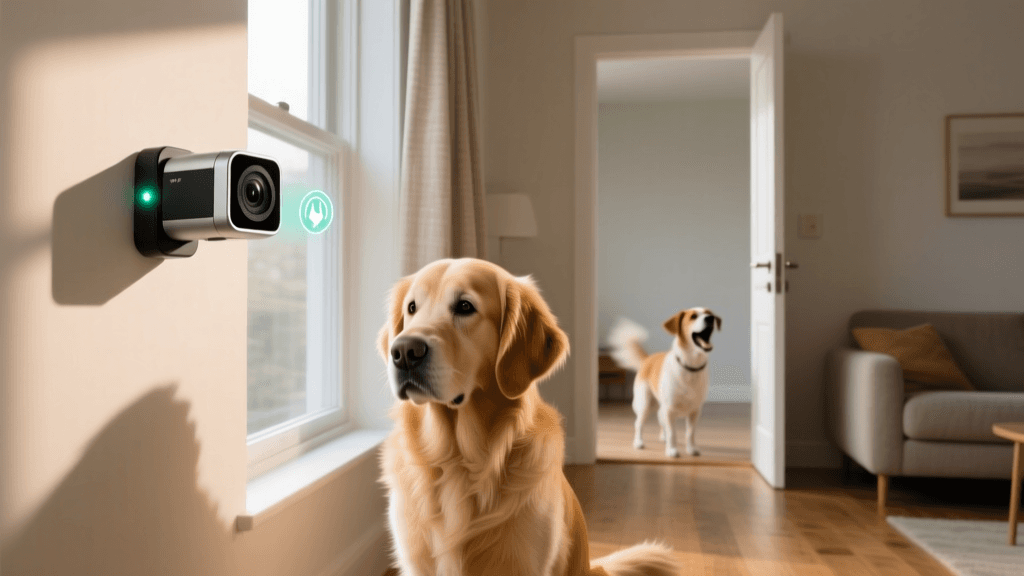
Many dogs exhibit intense barking, lunging, and pacing when looking out the front window. This is known as barrier frustration combined with territorial guarding. From the dog's perspective, they are patrolling the perimeter of their den, and every passing pedestrian, mail carrier, or neighborhood dog is an intruder. Because the 'intruder' always walks away, the dog's brain registers the barking as a successful defense mechanism, reinforcing the behavior and keeping the dog in a state of chronic, elevated cortisol (stress hormone) levels.
Dog-proofing against territorial stress involves managing the dog's visual field. You do not need to block out all natural light. Apply a frosted privacy window film ($15 to $30 on Amazon) to the bottom three-quarters of your front-facing windows. This simple, renter-friendly modification removes the visual triggers that spark the guarding instinct, allowing the dog to relax in the living room without feeling the burden of protecting the entire neighborhood. Pair this with a physical baby gate to keep the dog out of the entryway when guests arrive, reducing the chaotic threshold arousal that often leads to jumping or nipping.
Household Hazards vs. Canine Behavioral Triggers
Understanding the 'why' behind your dog's behavior makes the 'how' of dog-proofing significantly more effective. Below is a breakdown of common household hazards, the psychological triggers that draw dogs to them, and the most effective environmental solutions.
| Hazard | Behavioral Trigger | Psychological Root | Dog-Proofing Solution |
|---|---|---|---|
| Trash Cans | Scavenging, Tipping | Opportunistic Foraging | Locking lids, pantry storage, magnetic cabinet locks. |
| Electrical Cords | Chewing, Batting | Teething, Endorphin release, Prey drive (movement) | Split loom tubing, hard PVC cord concealers. |
| Toxic Houseplants | Investigative biting, Digging | Oral exploration, boredom, instinctual digging | Elevated hanging planters, consulting the ASPCA's comprehensive list of toxic and non-toxic plants. |
| Front Windows | Barking, Lunging, Pacing | Territorial guarding, barrier frustration | Frosted privacy window film, blocking access with gates. |
The Olfactory Environment: Scent-Proofing and Enrichment
While humans navigate the world primarily through sight, dogs experience their home environment through their noses, possessing up to 300 million olfactory receptors. The scents in your home profoundly impact your dog's psychological state. Many owners unknowingly introduce toxic hazards by using essential oil diffusers to make their homes smell pleasant. According to the ASPCA Animal Poison Control, essential oils such as tea tree, eucalyptus, citrus, and pine are highly toxic to dogs and can cause respiratory distress, liver damage, and neurological issues when inhaled or absorbed through the skin.
To create a psychologically soothing olfactory environment, avoid synthetic aerosols and toxic essential oils. Instead, utilize species-specific pheromone therapy. Products like the Adaptil diffuser ($50 to $80) release synthetic dog-appeasing pheromones (DAP) that mimic the comforting scent produced by a mother dog nursing her puppies. Plugging this diffuser into the outlet nearest your dog's den or primary resting area can significantly lower baseline anxiety, reduce noise phobias during thunderstorms, and make the overall home environment feel inherently safer to your dog's sensitive nose.
Conclusion: A Harmonious Shared Space
Ultimately, effective dog-proofing is an exercise in empathy. By stepping back and observing your home from your dog's eye level—both physically and psychologically—you can anticipate their needs and prevent accidents before they occur. Providing a properly sized den respects their need for security; locking away the trash honors their scavenging heritage without risking their health; managing window views protects them from chronic territorial stress; and curating a safe olfactory environment ensures their most powerful sense is not overwhelmed by toxins. When you align your home environment with your dog's natural instincts, you stop fighting their biology and start supporting it, resulting in a safer home and a profoundly happier, more relaxed canine companion.
beth-carrasco
All our authors care for dogs every day — read more of their work on the authors page.