Top Puppy Treat Cameras for Separation Anxiety in 2026: Reviewed
Discover the best interactive puppy cameras to ease separation anxiety in 2026. Compare Furbo and Petcube features, treat tossing, and training tips.
The 2026 Landscape of Puppy Alone-Time Training
Leaving a new puppy alone for the first time is a milestone that fills many owners with dread. As hybrid work models and flexible schedules have permanently shifted our daily routines in 2026, puppies are often accustomed to constant human presence during their critical early developmental weeks. However, teaching a puppy to be comfortable when left alone is not just a convenience; it is a vital welfare requirement. Without proper desensitization, puppies can develop severe separation anxiety, leading to destructive behavior, excessive vocalization, and chronic stress.
Fortunately, the evolution of smart pet technology has provided owners with unprecedented tools to monitor, comfort, and train their puppies remotely. In 2026, interactive treat-dispensing cameras equipped with edge-computing AI and advanced behavioral analytics have revolutionized how we manage puppy separation anxiety. This comprehensive guide explores the best interactive cameras on the market, how to differentiate between normal puppy whining and true anxiety, and a step-by-step protocol for using these devices to build your puppy's independence.
Understanding Puppy Separation Anxiety vs. Normal Adjustment
Before investing in smart home pet tech, it is crucial to understand what you are observing on your camera feed. Puppies are social animals, and it is entirely normal for a 10-week-old puppy to cry or whine when first placed in a crate or left in a room alone. This is known as 'isolation distress' and typically resolves as the puppy learns that you always return.
True separation anxiety, however, is a panic response. According to the ASPCA, separation anxiety is triggered by the dog's intense fear of being separated from their primary attachment figure. Signs of true anxiety include:
- Frantic, non-stop pacing and panting that does not subside after the first 15 minutes.
- Destructive behavior directed at exit points (doors, window sills, or crate bars).
- Inappropriate elimination in a previously house-trained puppy, specifically occurring only when left alone.
- Excessive drooling and self-mutilation (such as licking paws raw).
If your camera reveals these severe panic indicators, treat tossing and remote audio may not be enough, and you should consult a certified veterinary behaviorist. However, for the vast majority of puppies experiencing mild isolation distress or boredom, interactive cameras are the ultimate training aid.
Top Interactive Treat Cameras for Puppies (2026 Comparison)
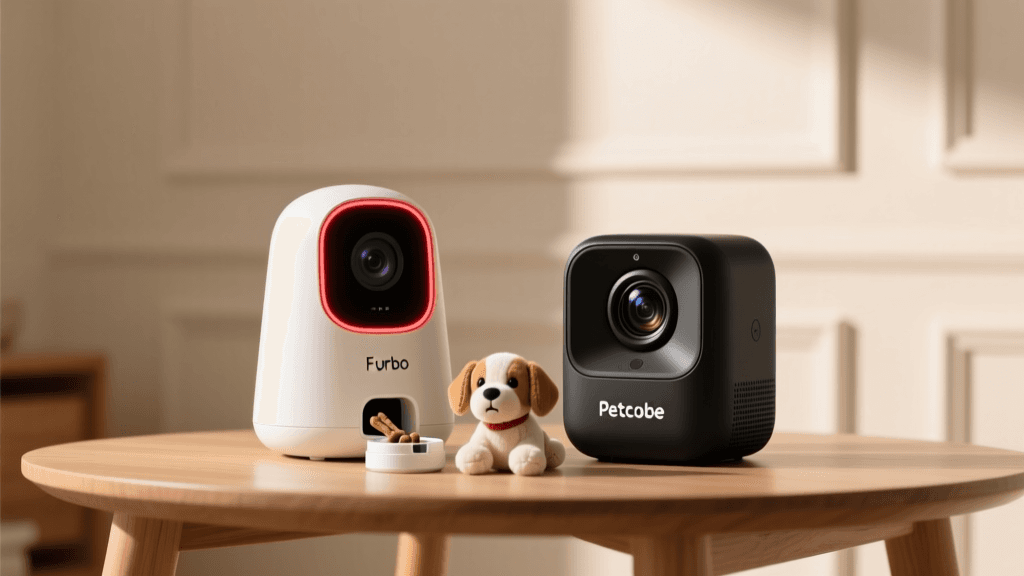
When selecting a camera to aid in alone-time training, you need three core features: high-definition two-way audio, a reliable treat-tossing mechanism for positive reinforcement, and AI-driven bark or movement alerts. Here is how the top models stack up in 2026.
| Feature | Furbo 360° Dog Camera | Petcube Bites 2 |
|---|---|---|
| Field of View | 360° Auto-Rotating Panning | 165° Wide-Angle Fixed |
| Treat Capacity | Holds up to 35 standard treats | Holds up to 30 standard treats |
| Video Quality | 1080p HDR with Night Vision | 1080p HD with Night Vision |
| AI Alerts (2026) | Bark, crying, vomiting, and person detection | Bark and motion detection |
| Approx. Price (2026) | $219.00 | $169.00 |
| Best For | Active puppies who move around their pen | Puppies in smaller, fixed crate setups |
Furbo 360° Dog Camera: The Premium Choice
The Furbo 360° remains the gold standard for puppy monitoring in 2026. Its motorized base allows the camera to follow your puppy as they move from their bed to their water bowl, ensuring you never lose sight of them. The 2026 firmware update significantly improved its AI crying detection, allowing owners to differentiate between a playful 'boof' and a distressed whine. The treat tosser is highly reliable, launching kibble or small training treats across the room, which encourages the puppy to engage in 'sniff-and-seek' behavior—a natural stress reliever.
Petcube Bites 2: The Budget-Friendly Contender
For owners utilizing a standard wire crate where a 360-degree view is unnecessary, the Petcube Bites 2 offers exceptional value. Its wide-angle lens easily captures the entirety of a standard 36-inch crate. The built-in treat dispenser is slightly quieter than the Furbo, which is beneficial for sound-sensitive puppies who might be startled by the mechanical whir of a treat launcher. Additionally, the Petcube app integrates seamlessly with Matter-compatible smart home routines, allowing you to automate treat dispensing schedules based on your smart lock's departure triggers.
Systematic Desensitization: Training Your Puppy to Be Alone
Simply buying a camera will not cure separation anxiety; it is a tool to facilitate a structured training protocol. The American Kennel Club (AKC) emphasizes that puppies must be taught that being alone is safe and predictable. Here is how to use your interactive camera to execute a systematic desensitization plan.
Step 1: Pre-Departure Cue Desensitization
Puppies are incredibly observant. Picking up your keys, putting on your shoes, or grabbing your coat can trigger a cortisol spike before you even leave. Spend a week performing these actions without leaving the house. Use your camera's two-way audio to offer calm praise when the puppy remains relaxed during these 'fake' departures.
Step 2: Micro-Absences and Remote Reinforcement
Begin by leaving the puppy in their safe space (a crate or an exercise pen) for just 30 seconds. Step out the front door, close it, and immediately watch your camera feed. If the puppy remains calm or settles down, use the treat-tossing feature to dispense a high-value reward. This creates a positive association: Owner leaves = delicious treats appear.
Gradually increase the duration of your absences. Move from 30 seconds to 2 minutes, then 5 minutes, then 15 minutes. If the puppy begins to cry, do not use the two-way audio to scold them, and do not return while they are vocalizing, as this reinforces the crying. Wait for a brief moment of silence, toss a treat via the camera, and then return.
Step 3: The 'Jackpot' Departure
When you are ready to leave for a longer period (e.g., a 45-minute grocery run), load the camera with a high-value, novel treat that the puppy only receives when you leave. Freeze-dried liver or small pieces of low-sodium jerky work wonderfully. Toss a 'jackpot' of three or four treats right before you walk out the door to engage their foraging instincts as you depart.
Environmental Enrichment for Alone Time
A camera allows you to monitor your puppy, but environmental enrichment ensures they have something constructive to do. In 2026, veterinary behaviorists strongly recommend replacing passive waiting with active foraging.
- Lick Mats: Smearing plain, xylitol-free Greek yogurt or pumpkin puree on a textured silicone lick mat and freezing it provides up to 20 minutes of soothing, repetitive licking. Licking releases endorphins in a puppy's brain, naturally lowering their heart rate.
- Interactive Food Puzzles: Toys like the West Paw Toppl or the Kong Classic force the puppy to work for their meals. Stuff these with your puppy's daily kibble ration mixed with a little wet food and freeze them overnight.
- White Noise and Auditory Masking: Puppies have acute hearing and may bark at outdoor noises. Use a white noise machine or a smart speaker playing 'brown noise' (which has deeper, more soothing frequencies than white noise) to mask hallway footsteps or street traffic.
Sample 12-Week-Old Puppy Alone-Time Schedule
Consistency is the bedrock of puppy training. Here is a sample schedule incorporating camera-monitored alone time for a 12-week-old puppy:
- 8:00 AM: Active play, training session, and potty break outside.
- 9:00 AM: Pencil in a 2-hour crate nap. Turn on the Furbo camera to monitor sleep quality.
- 11:00 AM: Potty break, followed by a meal served inside a snuffle mat for mental enrichment.
- 12:30 PM: Desensitization Drill. Place puppy in pen with a frozen lick mat. Leave the house for 10 minutes. Monitor via Petcube. Toss a treat at the 5-minute mark if they are calmly chewing.
- 1:00 PM: Return home, ignore excited jumping until all four paws are on the floor, then take outside for potty.
- 3:00 PM: Afternoon nap and solo-play time in a puppy-proofed room with the camera tracking their movements.
When to Seek Professional Help
While smart cameras and systematic desensitization are highly effective for mild isolation distress, severe separation anxiety is a clinical condition that requires professional intervention. If your 2026 camera feed consistently shows your puppy injuring themselves, destroying their crate, or exhibiting panic attacks that do not diminish over weeks of structured training, it is time to consult a professional.
Many veterinary behaviorists now offer comprehensive telehealth consultations, allowing them to review your camera footage in real-time and prescribe short-term anti-anxiety medications or specialized behavioral modification plans. Remember, the goal of alone-time training is not just a quiet house, but a confident, secure, and happy puppy who trusts that you will always come back.
anouk-beaumont
All our authors care for dogs every day — read more of their work on the authors page.