Treating Puppy Osteoarthritis: 2026 Joint Care Guide
Discover 2026 veterinary guidelines for treating juvenile osteoarthritis and joint dysplasia in puppies, including supplements, weight control, and surgery.
When most dog owners hear the term 'osteoarthritis' (OA), they immediately picture senior dogs struggling to climb the stairs. However, as veterinary orthopedic science advances in 2026, specialists are increasingly focused on juvenile osteoarthritis. For puppies, particularly large and giant breeds, the first year of life is a critical window where developmental orthopedic diseases (DOD) can trigger early-onset joint degeneration. Conditions like hip dysplasia, elbow dysplasia, and osteochondritis dissecans (OCD) create joint instability and micro-traumas, leading to inflammatory cascades that result in osteoarthritis well before a dog reaches adulthood.
Understanding Juvenile Osteoarthritis in the First Year
Osteoarthritis is a progressive, degenerative disease of the synovial joints. In puppies, it is almost always secondary to a developmental abnormality. When a puppy's bones grow too rapidly or the joint socket (acetabulum) fails to properly cover the femoral head, the resulting friction damages the articular cartilage. According to the Orthopedic Foundation for Animals (OFA), early joint laxity in breeds like Golden Retrievers, German Shepherds, and Great Danes is the primary catalyst for juvenile OA. The inflammation caused by this laxity releases degradative enzymes that break down cartilage, leading to pain, stiffness, and altered gait during the puppy's crucial growth phases.
Early Diagnostic Screening for Puppies
You cannot effectively treat what you have not diagnosed. In 2026, veterinary consensus dictates that waiting until a puppy is two years old for traditional OFA radiographs is a missed opportunity for early intervention. Instead, the PennHIP distraction method is the gold standard for puppies. This specialized X-ray technique can be performed as early as 16 weeks of age to measure joint laxity and predict the likelihood of developing OA later in life. If a puppy scores a high Distraction Index (DI), veterinarians can immediately implement preventative OA treatments before irreversible cartilage damage occurs.
2026 Veterinary Treatment Options for Puppy Joint Issues
Managing juvenile OA requires a multimodal approach. Because a puppy's organs are still developing, veterinarians must be highly selective with pharmaceuticals, leaning heavily into early surgical corrections, targeted supplements, and physical rehabilitation.
Preventative and Corrective Surgeries
For puppies diagnosed with severe joint laxity early on, surgical intervention can alter the trajectory of osteoarthritis. The American College of Veterinary Surgeons (ACVS) highlights two primary juvenile procedures:
- Juvenile Pubic Symphysiodesis (JPS): Performed between 16 and 20 weeks of age, this minimally invasive procedure uses electrocautery to prematurely close the growth plate at the bottom of the pelvis. As the puppy grows, the top of the pelvis continues to expand, effectively rotating the hip sockets over the femoral heads and creating a tighter, more stable joint.
- Proximal Abducting Osteotomy (PAPO): For slightly older puppies (typically 5 to 8 months) who have missed the JPS window, PAPO involves cutting the femur and angling it to improve joint coverage and reduce the subluxation that causes OA.
Medical Management and Pain Relief
While Non-Steroidal Anti-Inflammatory Drugs (NSAIDs) like Carprofen or Meloxicam are staples for adult OA, their use in puppies under six months is heavily restricted due to the risk of renal and hepatic toxicity. In 2026, veterinary pain management protocols for puppies prioritize Adequan (polysulfated glycosaminoglycan) injections. Adequan is a disease-modifying osteoarthritis drug (DMOAD) that inhibits cartilage-degrading enzymes and stimulates the production of healthy joint fluid. It is exceptionally safe for growing puppies and is typically administered as a series of intramuscular injections over four weeks.
Nutritional Interventions and Joint Supplements
Nutrition is arguably the most powerful tool for preventing and managing juvenile OA. Overfeeding a large-breed puppy causes rapid skeletal growth that outpaces muscle and tendon development, exacerbating joint instability. Current 2026 AAFCO guidelines mandate strict calcium-to-phosphorus ratios (between 1.1:1 and 1.4:1) and controlled caloric densities for large-breed puppy formulas to ensure a slow, steady growth rate.
In addition to prescription diets, veterinary orthopedists recommend starting high-quality joint supplements at the first sign of joint stress or a poor PennHIP score. Below is a comparison of the top puppy-safe joint supplements utilized in 2026:
| Supplement Brand | Key Active Ingredients | Best For | Approx. 2026 Cost |
|---|---|---|---|
| Dasuquin Advanced | ASU, Glucosamine, Chondroitin, EPA/DHA | Severe early-onset dysplasia and high OA risk | $65 - $85 |
| GlycoFlex Max | Perna Canaliculus (Green Lipped Mussel), MSM, DMG | Active puppies needing soft tissue and cartilage support | $55 - $70 |
| Welactin Canine | High-concentration Omega-3 (EPA/DHA) from wild salmon | Reducing systemic joint inflammation safely in young pups | $35 - $45 |
Note: Always consult your veterinarian before introducing supplements, as excessive calcium or vitamin D supplementation can actually worsen developmental orthopedic diseases.
Physical Therapy and Controlled Exercise
Exercise is vital for a puppy's mental and physical health, but the type of exercise must be strictly managed to protect vulnerable joints. High-impact activities like fetching frisbees, jumping off furniture, or running on slippery hardwood floors create sheer forces that accelerate cartilage wear. Research from the Washington State University Veterinary Teaching Hospital emphasizes that controlled, low-impact movement builds the muscle mass necessary to stabilize loose joints without damaging the cartilage.
Recommended Puppy Rehab Exercises
- Hydrotherapy: Underwater treadmills provide buoyancy, reducing weight-bearing stress on the joints while the water's resistance builds crucial stabilizing muscles in the hips and shoulders.
- Cavaletti Rails: Walking over low, evenly spaced poles encourages a puppy to consciously lift their legs and engage their core and hindquarters, improving proprioception (body awareness).
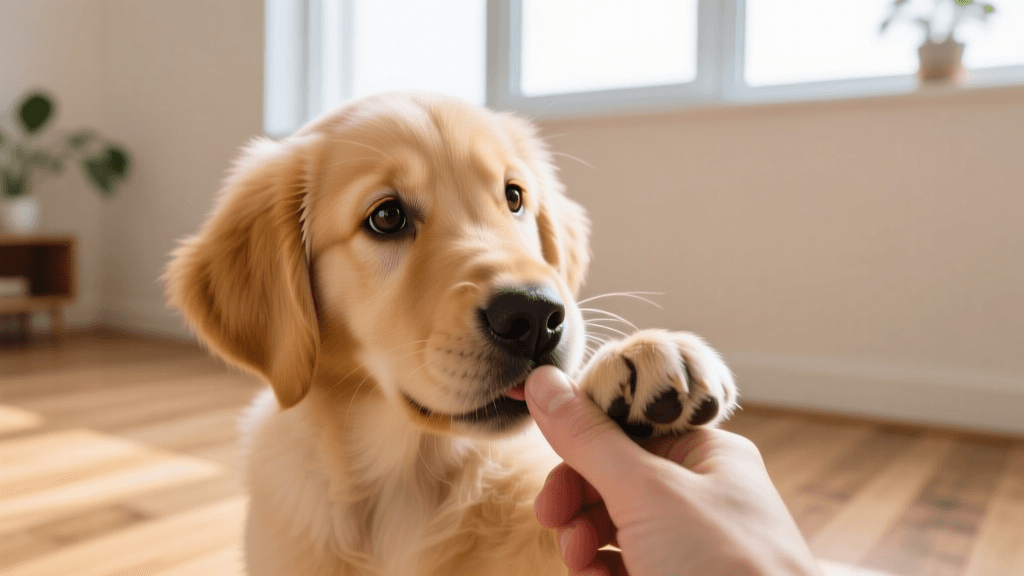
- Cookie Stretches: Using a treat to guide a puppy's nose to their toes, up to the ceiling, and side-to-side while standing on a stable surface improves spinal flexibility and weight-shifting capabilities.
Environmental Modifications for the Growing Puppy
Treating juvenile OA extends beyond the veterinary clinic and into your living room. Puppies with early joint issues require an environment that minimizes accidental trauma. In 2026, canine interior design for large-breed puppies heavily features interlocking foam mats or area rugs over slick tile and hardwood floors to prevent splaying. Furthermore, providing orthopedic memory foam beds ensures that the puppy's joints are not subjected to hard pressure points while sleeping, which can exacerbate morning stiffness. Ramps should be introduced early for accessing couches or vehicles, training the puppy to avoid jumping before the habit is ingrained.
Conclusion
While a diagnosis of joint dysplasia or early-onset osteoarthritis in a puppy can be frightening, the veterinary advancements available in 2026 offer incredible hope. By combining early PennHIP diagnostics, precise nutritional management, targeted supplements like Adequan, and controlled physical rehabilitation, you can significantly alter the course of the disease. Proactive puppy joint care ensures that your dog can transition from a vulnerable adolescent into a strong, active, and pain-free adult.
anouk-beaumont
All our authors care for dogs every day — read more of their work on the authors page.