2026 Guide to Canine Cooperative Care and Trust Building
Learn how cooperative care chin rest training reduces vet anxiety and builds deep trust with your dog in 2026. Step-by-step husbandry guide.
The Evolution of Canine Husbandry in 2026
As we navigate through 2026, the veterinary and animal behavior communities have overwhelmingly shifted away from traditional, force-based restraint methods. Today, the gold standard for canine health and wellbeing is cooperative care—a training philosophy that empowers dogs to voluntarily participate in their own medical and grooming procedures. By replacing physical restraint with consent-based communication, owners and veterinary professionals are drastically reducing canine cortisol levels and preventing the long-term behavioral trauma historically associated with vet visits.
According to the latest guidelines championed by Fear Free Pets, allowing a dog to 'opt-in' to handling not only makes procedures safer for the humans involved but also profoundly deepens the human-animal bond. When your dog learns that they have a voice and that their boundaries will be respected, the trust they place in you becomes unshakable. This guide will walk you through the foundational cooperative care techniques that are revolutionizing canine wellness in 2026.
The Neurobiology of Trust and Bonding
Why does cooperative care build such a strong relationship? The answer lies in canine neurobiology. When a dog is forcibly held down for a nail trim or blood draw, their amygdala triggers a fight-or-flight response, flooding their system with adrenaline and cortisol. This state of panic inhibits learning and damages the dog's association with their handler.
Conversely, when a dog is trained to offer a behavior—such as resting their chin on a mat or targeting a stick—and is rewarded for their participation, their brain releases dopamine and oxytocin. Oxytocin, often called the 'bonding hormone,' is released in both the dog and the human during these positive, cooperative interactions. By turning a stressful health necessity into a rewarding game of communication, you are literally wiring your dog's brain to associate you with safety, predictability, and joy.
Essential 2026 Gear for Cooperative Care
Before beginning your training journey, it is important to gather the right tools. The market for force-free training equipment has expanded significantly, offering ergonomic and highly effective options for husbandry training.
- Target Sticks with Collapsible Tips: A rigid target stick with a distinct, brightly colored ball on the end is crucial for guiding your dog into position without using your hands, which can trigger handling sensitivity.
- LickiMat Soother Pro (2026 Edition): Made from veterinary-grade, dishwasher-safe silicone, these mats are perfect for spreading high-value treats like bone broth paste or peanut butter. Licking is a self-soothing behavior that naturally lowers a dog's heart rate.
- Magnetic Treat Pouches: Quick access to rewards is vital. Magnetic closures allow you to retrieve treats in a fraction of a second, ensuring precise timing when marking desired behaviors.
- Non-Slip Husbandry Mats: A designated, textured silicone mat signals to your dog that it is time for a training session, providing physical stability and psychological predictability.
Core Skill 1: Teaching the Stationary Chin Rest
The chin rest is arguably the most versatile cooperative care behavior. It is used for eye exams, ear cleaning, tooth brushing, and administering oral medications. The goal is for the dog to voluntarily rest their chin on a designated surface (or your hand) and remain still until they hear a release cue.
Step-by-Step Chin Rest Protocol
- Capture the Movement: Sit with your dog in a quiet room. Hold a LickiMat or your flat palm at your dog's chest level. The moment your dog lowers their head to investigate and their chin makes contact with the surface, use a marker word like 'Yes!' and deliver a high-value treat.
- Build Duration: Gradually delay your marker word. Wait for one second of contact, then two, then five. If your dog lifts their head before you mark the behavior, simply reset and wait for them to try again. Never physically push their head down.
- Add the Cue: Once your dog is reliably offering the chin rest for 5-10 seconds, introduce a verbal cue such as 'Rest' or 'Chin' just before they perform the action.
- Introduce Handling: With your dog's chin resting on the mat, gently touch their shoulder for one second, mark, and reward. Slowly progress to touching their ears, lifting their lips, and eventually simulating a veterinary exam, always marking and rewarding for continued stillness.
- The Opt-Out Rule: If your dog lifts their head and walks away, respect their choice. This 'opt-out' is the cornerstone of consent-based training. Take a short break, lower the difficulty of the next repetition, and rebuild their confidence.
Core Skill 2: Voluntary Paw Targeting
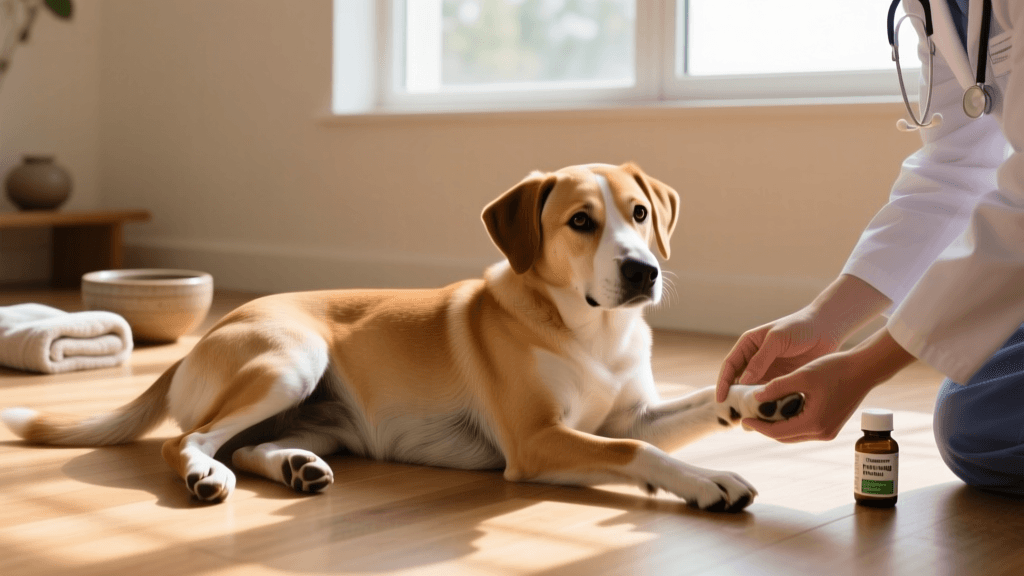
Nail trims are a notorious source of anxiety for dogs and owners alike. Voluntary paw targeting teaches the dog to place their paw into your hand or onto a grooming platform on their own terms, eliminating the need for stressful restraint.
Begin by presenting your open palm near the ground. Mark and reward any movement toward your hand. Progress to marking only when a single paw touches your palm. Once the behavior is fluent, you can gently cradle the paw, apply light pressure to the nail bed, and eventually introduce the sound of the nail clippers or Dremel tool. Because the dog is actively choosing to keep their paw in your hand, the physiological stress response is virtually eliminated.
Core Skill 3: Muzzle and Face Conditioning
Even the friendliest dogs may require a muzzle in emergency medical situations or when experiencing severe pain. In 2026, muzzle conditioning is viewed as a vital component of responsible ownership and proactive health care. Using a basket-style muzzle that allows for full panting and treat delivery, smear the inside with a high-value paste. Allow the dog to voluntarily push their snout into the basket to reach the food. Over several weeks, gradually introduce the neck straps, ensuring the dog remains relaxed and willing to participate at every stage.
Cooperative Care Progression Timeline
Every dog learns at their own pace, but understanding the general timeline can help you set realistic expectations and avoid rushing the process. Below is a standard progression framework for a dog with mild to moderate handling sensitivity.
| Training Phase | Focus Area | Estimated Duration | Success Milestone |
|---|---|---|---|
| Phase 1: Foundation | Targeting and Mat Work | 2 - 4 Weeks | Dog reliably targets stick and mat for 10 seconds. |
| Phase 2: Introduction | Chin Rest and Paw Holds | 3 - 6 Weeks | Dog accepts 5 seconds of gentle handling while resting. |
| Phase 3: Desensitization | Tool Introduction (Clippers, Stethoscope) | 4 - 8 Weeks | Dog remains relaxed when tools are touched to their body. |
| Phase 4: Simulation | Mock Vet Exams and Grooming | Ongoing | Dog voluntarily participates in full 5-minute mock exams. |
Reading Canine Body Language and Consent
Effective bonding requires fluent communication. You must become an expert in reading your dog's subtle stress signals. According to resources provided by the ASPCA, dogs communicate discomfort long before they resort to growling or snapping. Learning to recognize 'calming signals' and early signs of stress is critical for maintaining trust.
Watch for the following indicators that your dog may need a break or a lower level of difficulty:
- Lip Licking and Yawning: When not related to food or sleep, these are classic displacement behaviors indicating internal conflict or mild stress.
- Whale Eye: Showing the whites of the eyes while the head is turned away is a clear sign of anxiety.
- Muscle Tension: A sudden freezing of the body, tight facial muscles, or a stiff tail base.
- Avoidance: Leaning away, breaking eye contact, or actively trying to leave the training area.
If you observe any of these signals, immediately stop the procedure, reward the dog for communicating their boundary, and adjust your training plan. Pushing a dog past their threshold destroys the trust you have worked so hard to build.
Integrating Cooperative Care into Daily Life
Cooperative care should not be reserved solely for the veterinary clinic. Integrate these skills into your daily routine to maintain fluency and keep the bond strong. Practice the chin rest while waiting for your morning coffee to brew. Ask for a paw target while watching television. By weaving these behaviors into the fabric of your everyday life, you normalize handling and ensure your dog is always prepared for unexpected health needs.
Furthermore, consider pairing your home training with professional support. Many modern veterinary clinics now offer 'Happy Visits'—short, non-medical appointments where your dog simply visits the clinic, practices their cooperative care skills on the exam table, receives high-value treats, and goes home. The Humane Society highly recommends these positive exposure sessions to prevent the development of clinical phobias.
Conclusion
The shift toward cooperative care represents one of the most significant advancements in canine health and wellbeing in recent history. By embracing consent-based training in 2026, you are doing far more than making vet visits easier; you are actively participating in a profound relationship-building exercise. When you give your dog the power of choice, you earn their absolute trust. Start with the chin rest, respect their boundaries, and watch as your anxious dog transforms into a confident, willing partner in their own healthcare journey.
marcus-aldridge
All our authors care for dogs every day — read more of their work on the authors page.