Top Dog Cameras for Separation Anxiety 2026: Furbo vs Petcube
Discover how to ease your dog's separation anxiety in 2026 using the Furbo 360 and Petcube cameras alongside a proven departure desensitization protocol.
Understanding Isolation Distress vs. True Separation Anxiety
As hybrid work models continue to evolve in 2026, many dogs are facing unpredictable schedules that leave them home alone for varying hours. Before investing in technology or training, it is crucial to understand the psychology behind your dog's distress. Canine behaviorists generally divide alone-time distress into two categories: isolation distress and true separation anxiety.
Isolation distress is the fear of being left alone, regardless of who the dog is with. A dog with isolation distress will typically settle down if left with a pet sitter, a dog walker, or even another household pet. True separation anxiety, however, is a hyper-attachment to one specific person. According to the ASPCA, dogs with true separation anxiety will exhibit panic behaviors—such as destructive scratching at door frames, inappropriate elimination, and relentless vocalization—even if other humans or animals are present in the home, simply because their primary attachment figure is absent.
Understanding this distinction is vital because the behavioral modification protocols and technological interventions required for each differ slightly. While isolation distress can often be managed with environmental enrichment and gradual desensitization, true separation anxiety frequently requires a multi-modal approach that includes veterinary intervention.
Reading Subtle Stress Signals on Camera
One of the greatest advantages of using smart pet cameras in 2026 is the ability to observe your dog's body language in real-time while you are away. Many owners mistakenly believe their dog is 'fine' until the neighbors complain about barking. However, canine communication is subtle, and panic is usually preceded by micro-expressions of anxiety.
When monitoring your dog via a smart camera, look for these early indicators of stress before the panic threshold is crossed:
- Pacing and Inability to Settle: Moving from room to room without a clear purpose or lying down and immediately standing back up.
- Contextual Yawning and Lip Licking: Yawning when not tired or repeatedly licking their lips and nose are classic calming signals indicating internal conflict or stress.
- Panting: Heavy, rapid panting in a climate-controlled environment is a physiological response to a spike in cortisol and adrenaline.
- Whale Eye: Showing the whites of the eyes while keeping the head pointed toward the door or window.
- Hyper-Vigilance: Staring fixedly at the exit point, ears pinned forward, completely ignoring high-value treats or puzzle toys.
By identifying these signals early through your camera feed, you can intervene with a treat toss or an audio cue before your dog escalates into a full-blown panic loop.
Hardware Showdown: Furbo 360 vs. Petcube Bites 2 Lite
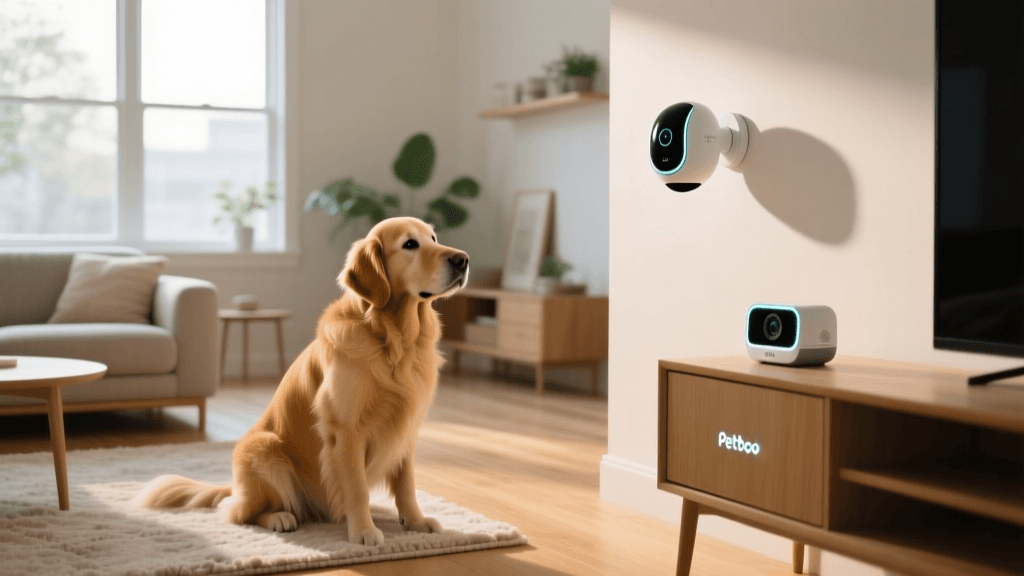
To effectively implement a departure desensitization protocol, you need a camera with two-way audio, high-definition video, and a reliable treat-tossing mechanism. In 2026, the market is dominated by two top-tier contenders: the Furbo 360 and the Petcube Bites 2 Lite. Both offer AI-driven bark alerts and auto-soothing features, but their hardware approaches differ.
| Feature | Furbo 360 | Petcube Bites 2 Lite |
|---|---|---|
| Camera View | 360-degree auto-rotating pan | Fixed 160-degree wide-angle |
| Treat Capacity | Holds approx. 100 treats | Holds approx. 120 treats |
| Video Resolution | 1080p HD with night vision | 1080p HD with night vision |
| AI Alerts | Barking, crying, vomiting, person | Barking, person, pet detection |
| Approx. 2026 Retail Price | $219.00 | $179.00 |
| Cloud Subscription | Furbo Care ($6.99/mo) | Petcube Care ($5.99/mo) |
The Furbo 360 is ideal for dogs who pace or move between rooms, as the motorized base follows their movement, ensuring you never lose sight of their body language. The Petcube Bites 2 Lite is a cost-effective alternative for dogs who tend to station themselves near the front door or in a specific crate area.
The 4-Week Graduated Departure Desensitization Protocol
Technology alone cannot cure anxiety; it is merely a tool to facilitate behavioral modification. The Humane Society emphasizes that desensitization and counterconditioning are the gold standards for treating alone-time distress. Below is a structured 4-week protocol utilizing your smart camera to monitor thresholds.
Week 1: Neutralizing Pre-Departure Cues
Dogs with separation anxiety often begin to panic before you even leave the house. They associate 'safe signals'—like putting on your shoes, grabbing your car keys, or picking up your coat—with the impending trauma of isolation. During Week 1, your goal is to strip these cues of their predictive value.
Put on your coat, pick up your keys, and then sit down on the couch and read a book. Do this 10 to 15 times a day. Your dog will initially show stress signals, which you can monitor via your camera if you step into another room. Over the week, you should see your dog's body language shift from hyper-vigilance to relaxation when these cues occur.
Week 2: Micro-Departures and Threshold Monitoring
Once your dog is relaxed by pre-departure cues, begin micro-departures. Step outside your front door, close it, and immediately open it and walk back in. You are gone for literally one second. Use your smart camera's mobile app to watch your dog's reaction the moment the door clicks shut.
If your dog remains relaxed, gradually increase the time outside to 5 seconds, then 10 seconds, then 30 seconds. If you see stress signals on the camera (pacing, panting, whining) at the 30-second mark, you have found your dog's threshold. Immediately return inside, but do not offer affection or apologies, as this can reinforce the anxiety. Step back to 15-second departures and proceed more slowly.
Week 3: Building Positive Associations via Treat Tossing
Now, integrate your Furbo or Petcube camera into the protocol. When you step outside for a successful micro-departure (e.g., a 2-minute absence where the dog remains calm), use the app to toss a high-value treat through the camera's dispenser. This builds a positive emotional response to the sound of the door closing and the physical state of being alone.
The treat toss should occur *before* the dog shows any stress signals. If your dog typically gets anxious at the 4-minute mark, toss a treat at minute 2, and another at minute 3. You are actively counterconditioning the experience of solitude.
Week 4: Extending Duration and Fading Prompts
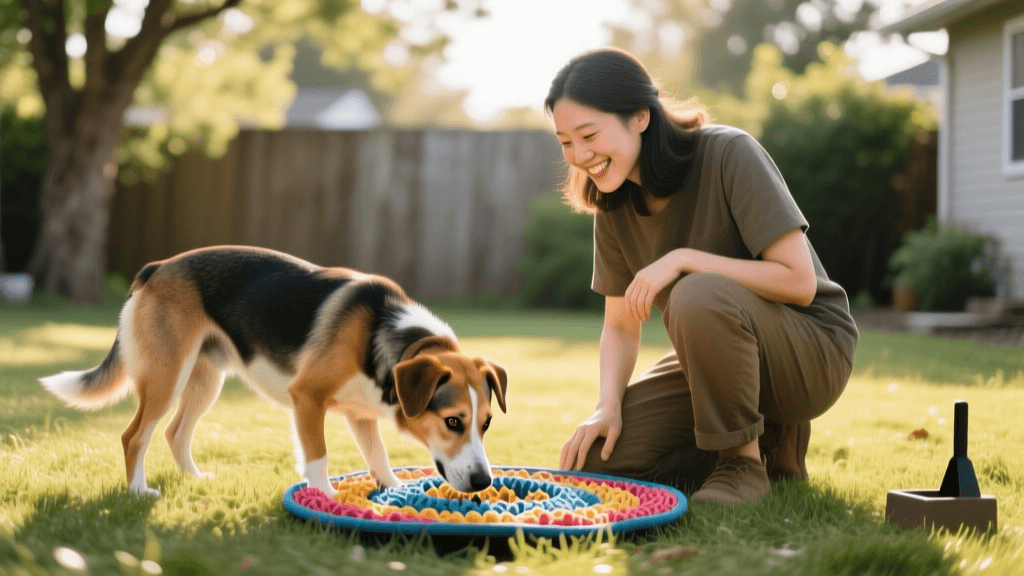
Begin extending your absences to 10, 15, and eventually 30 minutes. Introduce a long-lasting enrichment item, such as a frozen Kong or a lick mat, right before you leave. The camera allows you to verify that your dog is engaging with the enrichment rather than ignoring it in a state of fear. Slowly fade the frequency of the camera treat tosses so the dog learns to self-soothe without relying on a treat dropping from the ceiling every three minutes.
Supplementing Your Protocol with Calming Aids
While desensitization is the core of treatment, adjunctive therapies can help lower your dog's baseline arousal levels, making them more receptive to learning. In 2026, pheromone therapy remains highly recommended. The Adaptil Optimum diffuser releases synthetic dog-appeasing pheromones that mimic the comforting signals of a nursing mother. Plug this into the room where your dog spends the most time alone.
Additionally, nutraceuticals containing L-theanine, L-tryptophan, and milk-derived bioactive peptides (such as Solliquin or Zylkene) can be administered daily to support neurological calmness. Always consult your veterinarian before introducing new supplements, especially if your dog is already on prescription medications.
When to Consult a Veterinary Behaviorist
It is important to recognize the limits of behavioral modification alone. If your dog is injuring themselves by breaking teeth on window sills, tearing out their own nails on door frames, or if they are entirely unable to eat or engage with enrichment toys while you are gone, you must seek professional help. The American Kennel Club notes that severe separation anxiety is a medical condition rooted in neurochemical imbalances.
A Certified Veterinary Behaviorist (DACVB) or a veterinarian with a special interest in behavior can prescribe psychotropic medications such as Fluoxetine (an SSRI) or Trazodone (a serotonin antagonist and reuptake inhibitor). These medications do not 'sedate' the dog; rather, they normalize brain chemistry, reducing the intensity of the panic response so that the 4-week desensitization protocol can actually take effect. Combining smart camera technology, structured behavioral protocols, and appropriate veterinary care offers the highest success rate for helping your dog find peace when home alone.
aaron-whyte
All our authors care for dogs every day — read more of their work on the authors page.