Dog Leash Reactivity: Diagnosing Fear or Frustration
Discover if your dog's leash reactivity stems from fear or frustration. Learn diagnostic signs, actionable training solutions, and recommended gear.
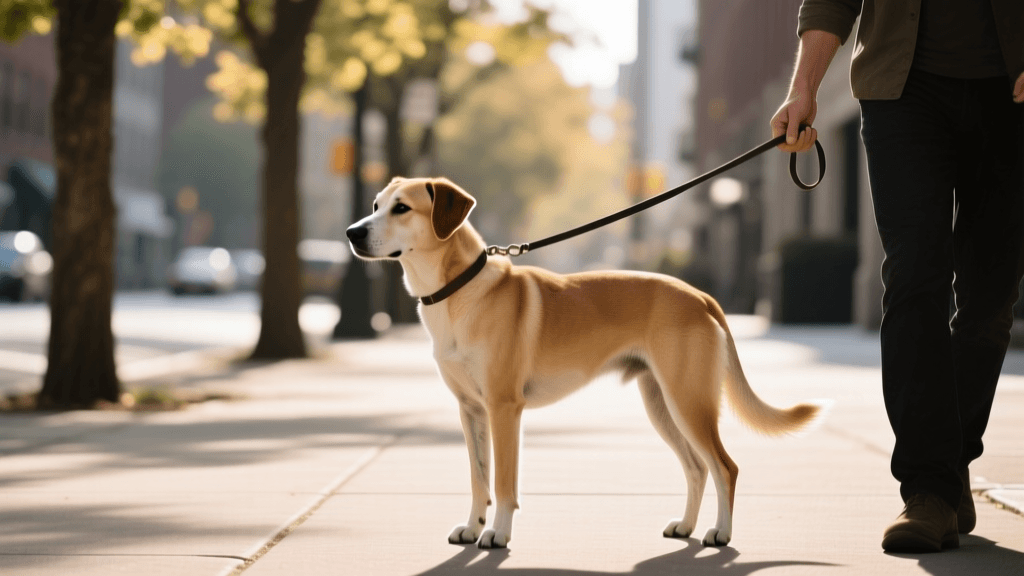
The Epidemic of Leash Reactivity
Leash reactivity is one of the most common, yet profoundly misunderstood, behavioral challenges in modern dog ownership. Characterized by barking, lunging, growling, or pulling when on a leash, this behavior can turn a simple neighborhood walk into a stressful ordeal. According to the American Kennel Club (AKC), reactivity is not a breed flaw or a sign of inherent 'badness'; rather, it is an emotional response to environmental stimuli. To effectively solve the problem, owners must first become amateur canine psychologists, diagnosing the root emotional driver behind the outburst. The two primary culprits are fear and frustration, and the treatment protocols for each are vastly different.
Decoding the Behavior: Fear vs. Frustration
Before implementing any training solution, you must accurately diagnose why your dog is reacting. Misdiagnosing a fearful dog as merely frustrated can lead to flooding (forcing the dog to face its fears without adequate coping mechanisms), which will severely worsen the behavior. Conversely, treating a frustrated, overly social dog with fear-based counter-conditioning may fail to address their underlying lack of impulse control.
Fear-Based Reactivity
A fear-reactive dog is essentially saying, 'I am scared, and I want that trigger to go away.' The leash acts as a trap. In an off-leash environment, a fearful dog's primary instinct is flight—running away from the perceived threat. When tethered, the flight option is removed, leaving the dog with only one defense mechanism: fight. They lunge and bark to create distance between themselves and the scary stimulus (which could be other dogs, strangers, or even noisy machinery).
Frustration-Based Reactivity (Barrier Frustration)
Frustration-based reactivity, often called barrier frustration, occurs when a dog is highly social or highly driven but is physically prevented from reaching their goal. The leash acts as a barrier. These dogs often exhibit excellent off-leash manners and play beautifully with other dogs at the dog park. However, the moment the leash clicks on, the physical restriction triggers a tantrum-like response. They are not saying 'Go away'; they are shouting, 'Let me go say hello!'
Diagnostic Comparison Chart
Use the following table to observe your dog's body language and contextual clues to determine the root cause of their reactivity.
| Behavioral Marker | Fear-Based Reactivity | Frustration-Based Reactivity |
|---|---|---|
| Primary Motivation | Increase distance from trigger | Decrease distance to trigger |
| Off-Leash Behavior | Avoidant, submissive, or aggressive | Social, playful, and appropriate |
| Body Posture | Weight shifted backward, crouching | Weight shifted forward, straining |
| Tail Carriage | Tucked, stiff, or low and slow wag | High, stiff, or rapid helicoptering |
| Vocalization Tone | Low-pitched growls, sharp barks | High-pitched whines, excited barks |
| Post-Reaction Recovery | Slow to calm down, remains vigilant | Calms quickly once the trigger is gone |
Actionable Solutions for Fear-Based Reactivity
If your diagnosis points to fear, your primary goal is to change the dog's emotional response to the trigger from 'scary' to 'predictor of good things.' This requires patience, high-value rewards, and strict environmental management.
1. Identify and Respect the Threshold
A dog's 'threshold' is the distance at which they notice a trigger but do not react. For some dogs, this is 10 feet; for others, it is 100 feet. Training must only occur under the threshold. If your dog is barking and lunging, they are over threshold, and their brain is no longer capable of learning. Find your dog's specific distance and start your training there.
2. Desensitization and Counter-Conditioning (DS/CC)
The most effective protocol for fear is the 'Look at That' (LAT) game or Open Bar/Closed Bar method. When the trigger appears at a sub-threshold distance, immediately begin feeding high-value treats (e.g., boiled chicken, freeze-dried liver, or Zuke's Mini Naturals). When the trigger disappears, the treats stop. Over time, the dog learns that the presence of the scary thing predicts a payday. The Humane Society of the United States emphasizes that forcing a fearful dog to 'face their fears' without this positive association will only deepen the trauma.
Actionable Solutions for Frustration-Based Reactivity
If your dog is frustrated, the goal shifts from changing an emotional fear response to teaching impulse control and emotional regulation.
1. Impulse Control and the Engage-Disengage Game
Frustrated dogs need to learn that calm behavior, not pulling, earns them access to what they want. Practice the 'Engage-Disengage' game. When your dog looks at a trigger (Engage), mark the behavior with a clicker or a verbal 'Yes!' and reward them when they turn back to you (Disengage). This teaches the dog that looking at a trigger is simply a cue to check in with the handler. Additionally, practice emergency U-turns in your living room so the muscle memory is ingrained before you take it to the streets.
2. Decompression and Alternative Outlets
A frustrated dog often has pent-up physical and mental energy. Incorporate 'Sniffaris'—long-line walks in nature where the dog is allowed to sniff and explore at their own pace. Sniffing lowers a dog's heart rate and provides immense mental enrichment. Additionally, utilize a flirt pole (a wand toy with a lure, typically costing $20-$30) in a fenced yard to satisfy their prey drive and physical exertion needs in a controlled, rule-based environment.
Essential Gear for Reactive Dogs
The right equipment will not train your dog, but it will keep you safe and give you the mechanical advantage needed to execute your training plan.
- Harness: Avoid standard back-clip harnesses, which encourage pulling via the opposition reflex. Invest in a front-clip harness like the 2 Hounds Design Freedom No-Pull Harness ($35-$45). The front martingale loop gently redirects the dog's momentum toward you when they lunge.
- Leash: Ditch the retractable leash immediately. Retractable leashes teach dogs that pulling gets them more freedom, and the thin cords can cause severe friction burns. Use a sturdy 6-foot leather or biothane leash ($25-$40). Biothane is highly recommended as it is waterproof, easy to clean, and provides an excellent grip even if your hands are full of treats.
- Treat Pouch: A dedicated treat pouch with a magnetic closure (like the Dog Treat Training Pouch by Paws & Pals, ~$15) ensures you can deliver rewards within the critical one-second window required for classical conditioning.
When to Call a Professional
While many mild cases of reactivity can be managed with dedicated owner training, severe cases involving redirected aggression, bite histories, or extreme owner anxiety require professional intervention. Look for certified professionals who utilize force-free, science-based methods. The International Association of Animal Behavior Consultants (IAABC) and the Certification Council for Professional Dog Trainers (CCPDT) are the gold standards for behavioral credentials. Expect to invest between $120 and $200 per session for a certified behavior consultant. This investment not only saves your dog's quality of life but also prevents potential liability issues associated with dog bites.
Understanding whether your dog is acting out of fear or frustration is the master key to unlocking a peaceful walking routine. By accurately diagnosing the root cause, managing the environment, and applying targeted, empathetic training solutions, you can transform your reactive dog into a confident, relaxed companion.
marcus-aldridge
All our authors care for dogs every day — read more of their work on the authors page.