2026 Puppy Separation Anxiety: Alone-Time Training Guide
Master puppy separation anxiety with our 2026 alone-time training guide. Learn desensitization protocols, smart camera tips, and interactive puzzle toys.
Understanding Puppy Separation Anxiety in 2026
As we navigate the fully normalized hybrid work schedules of 2026, puppy separation anxiety has become one of the most pressing challenges for new dog owners. Puppies born in late 2025 and early 2026 are growing up in households where humans are frequently transitioning between home offices and corporate workplaces. This inconsistent routine can leave young dogs deeply confused and distressed when left alone. Separation anxiety is not merely a case of a puppy missing its owner; it is a profound panic response triggered by isolation. According to the American Society for the Prevention of Cruelty to Animals (ASPCA), dogs with separation anxiety exhibit extreme stress behaviors because they lack the coping mechanisms to self-soothe when their primary attachment figure is absent.
Recognizing the Signs of Alone-Time Distress
Before implementing a training protocol, it is crucial to differentiate between normal puppy boredom and clinical separation anxiety. A bored puppy might chew a shoe or have a potty accident. An anxious puppy, however, will exhibit signs of sheer panic. Common indicators include:
- Vocalization: Continuous, high-pitched whining, howling, or barking that begins the moment you leave and does not subside.
- Destructive Escape Attempts: Scratching at door frames, digging at carpets near exits, or chewing on window sills.
- Pacing and Panting: Inability to settle down, often accompanied by excessive drooling or stress panting.
- Inappropriate Elimination: Urinating or defecating indoors despite being fully potty trained, occurring exclusively when the puppy is isolated.
If your puppy displays these severe symptoms, the American Kennel Club (AKC) recommends avoiding punishment entirely, as this only exacerbates the underlying fear and panic.
The 2026 Tech Stack: Smart Cameras and Interactive Dispensers
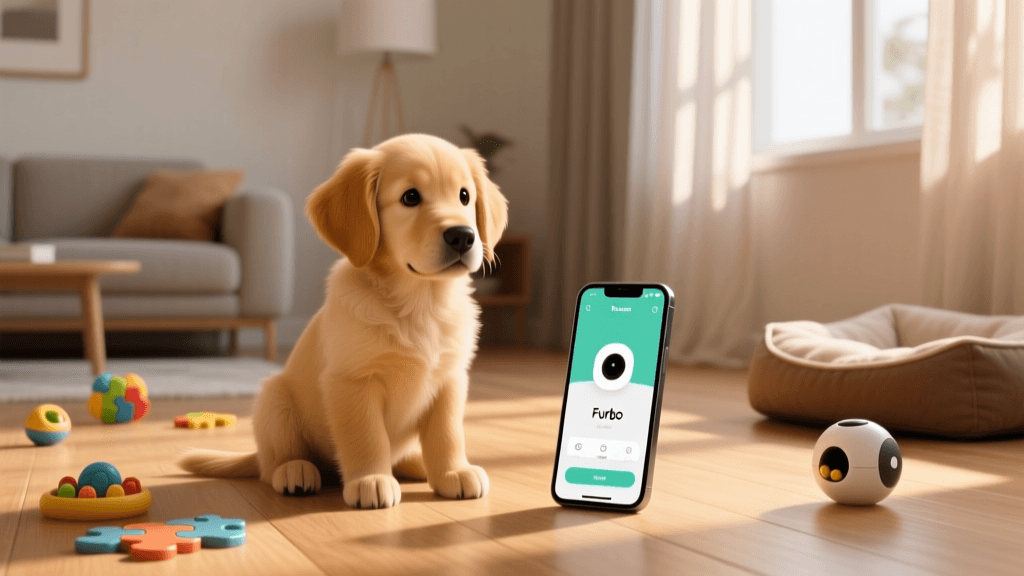
Modern puppy training in 2026 heavily relies on smart home technology to monitor and manage alone time. The Furbo 360 Dog Camera has become an industry standard for owners tackling separation anxiety. Its 360-degree rotating lens and automatic treat-tossing features allow you to interrupt a puppy's anxiety spiral remotely before it escalates into destructive behavior. Pairing a smart camera with high-quality enrichment toys creates a positive association with your departure. Instead of viewing your exit as the start of isolation, the puppy learns that your departure signals the arrival of high-value rewards and engaging puzzles.
The 4-Week Puppy Alone-Time Desensitization Protocol
Desensitization is the process of gradually exposing your puppy to the triggers of your departure without causing a stress response. This protocol requires patience and consistency. Do not rush the timeline; if your puppy shows signs of stress, revert to the previous successful step.
Week 1: Desensitizing Departure Cues
Puppies are highly observant and quickly learn the sequence of events that lead to you leaving. Picking up your keys, putting on your coat, and lacing up your shoes are all triggers. During Week 1, perform these actions without actually leaving. Pick up your keys, then sit down on the couch and watch television. Put on your shoes, then prepare a meal in the kitchen. By repeatedly exposing your puppy to these cues without the subsequent departure, you strip them of their predictive power, lowering your puppy's baseline anxiety.
Week 2: The Door Handle Method
Once your puppy no longer reacts to your departure cues, move to the door. Touch the doorknob, then walk away. Open the door one inch, close it, and turn around. Open the door fully, step one foot out, step back in, and close it. The goal is to keep your puppy completely relaxed. If they whine or pace, you are moving too fast. Keep sessions short, aiming for three to five minutes of practice, three times a day.
Week 3: Micro-Absences and Smart Monitoring
This is where your 2026 smart camera setup becomes invaluable. Step outside the door and close it. Wait for exactly three seconds, then re-enter. Gradually increase the time: five seconds, ten seconds, thirty seconds, and eventually one minute. Use your Furbo or Petcube camera to monitor your puppy's body language on your smartphone. If the puppy remains calm or engages with a toy, use the camera's treat-tossing feature to reward them remotely. If they begin to pace or whine, wait for a brief moment of silence before re-entering, so you do not accidentally reward the anxious behavior.
Week 4: Extending Duration with Enrichment Toys
Now that your puppy can handle one-minute absences, it is time to introduce long-lasting enrichment toys to build duration. Before you leave, provide a frozen puzzle toy. Step outside and close the door. Leave for five minutes, then return quietly. Over the course of the week, extend your absences to ten, fifteen, and eventually thirty minutes. The frozen toy serves as a distraction and a soothing mechanism, as licking releases endorphins that naturally calm the canine nervous system.
Comparison Table: Best 2026 Alone-Time Tools for Puppies
Investing in the right tools can dramatically accelerate your puppy's progress. Below is a comparison of the top-rated smart cameras and enrichment toys for managing alone time in 2026.
| Product Name | Type | 2026 Est. Price | Best Feature for Anxiety |
|---|---|---|---|
| Furbo 360 Dog Camera | Smart Camera | $249.00 | 360-degree auto-tracking and remote treat tossing to interrupt anxiety spirals. |
| Eufy Pet Dog Camera D605 | Smart Camera | $149.00 | Dual-band Wi-Fi reliability and dual treat dispensing for high-value rewards. |
| Kong Classic (Red) | Enrichment Toy | $18.00 | Unpredictable bounce and deep cavity for freezing high-value pastes and kibble. |
| West Paw Toppl | Enrichment Toy | $25.00 | Interlocking design allows you to create complex, multi-layered frozen puzzles. |
| Outward Hound Dog Brick | Puzzle Toy | $16.00 | Requires cognitive engagement (sliding and lifting compartments) to tire the brain. |
High-Value Frozen Recipes for Alone Time
To keep your puppy engaged for the full duration of your micro-absences, you need recipes that take time to consume. Here are two veterinarian-approved frozen enrichment recipes perfect for puppies in 2026:
- The Pumpkin & Kibble Soother: Mix half a cup of your puppy's regular kibble with two tablespoons of plain, unsweetened pumpkin puree (ensure it contains no xylitol or added spices). Add a splash of low-sodium chicken broth. Stuff the mixture into a Kong Classic and freeze for at least four hours. The pumpkin aids digestion, which can sometimes be upset by anxiety.
- The Peanut Butter & Yogurt Toppl: Smear a thin layer of dog-safe peanut butter (xylitol-free) on the inside walls of the West Paw Toppl. Fill the center with plain, unsweetened Greek yogurt and a few blueberries. Freeze overnight. The act of licking the frozen yogurt provides immense psychological comfort to an anxious puppy.
Common Mistakes Owners Make
Even with the best intentions, owners often inadvertently reinforce separation anxiety. Avoid these common pitfalls:
- Making a Big Deal Out of Departures and Arrivals: Saying a long, emotional goodbye or greeting your puppy with high-pitched excitement upon returning only heightens the contrast between your presence and absence. Keep departures and arrivals incredibly boring and low-key.
- Using the Crate as Punishment: If your puppy associates their crate with isolation and fear, they will panic when confined. The crate must be a sanctuary built through positive reinforcement, never a timeout zone.
- Rushing the Timeline: Jumping from a one-minute absence to a two-hour absence will trigger a panic response and set your training back weeks. Incremental progression is non-negotiable.
When to Seek Professional Help
If you have diligently followed this desensitization protocol for four weeks and your puppy continues to exhibit severe signs of distress, such as self-injury from escape attempts or complete refusal to eat high-value treats when alone, it is time to consult a professional. A certified applied animal behaviorist (CAAB) or a board-certified veterinary behaviorist can evaluate your puppy and discuss whether short-term anti-anxiety medication is appropriate to lower their arousal threshold enough for training to take effect. Remember, addressing puppy separation anxiety early is the most effective way to ensure a confident, well-adjusted adult dog.
jonas-cole
All our authors care for dogs every day — read more of their work on the authors page.