Stop Puppy Separation Anxiety: 2026 Graduated Absence Guide
Discover the 2026 graduated absence protocol using Furbo cameras and Adaptil pheromones to cure puppy separation anxiety and build alone-time confidence.
Understanding Puppy Separation Anxiety in 2026
As we navigate the hybrid work landscape of 2026, puppy owners are increasingly facing the challenge of leaving their young dogs at home alone. While remote work provided a constant companion presence for puppies over the last few years, the modern shift toward flexible office schedules has triggered a noticeable rise in canine separation anxiety. Puppies are not born knowing how to be alone; it is a learned skill that requires deliberate, patient training. Separation anxiety is not merely a phase of 'missing you'—it is a profound state of panic that can lead to destructive behavior, excessive vocalization, and even self-injury. According to the ASPCA's comprehensive guide on separation anxiety, true anxiety manifests as a dog exhibiting distress behaviors exclusively when separated from their primary attachment figure. To combat this, veterinary behaviorists in 2026 highly recommend the Graduated Absence Protocol, a systematic desensitization method that pairs controlled departures with smart home technology and synthetic pheromones.
The Science Behind the Graduated Absence Protocol
The Graduated Absence Protocol is rooted in classical counterconditioning and systematic desensitization. The goal is to change your puppy's emotional response to your departure from one of panic to one of calm neutrality, or even positive anticipation. By breaking down the act of leaving into micro-steps, you keep the puppy under their 'stress threshold.' If a puppy begins to pant, pace, or whine, they have crossed that threshold, and the training step must be scaled back. This method requires meticulous observation, which is where modern smart pet cameras become an indispensable tool for the 2026 puppy owner. You cannot accurately gauge your puppy's stress levels if you are already out the door; you need real-time, high-definition feedback to know exactly when to return and reward calm behavior.
Essential Gear: Furbo 360 and Adaptil Junior
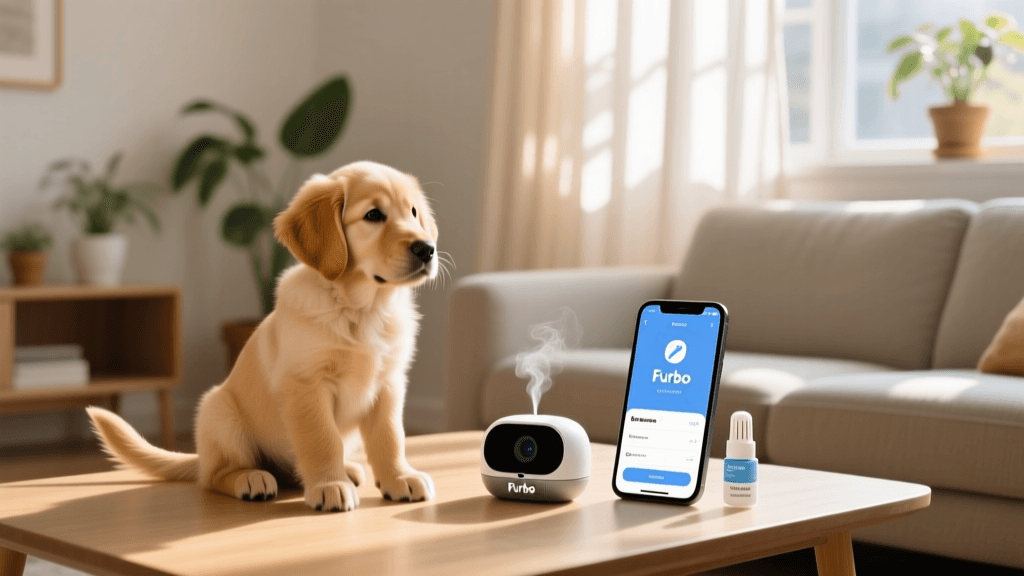
To successfully execute this protocol, you need the right environmental and technological support. Relying on guesswork will only prolong the anxiety. The two cornerstones of a modern separation anxiety toolkit are the Furbo 360 Dog Camera and Adaptil Junior pheromone diffusers.
Why the Furbo 360 Dog Camera?
The Furbo 360 has become the gold standard for separation anxiety training due to its rotating lens, 1080p HD video, and advanced AI bark and anxiety detection. The 2026 firmware updates have vastly improved its ability to distinguish between a playful bark and a distress howl. More importantly, the two-way audio and treat-tossing features allow you to reward your puppy for calm behavior while you are physically out of the room. By tossing a high-value treat through the app the moment your puppy settles onto their mat, you are actively reinforcing independence.
The Role of Adaptil Junior Pheromones
Environmental management is just as critical as active training. Adaptil Junior is a synthetic replica of the dog-appeasing pheromone (DAP) released by nursing mother dogs to comfort their puppies. Plugging an Adaptil Junior diffuser into the room where your puppy will be left alone creates a baseline of chemical calm. It does not sedate the dog; rather, it lowers their overall arousal level, making them more receptive to the graduated absence training. The Fear Free Pets behavioral guidelines frequently cite pheromone therapy as a vital adjunct to behavioral modification plans for young dogs.
Step-by-Step Graduated Absence Training Plan
Before beginning, ensure your puppy has been thoroughly exercised and has had the opportunity to eliminate. A tired puppy with an empty bladder is far more likely to rest. Set up your Furbo 360 on a counter or shelf where it has a full 360-degree view of the puppy's designated 'safe zone' (a playpen or puppy-proofed room). Plug in the Adaptil Junior diffuser at least 24 hours before starting the protocol to allow the pheromones to saturate the space.
Phase 1: Pre-Departure Cue Desensitization (Days 1-3)
Puppies are masters of associative learning. Long before you walk out the door, your puppy knows you are leaving based on pre-departure cues: picking up your keys, putting on your shoes, or grabbing your coat. If these cues trigger whining or pacing, you must desensitize them first.
- Day 1: Pick up your keys, then sit back down on the couch and watch TV. Do this 10 times throughout the day.
- Day 2: Put on your shoes and coat, then take them off and make a cup of coffee. Repeat until the puppy ignores these actions.
- Day 3: Walk to the front door, touch the handle, and walk back to the kitchen. Use the Furbo app to monitor your puppy. If they remain calm, toss a treat via the camera.
Phase 2: Micro-Departures (Days 4-7)
Once your puppy no longer reacts to pre-departure cues, you can begin actual absences. The key here is that the absences must be so short that the puppy does not have time to become anxious.
- Step 1: Step outside the door, close it, and immediately open it and step back inside (1 second). Reward calm behavior.
- Step 2: Step outside, wait 5 seconds, and return. Use the Furbo camera to watch their body language. Are they sitting? Are they pacing?
- Step 3: Gradually increase the time to 10 seconds, then 30 seconds, then 1 minute. If the puppy shows stress (lip licking, yawning, whining), you have moved too fast. Drop back to a shorter duration.
Phase 3: Extended Absences (Weeks 2-4)
As you push past the 5-minute mark, you can begin to introduce a long-lasting enrichment item, such as a frozen Kong filled with puppy-safe peanut butter and kibble. Give the Kong right before you leave. The act of licking and chewing releases endorphins that naturally soothe the puppy. Continue to use the Furbo 360 to check in, but avoid speaking through the two-way audio, as hearing your voice without seeing you can actually trigger frustration and anxiety in some dogs. Simply observe and toss a dry treat when they pause their chewing to look calmly at the camera.
Tracking Progress: Puppy Alone-Time Tolerance Chart
Keeping a structured log is essential for identifying patterns and ensuring you are progressing at a safe pace. Use the following 2026 tracking chart to guide your weekly milestones.
| Week | Target Absence Time | Furbo Treat Toss Interval | Adaptil Usage | Milestone Goal |
|---|---|---|---|---|
| Week 1 | 1 sec to 2 mins | Every 30 seconds of calm | Continuous Diffusion | Puppy ignores door closing |
| Week 2 | 2 mins to 15 mins | Every 2 minutes of calm | Continuous Diffusion | Puppy settles on mat with Kong |
| Week 3 | 15 mins to 45 mins | Every 5 minutes of calm | Continuous Diffusion | Puppy sleeps during absence |
| Week 4 | 45 mins to 2 hours | Randomized (1-3 times) | Continuous Diffusion | Confidence in extended solitude |
Common Mistakes to Avoid
Even with the best technology and intentions, owners frequently sabotage their own progress by making a few critical errors. The American Kennel Club's training protocols emphasize that consistency is paramount. First, never make a big fuss when leaving or returning home. Emotional greetings validate the puppy's belief that your departure was a major, stressful event. Keep your departures boring and your returns incredibly calm; ignore the puppy until all four paws are on the floor and they are entirely relaxed. Second, avoid using the Furbo's two-way audio to 'comfort' a crying puppy. If you speak to them while they are vocalizing, you are inadvertently reinforcing the crying. Only use the audio or treat toss to reward silence and relaxation. Finally, do not rush the timeline. Pushing a puppy from a 5-minute tolerance to a 2-hour tolerance in a single weekend is a recipe for a massive behavioral setback. If you must leave for a full workday before the puppy is ready, you must hire a pet sitter or use a doggy daycare to prevent them from practicing the anxious behavior.
When to Consult a Veterinary Behaviorist
While the Graduated Absence Protocol is highly effective for mild to moderate separation anxiety, some puppies suffer from severe panic disorders that require medical intervention. If your puppy is injuring themselves trying to escape their crate, breaking teeth on door frames, or exhibiting extreme autonomic responses like excessive drooling and loss of bowel control, stop the training immediately. In 2026, veterinary medicine offers excellent short-term anti-anxiety medications (such as trazodone or gabapentin) that can be used in conjunction with behavioral modification to help a severely panicked puppy's brain become receptive to learning. Always consult with a board-certified veterinary behaviorist or your primary veterinarian if your puppy's distress does not improve after two weeks of consistent, graduated training.
By combining the systematic desensitization of the Graduated Absence Protocol with the environmental support of Adaptil Junior and the real-time feedback of the Furbo 360, you can successfully guide your puppy toward a lifetime of confidence and independence. Alone time does not have to be scary; with patience and the right 2026 tools, it can become a peaceful, restful part of your puppy's daily routine.
jonas-cole
All our authors care for dogs every day — read more of their work on the authors page.