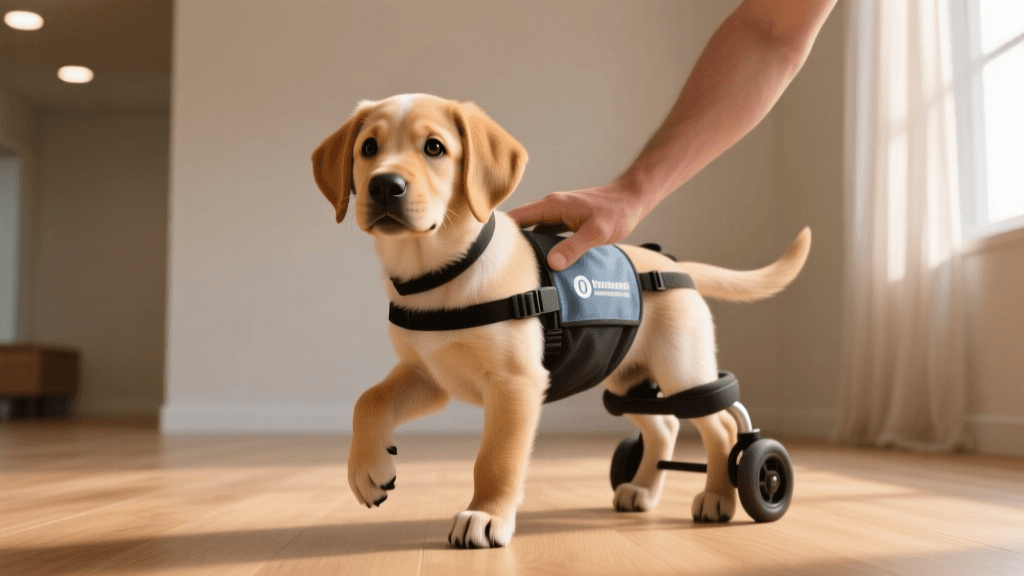
Mobility Service Dog Puppy Care 2026: Joint & Socialization Guide
Discover the 2026 guide to raising a mobility service dog puppy. Learn joint-safe conditioning, public access socialization, and early task foundations.
Raising a Future Mobility Service Dog: The 2026 Standard
Raising a puppy is a profound responsibility, but raising a future mobility service dog requires an extraordinary level of dedication, precision, and foresight. In 2026, the standards for service dog preparation have evolved significantly, integrating the latest veterinary sports medicine research with advanced behavioral science. Mobility service dogs—tasked with retrieving items, opening doors, and providing physical stability—must possess impeccable joint health, unshakable public neutrality, and a remarkably soft mouth. The first twelve months of a puppy's life lay the permanent foundation for their working career. This comprehensive guide explores the critical milestones of raising a mobility service dog puppy in 2026, focusing on joint-safe conditioning, specialized public access socialization, and early task-work preparation.
Early Joint Protection and Physical Conditioning
Large breed dogs, such as Labrador Retrievers, Golden Retrievers, and German Shepherds, are the most common choices for mobility work due to their size and strength. However, their size makes them highly susceptible to orthopedic issues like hip and elbow dysplasia. According to the American Kennel Club, managing a large breed puppy's growth rate and physical exertion during the first year is paramount to ensuring their growth plates close properly without microscopic fractures.
In 2026, canine physical therapists universally recommend strict adherence to the five-minute rule for structured leash walking. This rule dictates that a puppy should only engage in forced, structured walking for five minutes per month of age, twice a day. Free play on soft, natural surfaces like grass is encouraged, but repetitive high-impact activities must be strictly avoided to protect developing cartilage.
Furthermore, environmental management inside the home is critical. Slippery hardwood or tile floors can cause a puppy's legs to splay, leading to micro-tears in developing joint capsules. Investing in high-traction flooring solutions, such as the 2026 PawSafe Interlocking Foam Mats, provides the necessary grip for a growing puppy. When lifting a puppy into a vehicle or onto a grooming table, always use a supportive harness like the Ruffwear 2026 Web Master Harness to distribute weight evenly across the chest and abdomen, avoiding dangerous strain on the axillary or inguinal regions.
| Puppy Age | Max Structured Walk Time | Allowed Activities | Prohibited Activities |
|---|---|---|---|
| 3 Months | 15 Minutes | Sniffing on grass, mental enrichment | Stairs, jumping, slippery floors |
| 6 Months | 30 Minutes | Leash walking, shallow water wading | Agility jumps, fetching on hard surfaces |
| 9 Months | 45 Minutes | Hiking on soft trails, recall games | Running alongside bikes, repetitive fetching |
| 12 Months | 60 Minutes | Structured trotting, basic task pulling | Heavy weight pulling, high-impact jumping |
Public Access Socialization for Working Dogs
Socializing a future service dog differs vastly from socializing a household pet. While a pet dog is encouraged to greet strangers and interact with other dogs, a mobility service dog must learn strict environmental neutrality. The Assistance Dogs International (ADI) emphasizes that a working dog must remain focused on their handler, ignoring distractions, food drops, and approaching strangers while in public spaces.
During the critical socialization window between 8 and 16 weeks, expose your puppy to a wide variety of environments: busy grocery stores, public transit, hospitals, and crowded sidewalks. However, utilize the Bubble Technique. Teach your puppy that their personal space is a sanctuary. When strangers approach, reward the puppy heavily for maintaining eye contact with you rather than leaning in for pets.
Desensitization to auditory and visual stimuli is equally important. Mobility dogs frequently accompany handlers into environments with sudden, loud noises, such as dropping metal trays in cafeterias or the hiss of automatic bus doors. Use recorded soundtracks of urban environments, starting at a low volume and gradually increasing it while feeding high-value treats like freeze-dried beef liver. Introduce the working vest early, but keep sessions incredibly short to prevent vest burnout. The Chai's Choice 2026 Pro Service Dog Vest is highly recommended for its breathable mesh and clear patch placement, ensuring the puppy remains comfortable while learning that the vest signifies work mode.
Potty Training in Public and Work Environments
A mobility service dog must be able to eliminate on command and on various surfaces, as their handler may not always have access to a grassy lawn. Begin potty training on day one by establishing a strict feeding and watering schedule. Introduce a verbal cue, such as Go Potty or Hurry Up, the exact moment the puppy begins to eliminate.
Surface generalization is a critical 2026 training standard. Puppies naturally prefer to eliminate on the surface they were first trained on. To prevent future accidents when the handler is in an urban environment, intentionally take your puppy to gravel, concrete, mulch, and artificial turf during their potty breaks. Always carry a specialized cleanup kit, such as the 2026 Paws and Clean Portable Waste System, to ensure you leave public spaces immaculate, upholding the reputation of the service dog community.
Teething and Bite Inhibition for Task Work
Mobility dogs are frequently tasked with retrieving dropped items, such as car keys, smartphones, credit cards, and medication bottles. A hard mouth that punctures or scratches items is a disqualifying trait for service work. Therefore, bite inhibition and teething management during the first six months are absolutely critical.
When a puppy's deciduous teeth are erupting, they will chew relentlessly. Provide appropriate, high-durability outlets like the Kong Extreme 2026 Edition, stuffed with frozen bone broth. Never use your hands for rough wrestling games, as this teaches the puppy that human skin is an appropriate chew toy. If the puppy mouths your skin, immediately emit a high-pitched yelp and withdraw attention for ten seconds. This mimics littermate behavior and teaches the puppy to modulate their jaw pressure. Practice trading up games, offering a high-value treat in exchange for a toy, which builds the foundation for the Drop It command essential for item retrieval tasks.
Nutrition for Working Dog Development
Proper nutrition fuels the demanding cognitive and physical development of a working dog puppy. Overfeeding can lead to rapid skeletal growth, outpacing muscle and tendon development, which drastically increases the risk of orthopedic injuries. According to veterinary nutritionists, large breed puppies must be fed a diet specifically formulated to meet the AAFCO guidelines for large breed growth, which strictly limits calcium and caloric density.
In 2026, many top working dog programs utilize customized fresh-food diets or premium kibble brands like Purina Pro Plan Large Breed Puppy or Royal Canin Maxi Puppy. Measure food using a digital gram scale rather than a standard measuring cup to ensure precise caloric intake. Monitor the puppy's Body Condition Score weekly; you should be able to easily feel their ribs without pressing hard, and they should have a visible abdominal tuck when viewed from the side. Keeping a mobility service dog puppy lean during their first year is one of the most effective ways to ensure a long, pain-free working career.
Conclusion: Building a Lifelong Partnership
Raising a mobility service dog puppy is a marathon, not a sprint. By prioritizing joint-safe conditioning, enforcing strict public neutrality, and laying the groundwork for specialized task work, you are giving your puppy the best possible chance to succeed. The rigorous standards of 2026 ensure that when a mobility dog finally graduates and is paired with a handler, they are physically sound, mentally resilient, and fully prepared to change a life. Stay patient, remain consistent, and celebrate the small victories along the way.
aaron-whyte
All our authors care for dogs every day — read more of their work on the authors page.