Furbo 3 and Snuggle Puppy Alone Time Setup Guide 2026
Learn how to use the Furbo 3 camera and Snuggle Puppy to ease your new dog's separation anxiety and build a safe alone-time routine in 2026.
The Reality of Canine Separation Anxiety in 2026
Bringing a new dog home is one of life's greatest joys, but the reality of leaving them alone can quickly become a major source of stress for both owner and pet. As hybrid and remote work models continue to evolve in 2026, many new dog owners find themselves navigating the tricky transition of leaving their new companion at home while they run errands, attend in-office meetings, or simply need a few hours of uninterrupted time. According to the ASPCA, separation anxiety is one of the most common behavioral issues reported by dog owners, often manifesting as destructive chewing, excessive vocalization, and inappropriate elimination when the dog is left alone.
When getting a new dog, whether a young puppy or an adult rescue, establishing a positive association with alone time from day one is critical. Relying on outdated methods like simply 'letting them cry it out' can actually deepen the trauma and exacerbate clinical anxiety. Instead, modern canine behaviorists recommend a multi-sensory approach to creating a secure environment. In 2026, the most effective strategy combines biological comfort tools with smart home technology—specifically, the Snuggle Puppy and the Furbo 3 Dog Camera.
Why the Furbo 3 and Snuggle Puppy Combo Works
To successfully acclimate a new dog to being alone, you must address both their physiological need for comfort and their psychological need for security. Dogs are den animals and pack creatures; isolation triggers an innate survival panic. The Snuggle Puppy addresses the physiological and tactile cravings of a newly separated dog, while the Furbo 3 provides the owner with the ability to monitor, intervene, and reward calm behavior remotely. Together, they create a comprehensive safety net that prevents the escalation of isolation distress into full-blown separation anxiety.
Snuggle Puppy: The Biological Comfort Tool
The Snuggle Puppy is a specialized plush toy designed to mimic the physical sensations of a littermate or mother. It features a patented 'Real-Feel Heartbeat' that pulses rhythmically, alongside a reusable heat pack that raises the toy's temperature to match a dog's natural body heat. For newly adopted puppies or rescue dogs experiencing the shock of a new environment, this combination is incredibly soothing. In 2026, the Snuggle Puppy remains a staple in the toolkit of certified fear-free trainers because it effectively masks the silence of an empty house, providing a continuous, calming biological anchor.
When setting up your dog's alone-time zone, place the Snuggle Puppy in their crate or designated pen. Turn on the heartbeat and activate the heat pack about twenty minutes before you plan to leave. This allows the bed to warm up and gives your dog time to investigate and settle with the toy while you are still present, building a positive association before the actual departure.
Furbo 3 Dog Camera: Remote Monitoring and Intervention
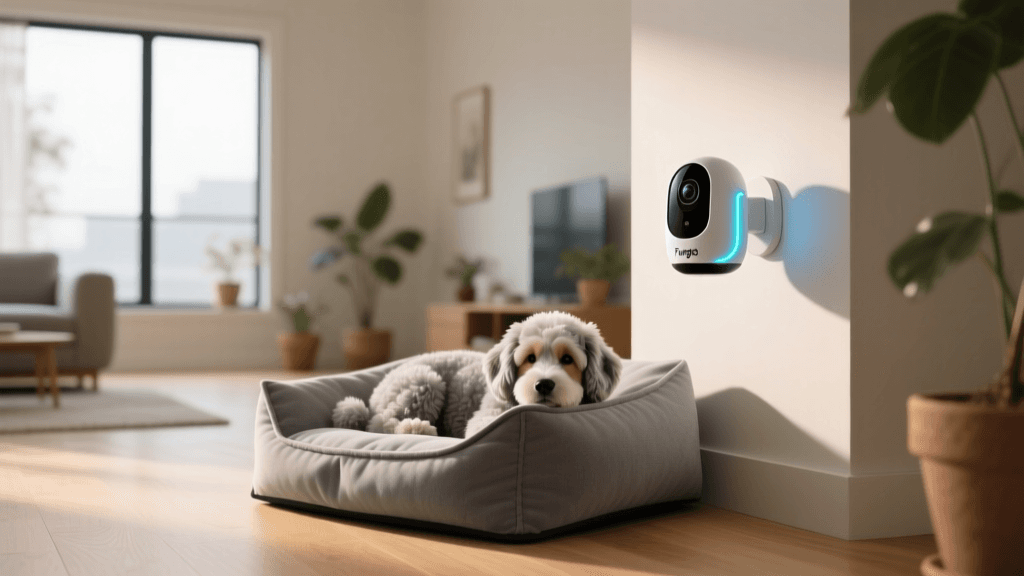
While the Snuggle Puppy provides passive comfort, the Furbo 3 Dog Camera offers active engagement and peace of mind for the owner. The 2026 iteration of the Furbo 3 boasts a 360-degree auto-tracking lens, 1080p HD video with night vision, and advanced AI-driven alerts that notify your smartphone if your dog is barking, crying, or exhibiting signs of distress. The two-way audio allows you to speak softly to your dog, but the true game-changer for alone-time training is the treat-tossing mechanism.
Behavioral conditioning relies heavily on positive reinforcement. With the Furbo 3, you can reward your dog for moments of calm. If you check the app and see your dog lying quietly on their bed instead of pacing or scratching at the door, you can instantly toss a treat. This teaches the dog that settling down in their safe zone yields high-value rewards, effectively rewiring their emotional response to being alone. Priced around $199 in 2026, the investment pays for itself by preventing property damage and reducing the need for expensive behavioral rehabilitation later on.
Building the Ultimate 'Alone-Time' Safe Zone
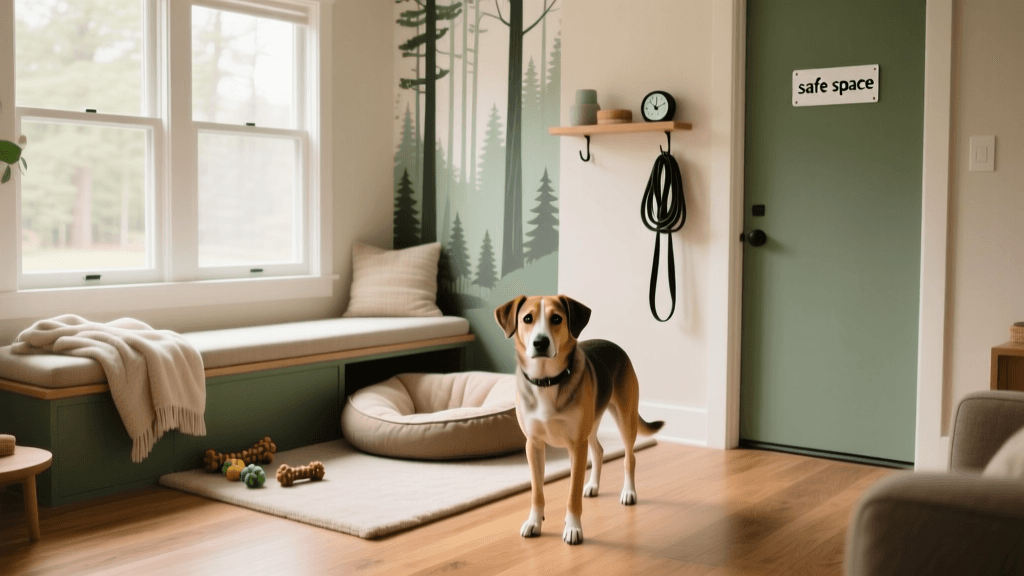
Before utilizing your tech and comfort tools, you must curate the physical space. Your dog's safe zone should be a confined, puppy-proofed area such as an exercise pen or a properly sized crate placed in a quiet but not entirely isolated room. Avoid placing the safe zone in direct sunlight or near drafty windows.
Sound masking is another crucial element. Silence amplifies the sound of your car pulling away or neighbors walking by, which can trigger a barking frenzy. Use a white noise machine or a smart speaker playing classical music or specialized canine relaxation audio. Keep the volume at a moderate level—just loud enough to muffle sudden exterior noises but not so loud that it causes stress.
Ensure that all interactive toys, such as frozen Kongs or lick mats, are prepared in advance. Mental stimulation tires a dog out faster than physical exercise. A dog that is busy working for their food is a dog that is not focused on your absence.
The 14-Day Desensitization Schedule
Acclimating a dog to alone time requires a structured, gradual approach. The following table outlines a 14-day protocol using the Snuggle Puppy and Furbo 3 to build your dog's confidence. Never rush this process; if your dog shows signs of panic at any stage, drop back to the previous step.
| Phase | Duration | Owner Action | Tech & Tool Usage |
|---|---|---|---|
| Days 1-3 | 5 to 15 Minutes | Step outside the front door, wait quietly, and return before the dog vocalizes. | Snuggle Puppy in crate. Furbo 3 on to monitor stress signals. No treat tossing yet. |
| Days 4-7 | 15 to 45 Minutes | Leave the house, get in the car, and sit in the driveway or take a short walk. | Activate Snuggle Puppy. Use Furbo 3 to toss a treat if the dog settles on their bed. |
| Days 8-11 | 1 to 2 Hours | Run a quick errand (grocery store, gym). Maintain a calm, unemotional departure and return. | Provide a frozen Kong. Use Furbo 3 two-way audio briefly if the dog whines, then reward silence. |
| Days 12-14 | 2 to 4 Hours | Extend absence to mimic a standard workday or long outing. | Snuggle Puppy on. Furbo 3 AI alerts active. Reward prolonged resting with multiple treat tosses. |
Consistency is the bedrock of this schedule. Departures must be boring. Do not make a fuss, say prolonged goodbyes, or use a high-pitched 'mommy voice' when leaving or returning. The American Kennel Club emphasizes that keeping arrivals and departures low-key helps normalize the act of leaving, reducing the emotional spike that triggers anxiety.
Troubleshooting Common Alone-Time Hurdles
Even with the best tools, you may encounter setbacks. One common issue with the Furbo 3 is the dog becoming fixated on the camera, waiting for treats and barking at the device when they don't appear. To combat this, utilize the camera's 'Auto-Play' or scheduled treat-tossing features if available, or vary the intervals at which you toss treats so the dog cannot predict the reward. Alternatively, switch to audio-only check-ins if the visual presence of the camera causes frustration.
If your dog ignores the Snuggle Puppy, try rubbing the plush toy on your own clothing or sleeping with it for a night so it absorbs your scent. Some dogs are also sensitive to the mechanical hum of the heartbeat device; if this seems to cause alarm rather than comfort, remove the heartbeat mechanism and rely solely on the heat pack and your scent.
Another frequent hurdle is the 'extinction burst.' Around day 5 or 6, a dog that was doing well may suddenly escalate their barking or destructive behavior. This is a psychological phenomenon where the dog tries harder to get the previous result (your return). It is vital that you do not return home or intervene during an extinction burst, as doing so will reinforce the escalated behavior. Watch via the Furbo 3, wait for a brief pause in the noise, and only then reward or return.
When to Call a Professional
It is important to distinguish between mild isolation distress and clinical separation anxiety. Mild distress involves whining for the first ten minutes before settling down to sleep or chew a toy. Clinical separation anxiety involves non-stop panic, drooling, self-injury, breaking teeth on crate bars, or urinating/defecating out of pure terror within minutes of your departure.
If your dog exhibits severe clinical signs despite utilizing the Snuggle Puppy, Furbo 3, and a gradual desensitization schedule, stop the alone-time training immediately. Pushing a clinically anxious dog past their threshold can cause deep psychological harm. In 2026, the gold standard for treating severe separation anxiety involves a combination of behavior modification protocols designed by a Certified Applied Animal Behaviorist (CAAB) and, in many cases, temporary anti-anxiety medications prescribed by your veterinarian to lower the dog's baseline stress levels enough for learning to occur.
Getting a new dog is a profound commitment that extends far beyond providing food and shelter. By proactively setting up a technologically enhanced, biologically comforting safe zone, you are giving your new companion the gift of confidence. The effort you put into teaching your dog how to be alone in their first few weeks will result in a lifetime of trust, security, and peace of mind for both of you.
hannah-wickes
All our authors care for dogs every day — read more of their work on the authors page.