Top Dual-Clip No-Pull Dog Harnesses For Strong Pullers 2026
Discover the best dual-clip no-pull dog harnesses for strong pullers in 2026. Learn fitting tips, biomechanics, and training techniques for urban walks.
The Evolution of Urban Dog Walking in 2026
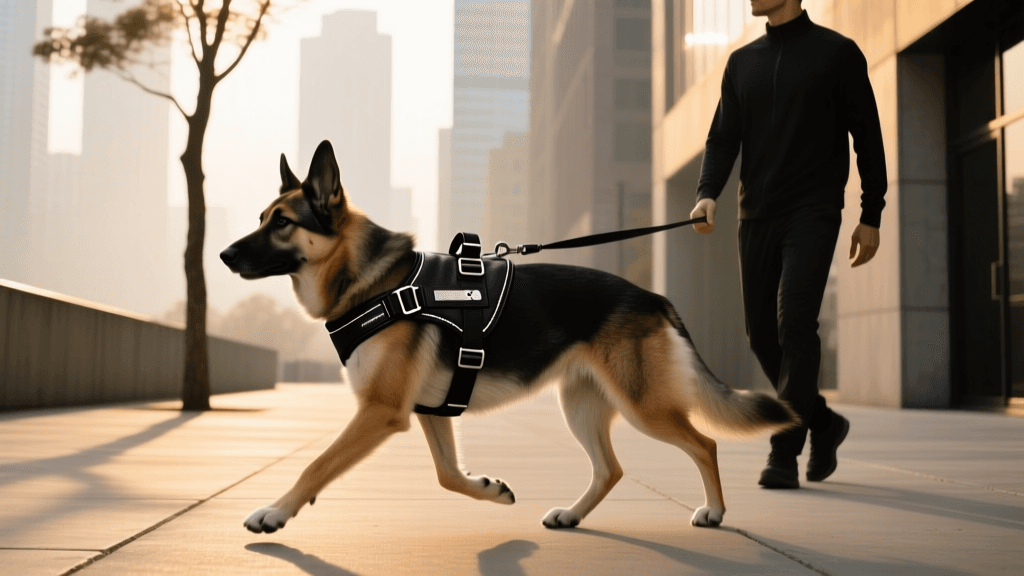
If you share your life with a strong, energetic breed like a Husky, German Shepherd, or Labrador Retriever, urban walks can sometimes feel more like a competitive sledding event than a relaxing stroll. In 2026, the pet industry has made massive strides in canine ergonomic design, moving away from outdated choke chains and standard back-clip harnesses that inadvertently encourage pulling. Today, the gold standard for managing strong pullers is the dual-clip no-pull harness. But with dozens of new models hitting the market this year, how do you choose the right one? In this comprehensive guide, we break down the biomechanics of pulling, review the top front-clip harnesses of 2026, and provide a step-by-step fitting and training protocol to help you reclaim your daily walks.
The Biomechanics of Pulling: Why Standard Harnesses Fail
To understand why a no-pull harness works, we first need to understand why dogs pull. Canines possess a natural neurological response known as the 'opposition reflex' or thigmotaxis. When pressure is applied to their chest or back, their instinct is to push forward against that pressure.
Standard back-clip harnesses were originally designed for sled dogs and drafting breeds. The dorsal (back) D-ring sits directly over the dog's center of gravity and aligns perfectly with their spine. When your dog lunges forward, the back-clip harness distributes the weight evenly across their robust chest and shoulders, allowing them to leverage their full body weight into the pull. Essentially, by using a standard back-clip harness on a strong puller, you are inadvertently outfitting them for draft work. Furthermore, constant pressure on the trachea from traditional flat collars can lead to severe veterinary issues, including tracheal collapse and cervical spine damage, making the transition to a properly fitted harness a critical health decision.
How Front-Clip No-Pull Harnesses Actually Work
Front-clip no-pull harnesses feature a leash attachment ring located on the chest strap, right over the dog's sternum. This simple shift in attachment point completely changes the physics of the walk.
When a dog pulls forward on a front-clip harness, the tension pulls their chest and shoulders laterally (to the side) rather than allowing forward momentum. Because a dog's center of gravity is located in their chest and shoulder region, redirecting this area effectively acts as a power steering wheel. The dog is physically turned back toward the handler, disrupting their forward momentum and breaking their concentration on the distraction ahead. Dual-clip harnesses, which feature both a front and a back ring, offer the ultimate versatility. You can use the front clip for active training and the back clip for casual sniffaris or attaching to a car safety tether.
Top Dual-Clip No-Pull Harnesses Tested for 2026
After testing the latest releases and updated classics over the past few months, here are the top-performing dual-clip no-pull harnesses for strong pullers in 2026.
1. Ruffwear Front Range (2026 Eco-Update)
The Ruffwear Front Range has been a staple in the dog walking community for years, but the 2026 update makes it an undeniable powerhouse. Ruffwear has transitioned to a highly durable, recycled ripstop nylon that resists tearing even from the most aggressive scratchers. It features a padded chest and belly panel to prevent chafing during long urban hikes. The dual attachment points include a solid aluminum V-ring on the back and a reinforced webbing loop on the chest. The 2026 model also includes a redesigned, low-profile ID pocket and improved reflective trim for nighttime visibility. It is best suited for active dogs who need a harness that transitions seamlessly from a training walk to a rugged trail hike.
2. 2 Hounds Design Freedom No-Pull Harness
For dogs with sensitive skin or those prone to chafing, the 2 Hounds Design Freedom harness remains the undisputed champion in 2026. The interior of the chest strap is lined with ultra-soft Swiss velvet, which completely eliminates friction burns in the armpits. What truly sets this harness apart is its patented martingale loop on the back. When the dog pulls, the back loop gently tightens to provide a mild, non-punitive tactile cue, while the front clip redirects their momentum. It also comes with a custom dual-clip training leash, allowing you to attach to both the front and back simultaneously for maximum steering control. This is the top recommendation for reactive dogs in high-stimulation urban environments.
3. Kurgo Tru-Fit Smart Harness (2026 Crash-Tested)
If your daily routine involves driving to the park before your walk, the Kurgo Tru-Fit Smart Harness is a must-have. Kurgo's 2026 iteration maintains its rigorous crash-test certification for car travel, utilizing steel nesting buckles inspired by rock climbing gear. The chest plate is ergonomically designed to sit low, avoiding the dog's throat entirely. It features a front D-ring for no-pull training and a back D-ring for car tethering. While slightly heavier than the Ruffwear due to the steel hardware, it offers unparalleled safety for strong, impulsive dogs who might dart into traffic or need secure restraint in a vehicle.
Comparison Chart: 2026 No-Pull Harness Showdown
| Harness Model | Front Clip Type | Best For | 2026 Est. Price | Weight Range |
|---|---|---|---|---|
| Ruffwear Front Range | Reinforced Webbing | Active Hikers & Trail Dogs | $45.00 | 5 - 100+ lbs |
| 2 Hounds Freedom | Stainless Steel D-Ring | Reactive Dogs & Sensitive Skin | $39.95 | 5 - 250 lbs |
| Kurgo Tru-Fit Smart | Welded Steel D-Ring | Car Travel & Impulsive Darting | $34.99 | 5 - 110 lbs |
Step-by-Step Fitting Guide to Prevent Chafing
Even the most expensive 2026 no-pull harness will fail if it is improperly fitted. A poorly fitted harness can restrict a dog's scapula (shoulder blade) movement, leading to long-term gait abnormalities and joint issues. Follow these steps to ensure a perfect fit:
- Measure the Girth: Use a soft measuring tape to measure the widest part of your dog's ribcage, usually just behind the front legs. Do not rely on weight-based sizing charts alone; breeds like Bulldogs and Greyhounds have vastly different chest-to-weight ratios.
- The Two-Finger Rule: Once the harness is on, you should be able to slide exactly two fingers flat between the harness straps and your dog's body. If you can fit your whole hand, it is too loose and the dog may back out of it. If you cannot fit two fingers, it is too tight and will cause chafing.
- Check the Shoulder Clearance: Ensure the front chest plate sits below the trachea and that the side straps do not rub directly against the elbow joint during a full stride. Have your dog trot in a circle and observe their front leg extension.
Integrating the Harness with Positive Reinforcement Training
It is a common misconception among new dog owners that a no-pull harness is a magic cure for bad leash manners. As the American Kennel Club emphasizes, a front-clip harness is a management tool, not a substitute for training. It gives you the mechanical advantage needed to communicate with your dog, but the dog must still learn what is expected of them.
When your dog hits the end of the leash and the front clip redirects them toward you, immediately mark the behavior with a 'yes' or a clicker, and reward them with a high-value treat (like freeze-dried liver or boiled chicken) right at your pant seam. This teaches the dog that returning to your side after a redirect is highly rewarding. If your dog continually pulls, employ the 'red light, green light' method: stop walking completely the moment the leash goes tight. Only resume walking (green light) when the leash is slack.
Furthermore, safety experts, including the ASPCA, strongly advise against using retractable leashes in conjunction with front-clip harnesses. The thin cord of a retractable leash can easily tangle in the front D-ring, and the constant slight tension of the retractable mechanism teaches the dog that pulling is required to get more line, entirely defeating the purpose of the no-pull harness. Stick to a standard 4-to-6-foot biothane or leather leash for the best control and safety during your 2026 urban adventures.
Final Thoughts on Reclaiming Your Walk
Upgrading to a dual-clip no-pull harness is one of the most impactful investments you can make for your daily routine. By understanding the biomechanics of your dog's movement and pairing a high-quality, ergonomically designed 2026 harness with consistent, positive reinforcement training, you can transform your stressful urban tug-of-war into a peaceful, bonding experience. Remember to regularly check your harness for signs of wear, wash it according to the manufacturer's instructions, and continuously reward your dog for making good choices on the leash.
aaron-whyte
All our authors care for dogs every day — read more of their work on the authors page.