Front-Clip Harness Training 2026: Stop Dog Leash Pulling Fast
Learn how to stop dog leash pulling in 2026 using a front-clip no-pull harness and the 180-degree turn method. Expert behavioral conditioning tips inside.
The End of the Tug-of-War: Understanding Why Dogs Pull
If your daily walks feel more like a competitive sled-pulling event than a relaxing stroll, you are not alone. Leash pulling remains one of the most common behavioral challenges reported by dog owners in 2026. To effectively train your dog to walk politely on a leash, we must first understand the biomechanics and psychology behind the pulling. Dogs pull for a variety of reasons: excitement, environmental overstimulation, lack of leash training, or simply because pulling works to get them where they want to go faster. Furthermore, dogs possess a natural opposition reflex (thigmotaxis). When they feel pressure against their chest or neck, their instinct is to push forward against that pressure.
Traditional back-clip harnesses and standard flat collars often inadvertently trigger this reflex. When a dog pulls on a back-clip harness, the pressure is distributed across their strong chest and shoulders, allowing them to lean into the harness with their full body weight—much like a sled dog. To rewire this behavior, modern canine behavioral conditioning relies on management tools combined with positive reinforcement. Enter the front-clip no-pull harness.
Why Front-Clip Harnesses Are the 2026 Gold Standard
As veterinary behaviorists and certified professional dog trainers (CPDTs) continue to move away from aversive tools like prong collars and choke chains, the front-clip harness has emerged as the premier management tool for loose-leash walking. According to the ASPCA's guidelines on dog walking equipment, front-clip harnesses gently redirect a dog's forward momentum back toward the handler without causing pain or restricting the airway.
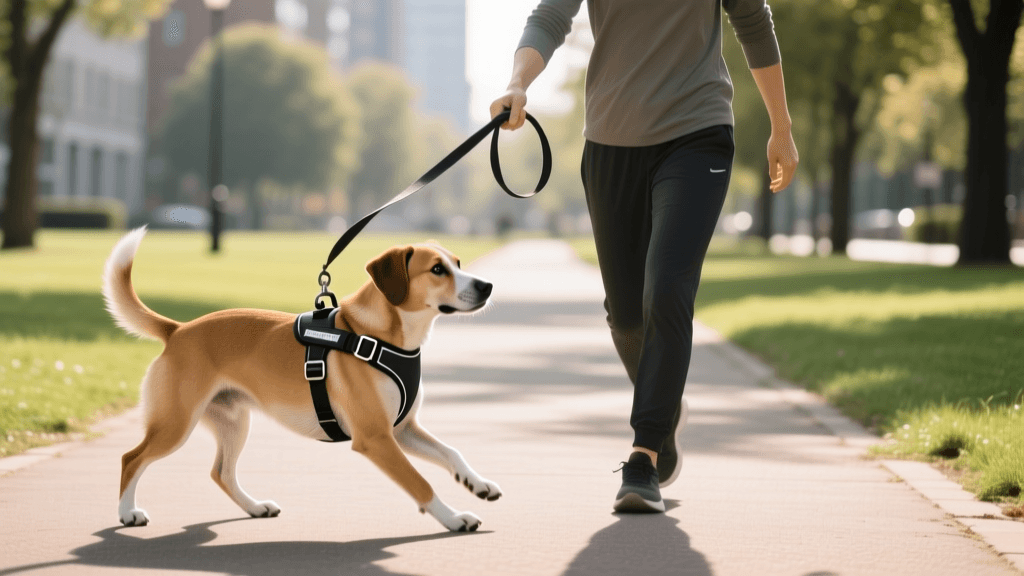
When the leash is attached to the D-ring located on the dog's sternum, any forward pulling causes the dog's chest to gently turn sideways, effectively steering them off their forward trajectory and back toward you. This breaks the opposition reflex and creates a natural pause in the dog's forward movement, providing a critical window of opportunity for you to mark and reward the desired behavior.
Anatomy of a Safe, Modern No-Pull Harness
Not all harnesses are created equal. When shopping for a front-clip harness in 2026, look for these specific anatomical features to ensure your dog's shoulder health is protected:
- Y-Shaped Front Design: Avoid harnesses with a horizontal strap cutting across the chest. A Y-shape ensures the dog's shoulder joints have a full range of motion, preventing long-term gait issues and chafing.
- Dual-Clip Options: The best modern harnesses feature both a front and a back D-ring. This allows you to use a double-ended leash for maximum steering control during the initial training phases.
- Breathable, Padded Materials: Look for recycled ripstop nylon or biothane with neoprene padding at the pressure points to prevent armpit friction burns.
The 180-Degree Turn Training Protocol
A front-clip harness is a communication tool, not a magic wand. Without a structured training protocol, your dog may simply learn to walk sideways while pulling. The most effective behavioral conditioning technique for strong pullers is the 180-Degree Turn Method (sometimes called 'Penalty Yards'). This method teaches the dog that pulling on the leash results in moving away from their desired destination, while a loose leash results in moving toward it.
Step 1: Acclimation and the 'Check-In'
Before hitting the streets, start in a low-distraction environment like your living room or a fenced backyard. Put the harness on your dog and let them wear it for short periods while feeding high-value treats (like boiled chicken or freeze-dried liver). Wait for your dog to offer voluntary eye contact. The moment they look at you, use a marker word like 'Yes!' or a clicker, and deliver the treat. This builds a foundation of engagement.
Step 2: The Slack Leash Rule
Begin walking at a normal pace. Your goal is to keep a 'J-curve' or slight slack in the leash. The moment you feel tension on the leash and the front-clip begins to engage, stop walking immediately. Do not yank the leash; simply become a tree.
Step 3: The 180-Degree Turn
If your dog continues to pull and lean into the harness after you have stopped, cheerfully say 'Let's go!' and abruptly turn 180 degrees, walking in the exact opposite direction. The front-clip will gently steer your dog's chest around. Do not pull the dog with your arm; use the momentum of your own body walking away to guide them.
Step 4: The Reward Zone
As your dog catches up to you and the leash goes slack, immediately mark the behavior ('Yes!') and deliver a treat right at your hip seam (the 'Reward Zone'). Delivering the treat at your hip reinforces the dog for staying in the correct positional zone next to your leg. Resume walking forward. If they pull again, repeat the 180-degree turn.
'Consistency is the bedrock of loose-leash walking. If a dog learns that pulling works even 10% of the time to reach a fire hydrant or another dog, the pulling behavior will persist. The front-clip harness paired with directional changes ensures pulling never achieves the desired outcome.'
Equipment Comparison Chart: What to Use and What to Avoid
Choosing the right equipment is vital for force-free training. The American Veterinary Society of Animal Behavior (AVSAB) strongly advocates for reward-based methods and warns against the physical and psychological harm caused by aversive tools. Below is a comparison of common walking tools based on 2026 behavioral standards.
| Equipment Type | Mechanism of Action | Training Outcome | 2026 Expert Recommendation |
|---|---|---|---|
| Front-Clip Y-Harness | Redirects forward momentum toward the handler via the sternum. | Breaks opposition reflex; allows for positive reinforcement of slack leash. | Highly Recommended for pullers and reactive dogs. |
| Back-Clip Harness | Distributes pressure across the back and shoulders. | Encourages pulling (sled-dog effect); offers no steering control. | Recommended only for brachycephalic breeds or dogs already trained to walk loosely. |
| Flat Buckle Collar | Applies pressure to the trachea and cervical spine. | Can cause tracheal collapse; triggers opposition reflex. | Acceptable for holding ID tags; not recommended for leash attachment in pullers. |
| Prong / Choke Collar | Applies pain or discomfort to the neck to suppress behavior. | Suppresses pulling through fear/pain; increases leash reactivity and aggression. | Strongly Discouraged by AVSAB and modern veterinary behaviorists. |
| Head Halter | Steers the dog via the snout/muzzle. | Effective for massive breeds but requires extensive desensitization to prevent neck injury. | Conditionally recommended for giant breeds with proper conditioning. |
Common Troubleshooting and Behavioral Pitfalls
Even with the best equipment and the AKC's recommended loose-leash walking techniques, you may encounter roadblocks. Here is how to troubleshoot the most common issues:
1. The 'Anchor' Dog (Refusing to Move)
Some dogs, when feeling the gentle pressure of a front-clip harness, will simply sit down and refuse to walk. This is a sign of confusion or mild pressure sensitivity. Solution: Do not drag the dog. Take two steps backward, use an encouraging voice, and lure them forward with a high-value treat. Reward heavily for any forward movement. Keep training sessions under 10 minutes to prevent frustration.
2. Leash Tangling Under the Front Legs
Because the leash attaches to the chest, it can easily slip under the dog's front legs if they cross your path. Solution: Use a leash with a traffic handle or practice 'magnet hand' training, where you keep a treat in your hand at your hip to keep the dog aligned on one side of your body, minimizing the chances of them crossing under the leash.
3. The 'Extinction Burst'
When you first stop rewarding pulling and start enforcing the 180-degree turns, your dog's pulling may temporarily get worse. This is known in behavioral psychology as an 'extinction burst'—the dog is trying harder to make the old behavior work. Solution: Stay completely consistent. Do not give in and allow them to pull to the tree they want to sniff. Once they realize the old rules no longer apply, the burst will subside, and true learning will begin.
Moving Beyond the Harness: Proofing the Behavior
The ultimate goal of loose-leash training is for your dog to walk politely regardless of the equipment they are wearing. Once your dog has mastered the 180-degree turn method on a front-clip harness in your neighborhood, it is time to 'proof' the behavior. Gradually increase the level of environmental distraction. Move from your quiet street to a busier park, and eventually practice with the leash clipped to the back D-ring of the harness to test their comprehension of the slack-leash rule.
By combining the biomechanical advantage of a Y-shaped front-clip harness with the clear, force-free communication of the 180-degree turn method, you can transform your daily walks from a stressful chore into a bonding experience. Remember that behavioral conditioning takes time, patience, and an abundance of high-value rewards. For further reading on the science of force-free methods, refer to the AVSAB's official position statement on reward-based training, which outlines the undeniable welfare benefits of positive reinforcement over aversive control.
tom-renshaw
All our authors care for dogs every day — read more of their work on the authors page.