Raw Diets & Dog Anxiety: The Gut-Brain Connection in 2026
Discover how fresh and raw diets influence your dog's anxiety and behavior through the gut-brain axis. Expert insights and 2026 feeding tips.
The Intersection of Canine Psychology and Nutrition in 2026
As dog owners and behavioral enthusiasts, we often look to training methods, environmental enrichment, and socialization to address canine anxiety, reactivity, and hyperactivity. However, as we move through 2026, veterinary behaviorists and canine nutritionists are increasingly turning their attention to a hidden driver of behavioral issues: the gut-brain axis. The food your dog consumes does more than just fuel their physical body; it fundamentally shapes their psychological state, emotional resilience, and instinctual satisfaction. While highly processed kibble has been the standard for decades, the shift toward raw, fresh, and alternative diets has revealed profound insights into how nutrition dictates canine behavior. Understanding your dog means understanding their biology, and nowhere is this more evident than in the connection between a fresh diet and a balanced, calm mind.
Understanding the Canine Gut-Brain Axis
The gut-brain axis is a bidirectional communication network that links the enteric nervous system (the gut) with the central nervous system (the brain). In dogs, this communication is primarily facilitated by the vagus nerve, the immune system, and the gut microbiome—the trillions of bacteria residing in the digestive tract. Remarkably, approximately 90% of a dog's serotonin, the neurotransmitter responsible for regulating mood, happiness, and anxiety, is produced in the gut, not the brain.
When a dog consumes a diet rich in diverse, whole-food nutrients, their microbiome flourishes. A healthy microbiome produces short-chain fatty acids (SCFAs) like butyrate, which reduce neuroinflammation and promote the synthesis of calming neurotransmitters. Conversely, a diet lacking in moisture, bioavailable nutrients, and natural enzymes can lead to dysbiosis—an imbalance of gut bacteria. Dysbiosis triggers systemic inflammation, which can cross the blood-brain barrier and manifest as behavioral symptoms such as noise phobia, separation anxiety, and leash reactivity. According to ongoing research highlighted by Tufts University Cummings School of Veterinary Medicine, nutritional interventions that support gut integrity are now considered a cornerstone of holistic behavioral management.
The Psychological Impact of Highly Processed Kibble
To understand why fresh and raw diets can alleviate anxiety, we must first examine the psychological toll of ultra-processed kibble. Kibble is extruded at extremely high temperatures, a process that destroys natural enzymes and creates Advanced Glycation End-products (AGEs). AGEs are known to trigger oxidative stress and chronic, low-grade inflammation throughout the body, including the brain.
From a behavioral standpoint, a dog suffering from chronic neuroinflammation may exhibit a lowered threshold for stress. A stimulus that a healthy dog might ignore—such as a distant doorbell or another dog passing by on a walk—can trigger an exaggerated, reactive response in a dog with an inflamed nervous system. Furthermore, the high carbohydrate content in many commercial kibbles causes rapid spikes and crashes in blood glucose. These glycemic fluctuations mimic the physiological symptoms of a panic attack, leading to restlessness, pacing, and an inability to settle down after exercise.
How Raw and Fresh Diets Reshape Behavior
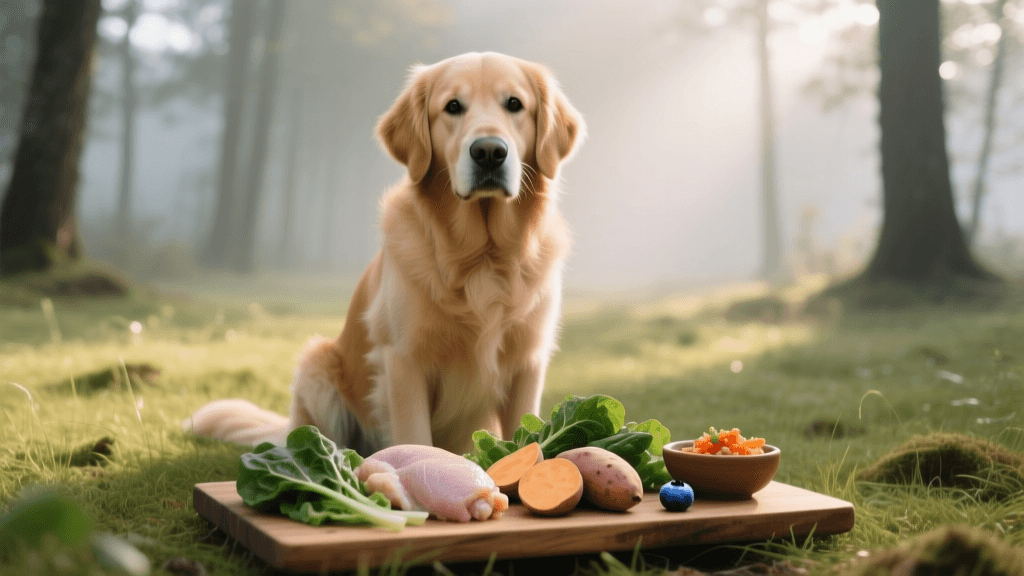
Transitioning to a biologically appropriate raw or gently cooked fresh diet addresses behavioral issues on multiple psychological and physiological levels. Here is how alternative diets satisfy a dog's innate needs and promote emotional stability.
1. Satisfaction of the Predatory Sequence
Dogs are scavengers and facultative carnivores with deeply ingrained predatory instincts. The act of chewing on raw meaty bones (RMBs) or tearing into fresh muscle meat engages the psychological 'predatory sequence'—search, stalk, chase, bite, dissect, and consume. Chewing, in particular, is a self-soothing behavior for dogs. The mechanical action of gnawing on raw bone releases endorphins in the brain, which act as natural painkillers and anxiety reducers. Dogs on raw diets often display a significant decrease in destructive chewing and hyperactivity because their instinctual need to 'dissect' and 'consume' is being fulfilled daily.
2. Reduction in Noise Phobia and Reactivity
Fresh diets are naturally abundant in bioavailable B-vitamins, magnesium, and amino acids like tryptophan, which are essential for nervous system regulation. In 2026, many canine behaviorists recommend fresh food toppers rich in omega-3 fatty acids (such as raw sardines or phytoplankton) to specifically target noise aversions, such as fear of thunderstorms or fireworks. The anti-inflammatory properties of EPA and DHA help protect the brain from stress-induced damage, allowing dogs to recover their baseline emotional state much faster after a frightening event.
3. Decreased Resource Guarding and Food Anxiety
Resource guarding is often rooted in a psychological fear of scarcity or a lack of satiety. Because kibble is calorie-dense but nutrient-poor and low in moisture, dogs may feel physically full but nutritionally starved, leading to a persistent, anxious drive to seek out more food. Fresh diets, with their high moisture content and rich nutrient profiles, provide deep, cellular satiety. Dogs fed fresh, satisfying meals are generally less obsessed with scavenging, counter-surfing, or guarding their food bowls, as their body recognizes that its nutritional requirements have been thoroughly met.
Canine Body Language Signals of Digestive Distress
Understanding your dog requires keen observation of their body language. Often, what we perceive as 'stubbornness' or 'fearfulness' is actually a dog communicating gastrointestinal discomfort. Dogs on inappropriate diets may exhibit subtle signs of distress, including:
- Lip Licking and Yawning: When not tired, these are classic calming signals indicating nausea or acid reflux, common in dogs fed high-carb kibble on an empty stomach.
- Restlessness at Night: Pacing or inability to get comfortable can stem from bloating or delayed gastric emptying associated with heavily processed foods.
- Grass Eating and Frantic Foraging: While sometimes normal, frantic, obsessive grass consumption often points to a desperate attempt to induce vomiting or soothe an inflamed gastric lining.
By switching to a fresh, easily digestible diet, owners frequently report that these subtle anxiety signals vanish, replaced by relaxed body postures, soft eyes, and deeper, more restorative sleep patterns.
2026 Behavioral Outcomes: Kibble vs. Fresh/Raw Diets
The following table summarizes the behavioral and psychological shifts commonly observed by veterinary behaviorists when dogs are transitioned from ultra-processed diets to balanced fresh or raw diets.
| Behavioral Marker | Ultra-Processed Kibble Diet | Balanced Fresh / Raw Diet (2026) |
|---|---|---|
| Baseline Anxiety Levels | Higher; prone to glycemic spikes and neuroinflammation. | Lower; stabilized blood sugar and abundant tryptophan. |
| Instinctual Fulfillment | Low; swallowing pellets bypasses the predatory sequence. | High; chewing and tearing release endorphins. |
| Post-Meal Satiety | Poor; high volume but low cellular nutrition leads to scavenging. | Excellent; deep nutritional satisfaction reduces food obsession. |
| Stress Recovery Time | Slower; systemic inflammation impedes neurotransmitter balance. | Faster; Omega-3s and antioxidants support brain resilience. |
| Focus and Trainability | Inconsistent; brain fog from poor gut health limits attention. | Sharp; a diverse microbiome supports cognitive clarity. |
Safe Transitioning and Veterinary Guidelines in 2026
While the psychological and behavioral benefits of raw and fresh diets are compelling, it is vital to approach these alternative diets with safety and scientific rigor. The U.S. Food and Drug Administration (FDA) consistently warns about the risks of bacterial pathogens like Salmonella and Listeria in raw meat, which can affect both the dog and the human handlers. Furthermore, the American Kennel Club (AKC) emphasizes that a raw diet must be meticulously balanced; feeding only muscle meat without the correct ratios of bone, organ meat, and essential micronutrients can lead to severe metabolic bone disease and neurological deficits.
In 2026, the raw feeding community has largely mitigated these risks through High-Pressure Processing (HPP) and rigorous microbiome testing. HPP uses intense water pressure to neutralize harmful pathogens without applying heat, preserving the vital enzymes and psychological benefits of raw meat. Additionally, owners can now utilize at-home canine microbiome testing kits to analyze their dog's gut bacteria before and after a dietary transition, ensuring that the new diet is actively reducing inflammation and promoting the bacterial strains associated with calm behavior.
Conclusion: Feeding the Mind Through the Stomach
Understanding your dog goes far beyond reading their tail wags and ear positions; it requires looking inward at the biological systems that drive their behavior. The gut-brain axis is a powerful testament to the fact that nutrition and psychology are inextricably linked. By moving away from heavily processed foods and embracing balanced, fresh, or raw diets, you are not just improving your dog's physical health—you are providing them with the nutritional foundation required for a calm, focused, and emotionally resilient mind. As you observe your dog's behavior in 2026, consider that the path to a more relaxed, confident companion may very well begin in their food bowl.
tom-renshaw
All our authors care for dogs every day — read more of their work on the authors page.