Raw Food Rewards For Reactive Dog Training Guide 2026
Discover how to use raw and fresh diet rewards to boost focus and counter-condition reactive dogs in 2026. Expert tips on high-value meat treats.
The Evolution of High-Value Rewards in 2026
As we navigate the dog training landscape in 2026, the intersection of canine nutrition and behavioral modification has never been more prominent. For decades, trainers relied heavily on processed kibble or commercial semi-moist treats to reward dogs during obedience and reactivity sessions. However, a growing movement toward raw, fresh, and alternative diets has revolutionized how we approach high-drive and reactive dogs. When a dog is over threshold—barking, lunging, or shutting down due to environmental stressors—their cognitive processing diminishes. In these high-stakes moments, standard dry treats simply do not possess the olfactory or biological currency required to break through the panic. By integrating raw and fresh diet components into your training treat pouch, you can dramatically accelerate counter-conditioning and focus-building exercises.
The Neurobiology of Scent and Reactivity
To understand why raw and fresh foods outperform traditional treats in reactive dog training, we must look at canine neurobiology. A dog's olfactory bulb is proportionally 40 times larger than a human's, and scent is directly tied to the limbic system, which governs emotion and memory. When a reactive dog spots a trigger (such as an unfamiliar dog or a loud vehicle), their amygdala triggers a fight-or-flight response, flooding their system with cortisol and adrenaline.
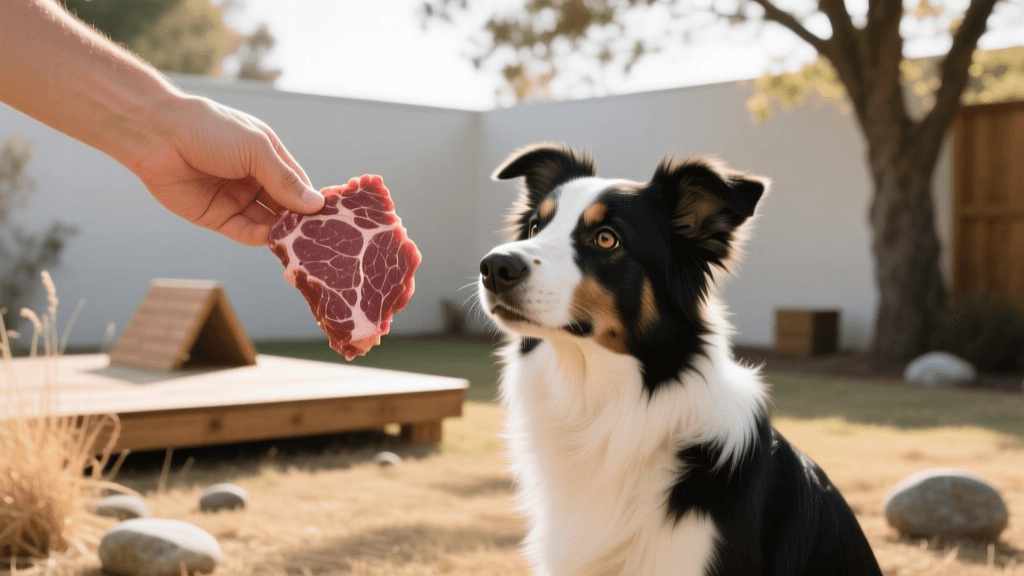
Processed kibble, which is largely composed of extruded starches and synthetic flavor coatings, lacks the complex volatile organic compounds (VOCs) found in raw meat, organs, and fresh tripe. When you introduce a piece of fresh raw liver or green tripe, the intense, biologically relevant scent immediately stimulates the dog's predatory sequence and dopamine pathways. Dopamine is a powerful neurotransmitter that not only creates feelings of pleasure but also actively competes with cortisol. In 2026, veterinary behaviorists increasingly recognize that the intense aromatic profile of fresh, raw meat can literally 'snap' a dog out of an amygdala hijack, redirecting their brain toward the prefrontal cortex where learning and decision-making occur.
Top Raw and Fresh Training Treats for Reactive Dogs
Not all raw and fresh foods are created equal when it comes to training. You need rewards that are high-value, easy to portion, and safe to handle in outdoor environments. Here are the top fresh and raw rewards dominating the behavioral training scene in 2026.
1. Freeze-Dried Raw Beef or Lamb Liver
Freeze-drying raw liver preserves nearly 100% of its natural nutrients and volatile scent compounds while removing the moisture that makes raw meat messy to handle. Liver is universally regarded as a 'jackpot' reward for dogs. In 2026, premium brands utilizing High-Pressure Processing (HPP) before freeze-drying have made this option safer than ever, eliminating pathogens while retaining the raw nutritional profile. It crumbles easily, making it perfect for rapid-fire marking and treating during Look At That (LAT) games.
2. Fresh Green Tripe
Green tripe (the unbleached, unwashed stomach lining of ruminants) is notoriously foul-smelling to humans, but to a dog, it is the ultimate high-value reward. The intense odor makes it an exceptional tool for recall training in highly distracting environments or for counter-conditioning severe leash reactivity. Because it is moist, it is best used in dedicated, washable silicone treat pouches. Many raw feeders in 2026 buy fresh frozen tripe, thaw it, and portion it into small training cubes.
3. Raw Quail Eggs
For dogs that are highly food-motivated but prone to gulping, raw quail eggs offer a fantastic, biologically appropriate alternative. They are rich in amino acids, healthy fats, and natural enzymes. Popping a whole raw quail egg into your dog's mouth serves as an incredible 'jackpot' reward for a major breakthrough in a training session, such as successfully navigating past a close-proximity trigger without reacting.
4. Commercial Fresh Food Tubes and Roll-Ups
The fresh pet food market has exploded, and by 2026, many leading fresh diet companies offer 'training tubes'—essentially squeezable pouches of pureed fresh meats, organs, and bone broth. These are ideal for reactive dogs because the handler can dispense a small amount of the fresh puree onto a spoon or directly to the dog's lips, keeping the dog's head anchored in the handler's space and away from the trigger.
Comparison Chart: Raw & Fresh Training Rewards
The following table outlines the practical applications of various raw and fresh treats for behavioral conditioning in 2026.
| Treat Type | Scent Intensity | Caloric Density | Best Training Scenario | Approx. 2026 Cost |
|---|---|---|---|---|
| Freeze-Dried Raw Liver | High | Low (per piece) | Rapid-fire engagement, LAT games | $14 - $22 / oz |
| Fresh Green Tripe | Extreme | Medium | Severe reactivity, emergency recalls | $6 - $10 / lb |
| Raw Quail Eggs | Medium | High | Jackpot rewards, threshold breakthroughs | $4 - $7 / dozen |
| Fresh Meat Puree Tubes | High | Medium | Sustained focus, mat work, settling | $8 - $12 / tube |
Step-by-Step Counter-Conditioning with Fresh Meat
Integrating raw and fresh diets into your training protocol requires a structured approach. Below is a modern, 2026-approved protocol for using high-value fresh meat in classical counter-conditioning (CCC) for leash-reactive dogs.
Step 1: Establishing the 'Fresh Food' Baseline
Before hitting the streets, you must condition your dog to the specific raw treat you plan to use. In a low-distraction environment (like your living room), present the fresh treat (e.g., thawed green tripe). Let the dog smell and consume it. Repeat this until the dog's eyes light up and they offer focused attention the moment they detect the scent. This builds a strong neurological association between the scent of the raw food and a positive emotional state.
Step 2: The 'Look At That' (LAT) Protocol
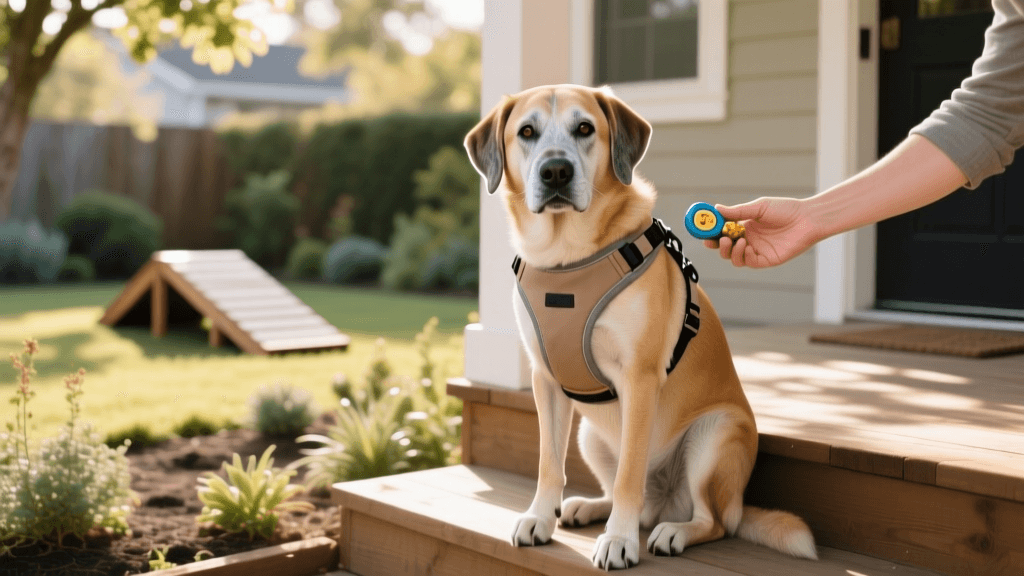
Take your dog to an environment where their trigger (e.g., another dog) is visible but far enough away that your dog remains under threshold. The moment your dog looks at the trigger, immediately mark the behavior with a clicker or a verbal 'Yes!', and immediately deliver a piece of the high-value raw liver or tripe. The goal is to change the dog's emotional response from 'Trigger equals panic' to 'Trigger equals the smell and taste of fresh raw meat.' Because the raw meat is biologically significant, the dog will begin to voluntarily look at the trigger and then immediately snap their head back to you in anticipation of the fresh reward.
Step 3: Duration and Scent Anchoring
For dogs that struggle to settle on a 'place' or 'mat' command in stimulating environments, use a fresh meat puree tube. Smear the fresh puree onto a lick mat attached to their training bed. The act of licking releases endorphins in the canine brain, while the fresh, raw ingredients provide a deep, satisfying enrichment that keeps them anchored to their bed while triggers pass by.
Safe Handling and Gear for Raw Training Treats
While the behavioral benefits of raw and fresh diets are immense, safety and hygiene must remain a top priority. The U.S. Food and Drug Administration (FDA) consistently reminds pet owners that raw pet food can contain harmful bacteria like Salmonella and Listeria. Therefore, handling raw meat in a training environment requires specialized gear and strict protocols.
In 2026, the market has adapted to the needs of raw-feeding trainers. Traditional fabric treat pouches are no longer suitable for fresh meat, as they harbor bacteria and retain odors. Instead, trainers are utilizing medical-grade, dishwasher-safe silicone treat pouches with magnetic closures. These allow for quick access to slimy or moist raw treats and can be sanitized at high temperatures after every session.
Furthermore, veterinary nutritionists at Tufts University Cummings Veterinary Medical Center emphasize that while raw diets carry pathogen risks, the behavioral benefits of high-value fresh meat can be utilized safely through proper handling, hand-washing, and opting for commercial raw treats that utilize High-Pressure Processing (HPP) to neutralize pathogens without cooking the meat. The American Veterinary Medical Association (AVMA) also advises that owners of immunocompromised individuals or young children should exercise extreme caution when handling raw training treats in public spaces, ensuring that any dropped treats are immediately retrieved and the area sanitized.
Conclusion
The shift toward raw, fresh, and alternative diets is not just a nutritional trend; it is a powerful behavioral tool. By leveraging the intense olfactory profiles and biological relevance of fresh meats, raw organs, and purees, trainers and owners can cut through the noise of a reactive dog's panic. As we continue through 2026, combining the science of canine nutrition with the art of counter-conditioning offers a more compassionate, effective, and deeply rewarding path to behavioral rehabilitation. Whether you are using freeze-dried liver for rapid engagement or fresh green tripe for emergency recalls, the raw diet revolution has permanently changed the way we train and connect with our dogs.
anouk-beaumont
All our authors care for dogs every day — read more of their work on the authors page.