Force-Free Rescue Dog Decompression Setup Guide 2026
Learn how to create a force-free decompression zone for your new rescue dog in 2026 using positive reinforcement gear and environmental management.
Understanding the Force-Free Philosophy in 2026
Bringing a new dog into your home is one of life's most rewarding experiences, but the transition can be profoundly stressful for the animal. As we navigate dog ownership in 2026, the veterinary and behavioral science communities have overwhelmingly reached a consensus: force-free, positive reinforcement (R+) methods are not just more humane, they are scientifically proven to be more effective and safer than aversive techniques. The days of 'alpha rolls,' dominance theory, and physical corrections are firmly in the past. Modern dog care focuses on environmental management, classical conditioning, and operant conditioning to build trust and encourage desired behaviors without inducing fear or pain.
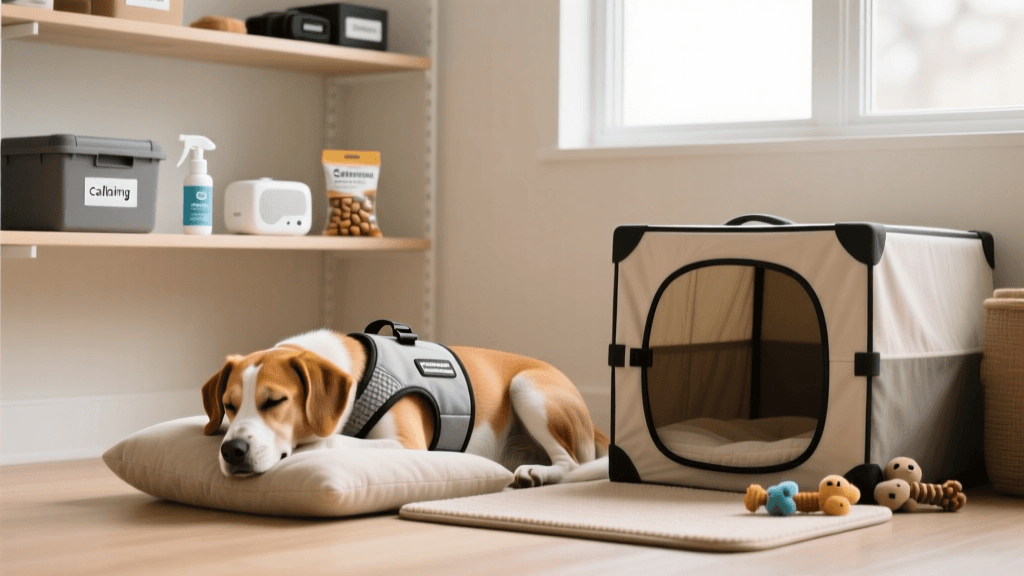
When you adopt a rescue dog or bring home a new puppy, their nervous system is often in a state of hyperarousal. Instead of demanding immediate obedience or using punitive tools to suppress stress behaviors, the 2026 standard of care dictates that we set up a 'decompression zone.' This is a carefully curated, force-free environment designed to lower cortisol levels, provide mental enrichment, and allow the dog to acclimate at their own pace. By prioritizing emotional welfare from day one, you lay the neurological groundwork for a confident, resilient, and deeply bonded companion.
The Biology of Stress and the 3-3-3 Rule
To understand why a decompression zone is vital, we must look at canine biology. When a dog experiences a major environmental change—like moving from a shelter to a living room—their body releases cortisol and adrenaline. Cortisol, the primary stress hormone, has a half-life in the canine bloodstream. This means it takes several days, and sometimes weeks, for stress hormones to fully dissipate after a triggering event. If a dog is continually pushed past their threshold during this period, they enter a state of chronic stress, which suppresses the immune system and inhibits the brain's ability to learn new associations.
Animal behaviorists widely advocate for the 3-3-3 Rule to manage expectations during this vulnerable window:
- 3 Days: The dog is overwhelmed, potentially hiding, refusing food, or exhibiting stress-induced behaviors like pacing or whining. They are learning the sights, sounds, and smells of a completely alien environment.
- 3 Weeks: The dog begins to settle, showing their true personality, testing boundaries, and learning your daily routines. Cortisol levels begin to normalize if the environment remains predictable and safe.
- 3 Months: The dog develops a deep sense of security, trust, and attachment to their new family. True behavioral training and complex learning can now flourish.
During the critical first three weeks, your primary tool is not a training collar or a stern voice; it is environmental management. The American Veterinary Society of Animal Behavior (AVSAB) strongly advocates for humane, reward-based methods, noting that aversive tools can increase fear and aggression, particularly in dogs already experiencing environmental stress.
Essential Positive Reinforcement Gear for 2026
Creating a successful decompression zone requires the right tools. In 2026, the market is saturated with enrichment products designed specifically to lower canine heart rates and promote foraging instincts. Here are the force-free essentials you must have on hand before your new dog crosses the threshold:
1. High-Capacity Treat Pouches
Positive reinforcement requires precise timing. Fumbling in your pockets for kibble creates frustration and missed learning opportunities. Invest in a magnetic-closure treat pouch like the Doggone Good Rapid Rewards or the Fenrir Pro Pouch. These allow for rapid, silent treat delivery, which is crucial for 'capturing' calm behaviors when your dog is resting in their safe space.
2. Snuffle Mats and Foraging Boxes
Foraging is a natural canine instinct that releases dopamine and serotonin. The Paw5 Wooly Snuffle Mat remains a top-tier choice in 2026 for its durability and washability. By scattering high-value, smelly treats (like freeze-dried minnows or boiled chicken) into the mat, you engage your dog's olfactory system. Sniffing actively lowers a dog's pulse rate, making it an ideal activity for the decompression zone.
3. LickiMats and Food Puzzles
The repetitive action of licking is self-soothing for dogs, similar to a human drinking chamomile tea. The Hyper Pet LickiMat Soother, made from non-toxic, food-grade rubber, is perfect for spreading wet food, plain pumpkin puree, or dog-safe peanut butter. Freezing the LickiMat extends the activity to 20-30 minutes, providing a prolonged period of stress relief.
4. Adaptil Optimum Diffusers
Synthetic dog-appeasing pheromones (DAP) mimic the comforting pheromones released by a nursing mother dog. The 2026 generation of Adaptil Optimum diffusers covers up to 700 square feet and has been clinically shown to reduce signs of anxiety in newly adopted dogs. Plug one into the outlet nearest to your dog's decompression zone at least 24 hours before they arrive.
Designing the Physical Decompression Space
The physical layout of your home dictates your dog's ability to make good choices. In a force-free framework, we do not punish a dog for chewing a shoe; we manage the environment so the shoe is inaccessible. This concept, championed by the International Association of Animal Behavior Consultants (IAABC) under the LIMA (Least Intrusive, Minimally Aversive) hierarchy, prioritizes altering the antecedents (the environment) before attempting to alter the behavior.
Location: Choose a low-traffic room or a quiet corner of the living space. Avoid high-stimulus areas like the entryway or the kitchen. A spare bedroom or a gated-off section of the family room works best.
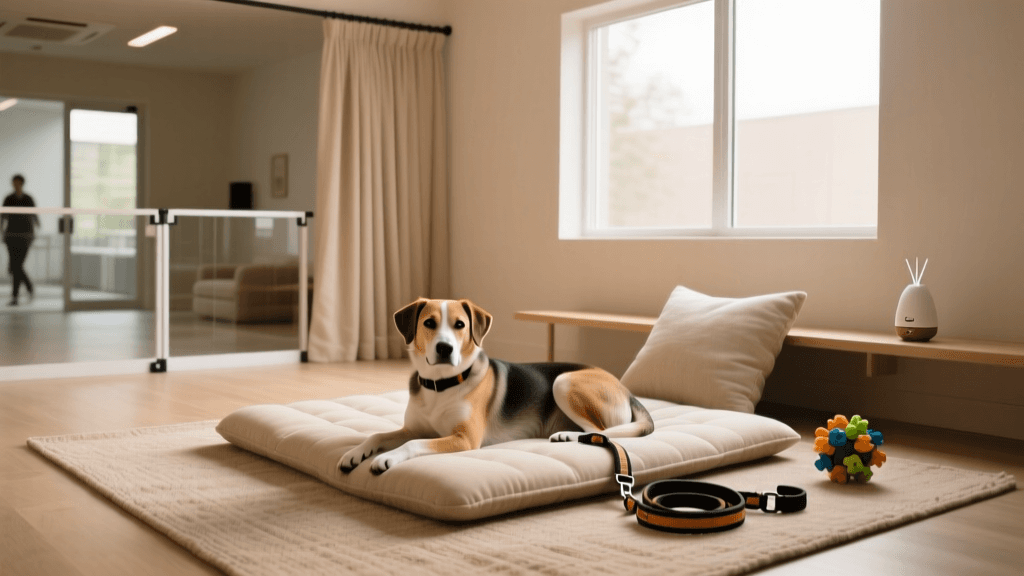
Barriers: Use 36-inch tall, hardware-mounted baby gates with auto-close doors. Avoid closed doors if possible, as isolation can trigger separation anxiety in rescue dogs. A gate allows the dog to see, hear, and smell the family while remaining physically contained in their safe zone. If your dog is a jumper, utilize a modular metal exercise pen (X-pen) attached to the wall to create a secure, open-air sanctuary.
Bedding and Scent: Provide an orthopedic bed with raised bolsters, which allows the dog to rest their head and feel physically supported. Before bringing the dog home, rub a clean cotton t-shirt on your skin and place it under their bedding. Your scent will serve as a classical conditioning anchor, associating your presence with safety and comfort.
Comparison: Environmental Management vs. Aversive Correction
To fully embrace the force-free methodology, it is helpful to understand how modern management strategies replace outdated aversive tools. The table below illustrates the 2026 veterinary consensus on canine behavioral modification.
| Behavioral Challenge | Outdated Aversive Method | 2026 Force-Free Management | Welfare Impact |
|---|---|---|---|
| Jumping on guests | Spray bottle, knee to chest, or leash pop | Gate the dog in the decompression zone with a frozen LickiMat during arrivals | Prevents rehearsal of the behavior; lowers arousal via licking |
| Counter surfing | Scat mats, shock collars, or booby traps | Use baby gates to block kitchen access; feed via snuffle mats on the floor | Eliminates opportunity; fulfills foraging needs safely |
| Pulling on leash | Prong collar, slip lead, or choke chain | Front-clip harness paired with a 15-foot biothane long-line for sniffaris | Protects trachea; allows natural decompression through sniffing |
| Resource guarding | Alpha rolling or forcibly removing items | Trade-up games; tossing high-value treats near the dog without taking the item | Builds trust; changes emotional response via classical conditioning |
Your First 48 Hours: A Step-by-Step Protocol
When your new dog finally arrives, your goal is to be as boring and predictable as possible. Excitement is a form of stress, even when it is positive. Follow this protocol to maximize the effectiveness of your decompression zone.
Step 1: The Quiet Arrival
Do not invite friends or family over to meet the new dog. Keep your voice low and your movements slow. Lead the dog directly to their decompression zone using a harness and a loose leash. Remove the leash, step out of the gated area, and simply sit on the floor nearby, reading a book or looking at your phone. Ignore the dog. Allow them to investigate the space, the snuffle mat, and the bedding without any social pressure.
Step 2: Capturing Calmness
Keep your treat pouch stocked with soft, high-value rewards. Whenever the dog voluntarily lies down, sighs, or rests their chin on their paws, quietly toss a treat onto their bed. Do not use a marker word like 'Yes!' or a clicker just yet, as sudden noises can startle a decompressing dog. The silent delivery of food teaches the dog that relaxing in their safe space yields wonderful rewards.
Step 3: Potty Breaks on a Long-Line
When it is time for a bathroom break, attach a 15-foot long-line to their harness. Take them to the exact same spot in the yard each time. Stand completely still and let them sniff. Sniffing is the primary way dogs process their environment and decompress. Once they eliminate, quietly reward them and return to the safe zone. Do not force them into a structured 'heel' position during these first few days; let the long-line provide freedom while maintaining safety.
Step 4: Implementing the Fear Free Feeding Routine
Mealtimes are prime opportunities for positive association. Instead of using a standard stainless steel bowl, serve all meals in food puzzles, Kongs, or scattered across a snuffle mat in their decompression zone. If the dog is too stressed to eat in your presence, place the food puzzle in the zone and leave the room. This reinforces the concept that their safe space is where all good things happen, and it removes the pressure of performing for food.
Conclusion: Patience is the Ultimate Positive Reinforcement
Setting up a force-free decompression zone requires an upfront investment of time, gear, and spatial planning, but the dividends it pays in your dog's behavioral health are immeasurable. By respecting the 3-3-3 rule, utilizing modern enrichment tools like LickiMats and snuffle mats, and managing the environment to prevent mistakes, you communicate to your new dog that they are safe, understood, and valued. In 2026, we know that true obedience is not born from fear or physical dominance; it is born from a foundation of absolute trust. Give your new companion the gift of time, and watch them blossom into a confident, joyful member of your family.
tom-renshaw
All our authors care for dogs every day — read more of their work on the authors page.