2026 Guide To Adopting Reactive And Anxious Rescue Dogs
Learn the 2026 decompression protocol for adopting reactive rescue dogs. Discover essential calming gear, safe haven setups, and first-week action plans.
The Reality of Adopting Reactive Rescues in 2026
Bringing a new dog into your home is a life-changing event, but adopting a rescue dog with a history of reactivity or severe anxiety requires a specialized approach. As we navigate 2026, animal shelters and rescue organizations are increasingly transparent about behavioral challenges, utilizing advanced behavioral assessments to match dogs with the right environments. However, this transparency means more first-time owners are willingly stepping up to adopt 'project dogs' who struggle with fear-based reactivity, resource guarding, or separation anxiety.
According to the ASPCA's guide on common dog behavior issues, fear and anxiety are the root causes of the majority of canine behavioral surrenders. When you adopt a reactive dog, you are not just bringing home a pet; you are bringing home a survivor who needs time, patience, and a highly structured environment to decompress. The traditional '3-3-3 rule' of dog adoption has evolved. In 2026, veterinary behaviorists advocate for a more nuanced, science-backed decompression protocol paired with modern calming technology to help anxious dogs transition successfully.
Understanding Reactivity vs. Fear in Rescue Dogs
Before unpacking your new dog's essentials, it is crucial to understand the difference between a 'bad' dog and a fearful one. Reactivity—manifesting as lunging, barking, or snapping on a leash or behind a window—is rarely born out of malice. The American Kennel Club (AKC) defines reactivity as an overreaction to specific stimuli, often triggered by fear, frustration, or a lack of proper socialization during critical developmental windows.
For a rescue dog, the shelter environment is a sensory nightmare. The chronic stress of kennel living elevates cortisol levels, leaving the dog's nervous system in a constant state of 'fight or flight.' When you bring them home, their trigger threshold is incredibly low. A passing car, a distant dog bark, or even a sudden movement from a family member can send them over the edge. Managing this requires a proactive strategy focused on lowering their baseline stress levels before any formal training begins.
The 2026 Decompression Protocol
The modern decompression protocol moves beyond simply giving the dog a quiet room. It involves actively managing their nervous system through environmental control and biochemical support. The Fear Free initiative emphasizes that reducing fear, anxiety, and stress (FAS) must be the primary goal during the first 30 days of adoption.
Phase 1: The Sensory Fast (Days 1-7)
During the first week, your dog should experience a 'sensory fast.' This means absolutely no trips to pet stores, no walks in busy neighborhoods, and no introductions to extended family or neighborhood dogs. Walks should be limited strictly to quiet potty breaks in a secure, low-traffic area. The goal is to starve the nervous system of overwhelming stimuli, allowing cortisol levels to drop naturally.
Phase 2: Scent and Sniff Work (Days 8-14)
Once the dog shows signs of settling (sleeping deeply, eating normally, seeking physical contact), introduce mental enrichment that relies on their nose. Sniffing lowers a dog's heart rate and releases dopamine. Scatter feeding in the grass or using complex puzzle toys indoors provides mental fatigue without the physical stress of a high-stimulus walk.
Phase 3: Controlled Exposure (Days 15-30)
Begin introducing mild triggers at a 'sub-threshold' distance. If your dog is reactive to other dogs, find a large, empty park where you can observe dogs from 100 yards away while feeding high-value treats like boiled chicken or freeze-dried liver. This process, known as desensitization and counter-conditioning, rewires the dog's emotional response to their triggers.
Preparing Your Home: The 'Safe Haven' Setup
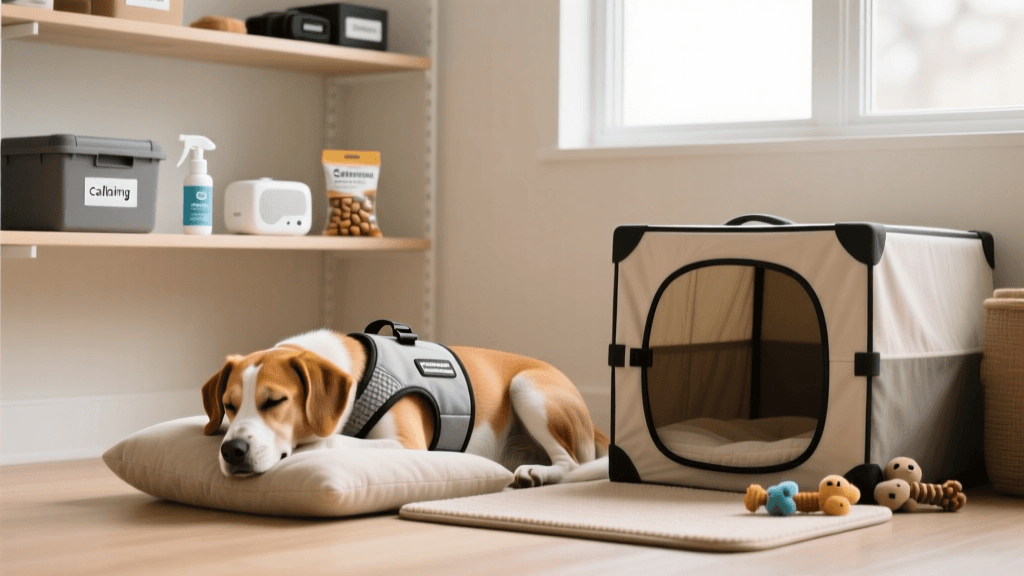
Before your dog's paws cross the threshold, you must prepare a designated 'Safe Haven.' This is not just a crate; it is a decompression zone where the dog learns that nothing bad will happen to them.
- Visual Barriers: Use opaque window film on lower glass panels to prevent window reactivity. If the dog cannot see the mail carrier or passing dogs, they cannot rehearse the barking behavior.
- Acoustic Dampening: Anxious dogs are highly sensitive to sudden noises. In 2026, smart white noise machines that emit specific frequencies designed to mask environmental stressors (like traffic or sirens) are highly recommended. Playing classical music or specialized canine calming audio can significantly reduce pacing and whining.
- The Decompression Pen: Instead of forcing a fearful dog into a closed crate, set up a sturdy wire exercise pen in a quiet corner of your living room. Drape a breathable cover over the top and sides to create a den-like atmosphere. Leave the door open so the dog can choose to enter and exit freely, fostering a sense of autonomy and control.
Essential Gear and Calming Supplements for Anxious Dogs
The pet care industry has seen massive advancements in anxiety management tools. Below is a comparison of the top-rated gear and supplements recommended by veterinary behaviorists for newly adopted reactive dogs in 2026.
| Product Name | Category | Key Feature for Reactivity | Approx. 2026 Price |
|---|---|---|---|
| Adaptil Smart Pheromone Diffuser | Environmental Calming | App-controlled synthetic dog-appeasing pheromones that signal safety and reduce environmental stress. | $65.00 |
| Fi Series 4 GPS Collar | Safety & Tracking | Biometric tracking alerts you to sudden spikes in your dog's activity/heart rate, indicating a panic episode or escape attempt. | $149.00 |
| Zesty Paws Advanced Calming Bites | Nutritional Supplement | Contains Ashwagandha, L-Theanine, and Colostrum to support the nervous system during high-stress transitions. | $28.00 |
| Ruffwear Front Range Harness | Walking Gear | Dual leash attachment points (front and back) provide secure control for dogs that lunge or panic on walks. | $45.00 |
| Snuffle Mat & Lick Mat Bundle | Enrichment Tools | $32.00 |
Note: Always consult with your veterinarian before introducing new supplements, especially if your rescue dog is already prescribed anti-anxiety medications like Fluoxetine or Trazodone.
The First 7 Days: A Step-by-Step Action Plan
To ensure success, print this checklist and stick it to your refrigerator. Consistency among all household members is vital for a reactive dog's recovery.
Day 1: The Arrival
Bring the dog directly into their prepared Safe Haven. Do not give them a tour of the entire house. Attach a lightweight drag-line (a short, soft leash) to their harness so you can gently guide them without grabbing their collar, which can trigger a fear-bite response in highly stressed dogs. Offer a long-lasting chew, like a yak cheese stick, to encourage endorphin release.
Days 2-3: Observation and Routine
Establish a rigid daily routine. Anxious dogs thrive on predictability. Feed them at the exact same times, take them out for potty breaks on a consistent schedule, and keep household noise to a minimum. Ignore the dog if they hide; let them come to you. Tossing high-value treats near their hiding spot without making eye contact builds positive associations.
Days 4-5: Introduction of Enrichment
Begin feeding meals exclusively through puzzle toys or scatter feeding in the yard. This builds confidence and encourages problem-solving. Introduce the Lick Mat smeared with plain, xylitol-free Greek yogurt and freeze it for a soothing, long-lasting activity.
Days 6-7: The First 'Sniffari'
Take the dog to a completely novel, quiet area (like an empty office park on a Sunday morning) for a 'Sniffari.' Allow them to lead the way and sniff as much as they want. Do not focus on leash manners or obedience commands during this time. The sole objective is to let them explore the world safely without pressure.
When to Call a Professional
While patience and a structured environment can resolve mild anxiety, severe reactivity requires professional intervention. If your dog exhibits redirected aggression (biting you when triggered by something else), severe resource guarding, or refuses to eat or sleep for more than 48 hours, it is time to call in the experts.
In 2026, look for a trainer who holds a certification from the International Association of Animal Behavior Consultants (IAAB) or a veterinary behaviorist (DACVB). Avoid any trainer who recommends 'alpha rolls,' shock collars, or dominance-based corrections. These outdated methods will only exacerbate your dog's fear, damaging the fragile trust you are working so hard to build. Adopting a reactive rescue is a marathon, not a sprint, but with the right protocol, gear, and empathy, you can help your new companion finally feel safe at home.
jonas-cole
All our authors care for dogs every day — read more of their work on the authors page.