2026 Force-Free Rescue Dog Decompression Sanctuary Setup
Learn how to build a force-free decompression sanctuary for your newly adopted rescue dog in 2026 using positive reinforcement and enrichment.
Welcoming Your Rescue: The Force-Free Philosophy for 2026
Bringing a newly adopted rescue dog home is one of the most rewarding experiences in life, but it can also be incredibly overwhelming for the dog. In 2026, the veterinary and behavioral science communities are more united than ever on one crucial front: force-free, positive reinforcement methods are not just a preference; they are a biological necessity for a dog's neurological well-being. When you adopt a dog, you are bringing an animal with an unknown history into a completely alien environment. The goal of the first few weeks is not obedience; it is decompression. Force-free training means we avoid intimidation, physical corrections, prong collars, and forced confinement, relying instead on choice, environmental management, and positive associations.
According to the ASPCA's comprehensive guide on dog adoption, the transition period is the most critical time for establishing trust. If we force a fearful dog into submission or overwhelm them with house tours and neighborhood walks on day one, we risk triggering a stress response that can lead to behavioral fallout later. Instead, modern force-free advocates recommend setting up a 'Decompression Sanctuary'—a safe, gated area where the dog has autonomy, enrichment, and zero pressure to perform.
The Science of Canine Decompression and the 3-3-3 Rule
Before purchasing any gear, it is vital to understand the '3-3-3 Rule' of rescue dog adoption. This framework outlines the general timeline a rescue dog needs to acclimate to a new home:
- 3 Days to Decompress: The dog may feel overwhelmed, scared, and unsure of their surroundings. They might not eat or drink normally, and they will likely sleep heavily or hide.
- 3 Weeks to Settle: The dog starts to figure out your routine, their personality begins to emerge, and they learn where the food comes from and where they sleep.
- 3 Months to Bond: Trust and a deep bond are established. The dog now considers your home their permanent territory.
During those first three days, a force-free approach dictates that we do not force the dog out of their safe space to meet the neighbors, the kids, or the other pets. We let the dog initiate contact. The American Veterinary Society of Animal Behavior (AVSAB) strongly advocates for positive, fear-free handling and environment management to prevent the development of fear-based aggression and anxiety. You can review their official stance on avoiding punishment and prioritizing welfare via the AVSAB Position Statements on Behavior Modification.
Building the Sanctuary: Hardware and Layout
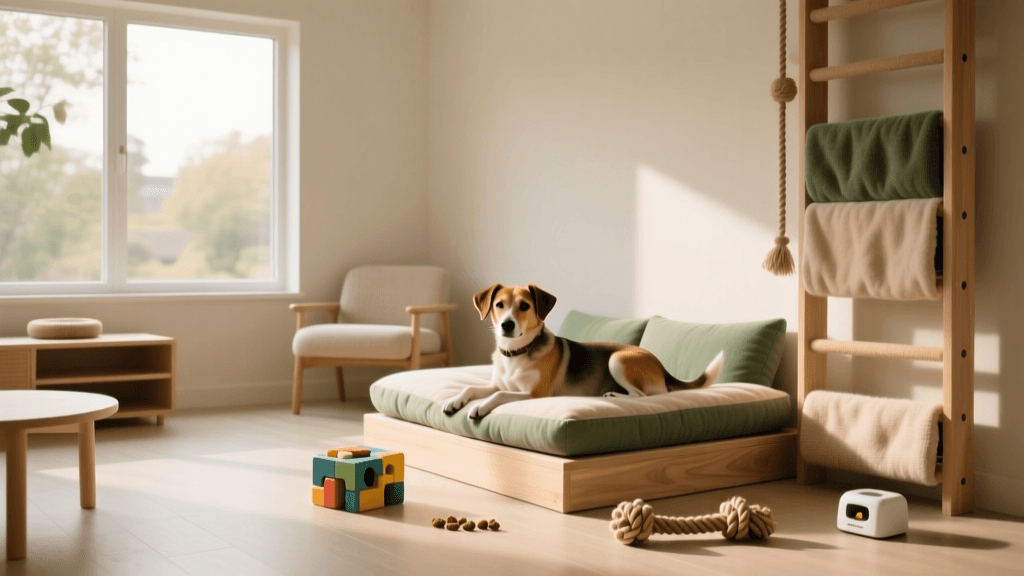
A Decompression Sanctuary is typically a spare bedroom, a large walk-in closet, or a sectioned-off area of a quiet living room. The ideal size is at least 6 feet by 8 feet, allowing the dog enough space to stretch, play, and retreat. We use baby gates or exercise pens rather than closing doors, which can cause isolation distress, or crates, which can induce confinement panic in dogs not previously crate-trained.
Essential Force-Free Hardware for 2026
- Carlson Pet Products Super Wide Adjustable Baby Gate (Approx. $85): This hardware-mounted gate is essential for doorways wider than 36 inches. It features a walk-through door with a dual-locking mechanism, allowing you to secure the area while still providing visual access so the dog doesn't feel entirely isolated.
- K&H Pet Products Thermo-Ortho Bed (Approx. $75): Rescue dogs often suffer from joint stiffness and anxiety-induced shivering. This bed features a removable, washable cover and an internal thermostat that warms to the dog's natural body temperature when they lie down, providing immense physiological comfort without the need for electric heating pads that could be chewed.
- Snuggle Puppy Heartbeat Stuffed Toy (Approx. $45): This toy mimics the heartbeat and warmth of a littermate. It is a staple in force-free shelters worldwide to soothe dogs experiencing their first night alone in a new home.
Positive Reinforcement Enrichment Tools for Day One
In a force-free sanctuary, we do not demand the dog sit or shake for their meals. Instead, we use 'passive enrichment' to build positive associations with the environment. Enrichment allows the dog to use their natural foraging and chewing instincts, which releases dopamine and endorphins, naturally lowering cortisol (stress hormone) levels.
Top Enrichment Recommendations
- West Paw Toppl (Approx. $22): Unlike traditional rubber toys, the Toppl has an open design that is less frustrating for beginners. You can stuff it with plain canned pumpkin, plain Greek yogurt, and a few kibble pieces, then freeze it. Licking and chewing are naturally soothing behaviors for canines.
- LickiMat Soother (Approx. $15): Smear this textured silicone mat with mashed sardines (in water, no salt added) or peanut butter (xylitol-free). The repetitive licking action stimulates the parasympathetic nervous system, promoting deep relaxation.
- Wool Snuffle Mat (Approx. $30): Scatter their daily kibble ration across a dense snuffle mat. This engages their primary sense—smell. Fifteen minutes of sniffing can be as mentally tiring as an hour of physical walking, making it perfect for the low-energy decompression phase.
The 72-Hour Force-Free Decompression Schedule
The following table outlines a structured, choice-based schedule for the first three days. Notice that there are no 'training sessions' or forced walks. Everything is driven by the dog's comfort level and positive reinforcement.
| Timeframe | Force-Free Activity | Enrichment Tool / Resource | Behavioral Goal |
|---|---|---|---|
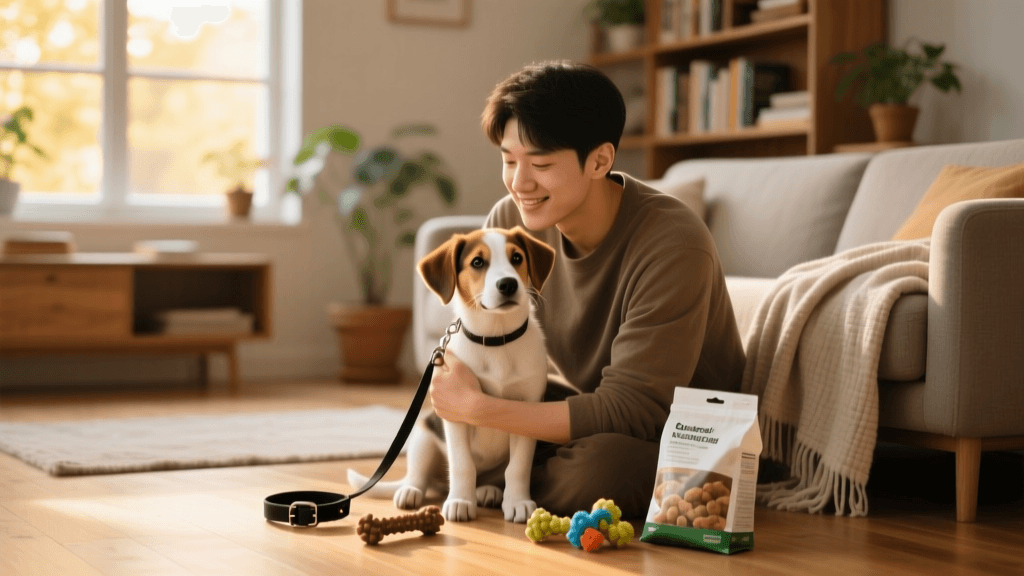
| Day 1: Arrival | Leash dog directly to Sanctuary. Remove leash. Sit quietly on the floor reading a book, ignoring the dog. | Snuggle Puppy, K&H Ortho Bed | Establish the sanctuary as a zero-pressure safe zone. Prevent sensory overload. |
| Day 1: Evening | Offer dinner via scatter-feeding on a Snuffle Mat. No direct eye contact. | Wool Snuffle Mat, High-value kibble | Encourage natural foraging. Build positive association with the room. |
| Day 2: Morning | Open the gate. Allow the dog to choose whether to explore the hallway or stay in the sanctuary. | Carlson Baby Gate (left open) | Promote canine autonomy and consent. Build confidence through choice. |
| Day 2: Afternoon | Introduce a frozen Toppl in the sanctuary. Praise softly if the dog engages. | West Paw Toppl, plain yogurt | Provide soothing, dopamine-releasing chewing activity. |
| Day 3: Morning | Short, 5-minute 'sniffari' in the backyard on a 15-foot biothane long line. No heel commands. | 15ft Long Line, Harness (no-pull) | Allow environmental processing through scent without the pressure of obedience. |
| Day 3: Evening | Consent testing: Offer a hand for sniffing. If the dog leans in, offer gentle chest scratches. | Zuke's Mini Naturals treats | Establish force-free handling boundaries and build trust through consent. |
Force-Free Potty Training from the Sanctuary
Accidents will happen, and how you handle them defines your commitment to force-free methods. Never rub a dog's nose in an accident, and never use a rolled-up newspaper or loud vocal corrections. These archaic methods only teach the dog to hide from you when they need to eliminate, leading to them sneaking behind the sofa to pee.
Instead, manage the environment. When you take the dog out of the sanctuary to their designated potty spot in the yard, use a 15-foot long line attached to a well-fitted Y-front harness (like the Perfect Fit Harness or the Rabbitgoo No-Pull Harness). Give them the full length of the line to sniff and find a spot. The moment they eliminate, use a quiet marker word like 'Yes' or click a clicker, and immediately toss a high-value treat, such as Zuke's Mini Naturals (Roasted Chicken recipe), directly to them. If an accident happens inside, interrupt it gently with a neutral sound like 'Oops,' scoop the dog up or lead them outside, and reward heavily if they finish outside. Clean indoor accidents with an enzymatic cleaner like Nature's Miracle Advanced Stain and Odor Eliminator to completely break down the uric acid crystals.
Reading Canine Body Language: The Key to Consent
A cornerstone of positive reinforcement is understanding when your dog is saying 'no.' Force-free ownership requires us to become fluent in canine body language. A wagging tail does not always mean happiness; a stiff, high, rapidly wagging tail can indicate high arousal or impending aggression. Yawning, lip licking, and 'whale eye' (showing the whites of the eyes) are subtle signs of stress and anxiety.
Before initiating any physical contact, perform a 'Consent Test.' Pet the dog on the chest or shoulder for three seconds, then remove your hand and wait. If the dog leans in, nudges your hand, or looks at you expectantly, they are consenting to more petting. If they turn their head away, freeze, lick their lips, or move away, they are asking for space. Respecting this 'no' is the fastest way to build trust with a rescue dog. For a deeper understanding of these subtle signals, the Humane Society's guide on canine body language provides excellent visual examples of stress and relaxation signals.
Conclusion: Patience is the Ultimate Positive Reinforcement
Setting up a force-free decompression sanctuary in 2026 requires an upfront investment in gates, orthopedic bedding, and enrichment toys, but the return on investment is a confident, bonded, and emotionally stable dog. By removing the pressure to perform, avoiding punitive corrections, and allowing your newly adopted rescue to dictate the pace of their integration, you are laying the neurological groundwork for a lifetime of trust. Remember, you have the next 10 to 15 years to teach them how to sit, stay, and heel. For the first three weeks, your only job is to help them feel safe.
tom-renshaw
All our authors care for dogs every day — read more of their work on the authors page.