Force-Free Puppy Zone Setup: Top 2026 Positive Reinforcement Gear
Discover the best 2026 force-free gear for setting up a positive reinforcement puppy zone, including crates, playpens, and enrichment toys for new dogs.
Why Force-Free Methods Dominate Dog Care in 2026
Welcome to the journey of dog ownership! As we navigate pet care in 2026, the canine behavioral science community has overwhelmingly solidified its stance: positive reinforcement (R+) and force-free methods are not just a trend, but the absolute gold standard for raising a well-adjusted puppy. Outdated dominance-based theories and aversive tools like prong collars or shock collars have been entirely phased out by reputable veterinary behaviorists. Instead, modern dog care focuses on environmental management, reward-based conditioning, and setting up your home to encourage natural, desirable behaviors.
According to the American Veterinary Society of Animal Behavior (AVSAB), reward-based methods are highly effective and avoid the stress, fear, and potential aggression associated with aversive punishment. When you are preparing your home for a new dog, the very first step in a force-free training protocol is creating a 'Puppy Zone.' This is a safe, enriched confinement area that prevents unwanted behaviors (like chewing furniture or indoor accidents) from being practiced, while simultaneously teaching your puppy to love their crate and settle calmly.
Building the Ultimate Positive Reinforcement Puppy Zone
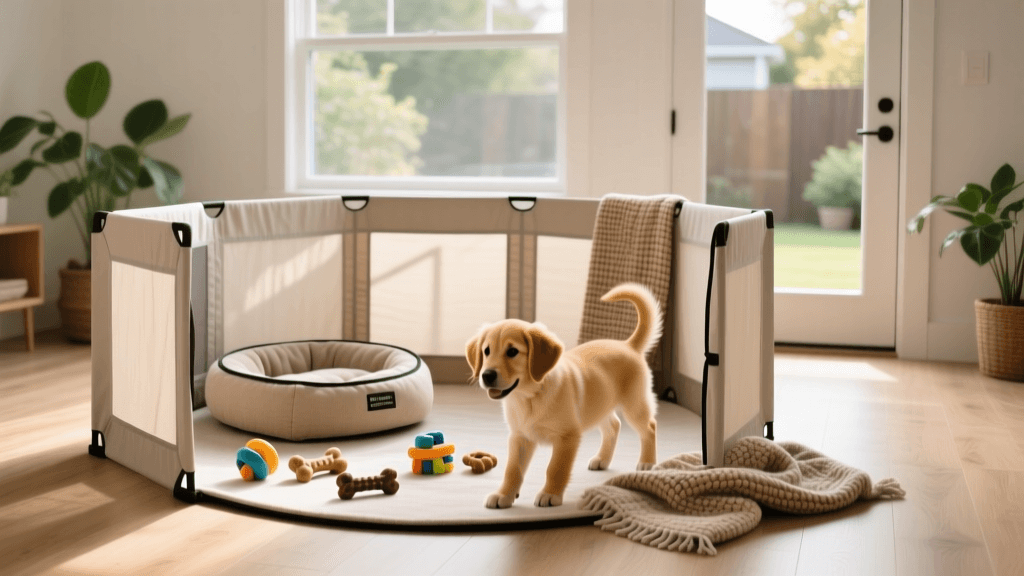
A force-free puppy zone is not a place of isolation or punishment; it is a canine sanctuary. To build this space in 2026, you need modular, safe, and highly functional gear that allows you to manage your puppy's environment without resorting to scolding or physical barriers that cause anxiety.
The Core Confinement Setup
The most effective R+ setup combines a high-quality wire crate with an attached modular playpen. This gives the puppy a designated sleeping den and a slightly larger area for potty pads (if you are pad-training) or a water bowl and enrichment toys.
- The Crate: Diggs Revol Dog Crate (Approx. $185 in 2026)
The Diggs Revol is widely considered the pinnacle of modern crate design. Built with a diamond wire mesh pattern, it prevents puppy paws and snouts from getting trapped—a common issue with traditional wire crates. For force-free crate training, its garage-style side door and ceiling hatch allow you to easily drop high-value treats inside to build positive associations without forcing the puppy through a narrow front door. Use the included puppy divider to adjust the space as your dog grows, ensuring the crate is only large enough for them to stand, turn around, and lie down, which naturally discourages indoor soiling. - The Playpen: FXW Royal Dog Playpen (Approx. $90 for 8 Panels)
Attach an 8-panel or 16-panel FXW playpen directly to the front of the Diggs crate. The FXW features heavy-duty coated wire that resists rust and chewing. By configuring it into a 4x4 foot rectangle, you create a secure 'airlock' system. You can leave the crate door open, allowing the puppy to freely choose between sleeping in their den or playing in the pen, which fosters autonomy and reduces confinement distress.
Essential R+ Enrichment and Conditioning Gear
To teach a puppy to love their crate and settle in their playpen, you must pair the space with incredible value. In positive reinforcement training, we use 'classical conditioning' to change the dog's emotional response to confinement. This requires specialized enrichment toys that keep the puppy engaged and licking/chewing, which naturally releases endorphins and lowers their heart rate.
| Enrichment Tool | Best Use Case | 2026 Average Cost | Force-Free Benefit |
|---|---|---|---|
| West Paw Toppl (Large & Small) | Stuffing with kibble, yogurt, and bone broth, then freezing. | $25 (Large) / $15 (Small) | Interlocking design provides a long-lasting, frustration-free chewing experience that builds extreme positive associations with the crate. |
| LickiMat Soother | Spreading wet food, pumpkin puree, or peanut butter (xylitol-free). | $12 | The textured nubs encourage prolonged licking, which is scientifically proven to self-soothe anxious puppies during their first nights away from littermates. |
| KONG Classic (Red or Black) | Packing with soaked kibble and sealing with a dab of cream cheese. | $18 | The unpredictable bounce and durable rubber make it an excellent reward for entering the crate on cue. |
The First-Week Force-Free Potty Training Schedule
Management is the cornerstone of force-free potty training. By controlling the environment, you prevent accidents from happening, meaning you never have to punish the puppy for making a mistake. The ASPCA Virtual Pet Behaviorist emphasizes that rewarding the exact moment the puppy eliminates in the correct spot is the fastest way to build a lifelong habit.
Timing and Treat Selection
For an 8-to-10-week-old puppy, bladder control is minimal. You must take them to their designated outdoor potty spot every 45 to 60 minutes during the day, and immediately after waking up, eating, or playing. When they eliminate, you must deliver a high-value reward within one second.
In 2026, top R+ trainers recommend using Zuke's Mini Naturals (approx. $8 per 6oz bag). These treats are under 3 calories each, meaning you can deliver 5 to 10 treats in rapid succession (a 'jackpot' reward) without upsetting the puppy's stomach or unbalancing their daily caloric intake. Pair the treat delivery with a marker word like 'Yes!' or use a Karen Pryor i-Click ($6) to precisely mark the behavior.
Sample Day 1 Schedule
- 6:00 AM: Carry puppy directly outside. Mark and reward immediately upon elimination. 10 minutes of supervised outdoor exploration.
- 6:15 AM: Breakfast served inside a frozen West Paw Toppl inside the Puppy Zone playpen.
- 7:00 AM: Potty break outside. Followed by 15 minutes of supervised indoor play and socialization.
- 7:30 AM: Nap time in the Diggs Crate with a LickiMat. (Puppies this age need 18-20 hours of sleep).
- 9:00 AM: Carry outside immediately upon waking. Mark and reward. Repeat cycle.
Troubleshooting Without Aversives
Even with the best gear and a strict schedule, new dog owners will face challenges. The force-free philosophy dictates that we change the environment or the antecedent, rather than punishing the dog. Here is how to handle common first-week hurdles using R+ methods.
Whining in the Crate
If your puppy whines in the crate, avoid the outdated advice of 'letting them cry it out' or shaking a can of coins to startle them into silence. First, rule out a biological need (do they need to potty?). If they are simply protesting the confinement, practice Differential Reinforcement of Incompatible Behavior (DRI). Wait for a micro-second of silence, or for the puppy to offer a 'sit' or 'down' inside the crate, mark that behavior, and drop a high-value treat through the ceiling hatch of the Diggs crate. You are teaching them that quiet, settled behavior operates the treat-dispensing mechanism, not vocalization.
Extinction Bursts
When you stop rewarding an unwanted behavior (like jumping up on you when you enter the puppy zone), the behavior will temporarily get worse before it gets better. This is called an 'extinction burst.' The puppy is essentially thinking, 'Usually jumping gets me attention, why isn't it working? Let me jump harder!' Force-free trainers prepare for this. Do not yell, push the dog away, or use knee-jerk physical corrections. Simply fold your arms, turn your back, and become entirely uninteresting. The absolute millisecond all four paws are on the floor, mark 'Yes!' and deliver a treat to the ground. You are reinforcing the incompatible behavior of having four paws on the floor.
Biting and Mouthing
Puppies explore the world with their mouths, and their needle-like teeth can be painful. Never hold a puppy's mouth shut or tap their nose. Instead, manage the environment by having a plush toy or a braided fleece tug toy in your hand before you reach into the playpen to pet them. This is called 'redirecting.' If teeth touch your skin, let out a calm, high-pitched 'Oops!', withdraw your attention for 3 seconds, and then offer the toy. When they bite the toy, praise them lavishly and engage in a gentle game of tug. This teaches bite inhibition and appropriate chew targets simultaneously.
Final Thoughts on Your 2026 Puppy Journey
Getting a dog is a profound commitment, and the way you begin sets the tone for the next 10 to 15 years together. By investing in modern, safe confinement gear like the Diggs Revol and FXW playpen, and by committing to the science-backed principles of positive reinforcement, you are building a relationship based on trust, clear communication, and mutual joy. Your puppy zone is not a cage; it is the launching pad for a confident, happy, and well-adjusted companion. Stick to your schedule, keep your treat pouch full of Zuke's Minis, and enjoy the beautiful, force-free journey of raising your new best friend.
jonas-cole
All our authors care for dogs every day — read more of their work on the authors page.