Force-Free Puppy Pen Setup 2026: First Week Essentials
Discover how to set up a force-free puppy pen and decompression zone in 2026 using positive reinforcement for a stress-free first week with your new dog.
The 2026 Standard: Why Force-Free Decompression Matters
Bringing a new dog home is one of life's most exciting milestones, but the transition can be deeply overwhelming for both you and your new companion. As we navigate dog ownership in 2026, the veterinary and behavioral communities have universally moved away from outdated, dominance-based 'alpha' theories. Today, the gold standard for welcoming a new puppy or rescue dog relies entirely on positive reinforcement (R+) and force-free methodologies. According to the American Veterinary Society of Animal Behavior (AVSAB), humane, reward-based training is not only more effective but also critical for preventing fear, anxiety, and aggression.
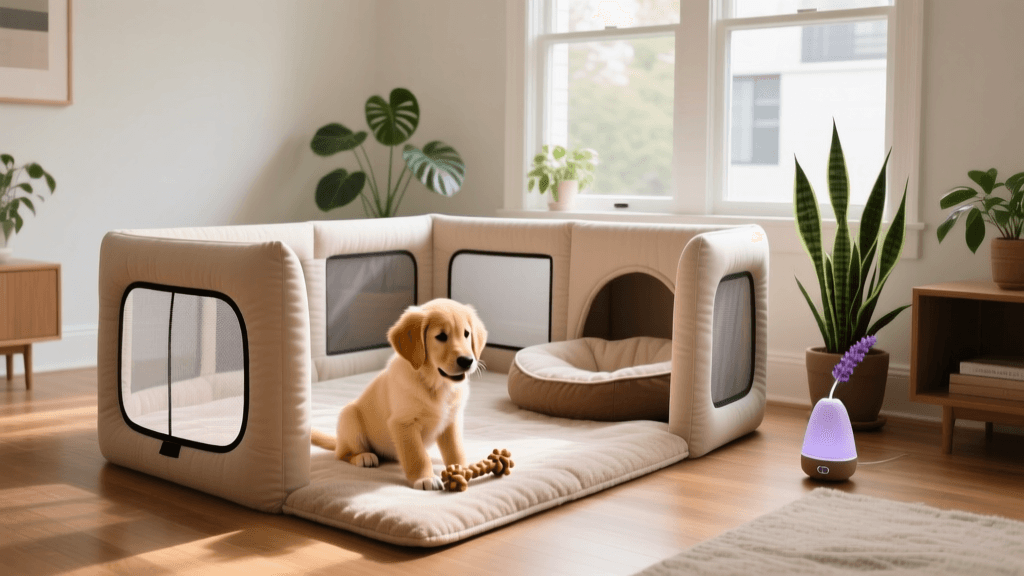
One of the most vital components of a force-free first week is establishing a 'decompression zone'—often configured as a puppy pen or exercise pen. Unlike traditional crate training methods that may involve forcing a dog into confinement and ignoring their distress, a force-free pen setup prioritizes the dog's emotional state. It offers them a safe, enriching sanctuary where they can process new environmental stimuli at their own pace, making choices rather than being subjected to coercion.
Essential Gear for Your Positive Reinforcement Pen
Creating an effective decompression zone requires more than just a metal gate. In 2026, the best force-free setups utilize modular, adaptable equipment that encourages natural foraging and chewing behaviors. These activities naturally lower a dog's heart rate and promote parasympathetic nervous system relaxation.
- Modular Wire Playpen: The Iris USA 8-Panel Pet Playpen remains a top choice for its stability and customizable shape, allowing you to expand the zone as your dog's confidence grows.
- Enrichment Feeders: Ditch the standard stainless-steel bowl. The West Paw Toppl and Hyper Pet IQ Treat Mat are essential for delivering meals in a way that engages your dog's brain and soothes their nervous system through licking and chewing.
- Calming Bedding: The Best Friends by Sheri Donut Bed provides raised edges that mimic a mother's fur, offering deep-pressure comfort for overwhelmed rescues or sleepy puppies.
- Snuffle Mats & Foraging Boxes: Hiding kibble in a snuffle mat encourages natural sniffing behaviors. Studies show that sniffing lowers a dog's pulse rate, making it a perfect decompression activity.
- Enzymatic Cleaners & Pheromones: Accidents will happen. An enzymatic cleaner like Nature's Miracle is mandatory to break down uric acid. Pair this with an Adaptil Optimum pheromone diffuser placed near the pen to provide synthetic calming signals.
Step-by-Step: Shaping Pen Acceptance Without Force
Never push, drag, or lure your dog into the pen and close the door behind them. This creates 'poisoned' associations with the space. Instead, we use a force-free shaping protocol to teach the dog that the pen is the best place in the house.
Phase 1: The Choice Architecture
Leave the pen door open and secured so it cannot swing shut and startle your dog. Toss high-value treats (like boiled chicken or freeze-dried liver) inside the pen while you are nearby. Let the dog enter, eat the treat, and exit freely. Repeat this 20 to 30 times over the first two days. The goal is to build a history of reinforcement for entering the space voluntarily.
Phase 2: Capturing Calmness
When your dog voluntarily walks into the pen and lies down on their calming bed, immediately mark the behavior with a gentle 'yes' or a clicker, and deliver a reward. The ASPCA highly recommends capturing and rewarding calm behaviors to build a foundation of relaxation in new environments. Do not praise them excitedly; simply deliver the treat calmly to maintain the relaxed state.
Phase 3: Duration and Door Closure
Once your dog is happily entering the pen for meals served in a West Paw Toppl, begin closing the door for just one second, then immediately open it and reward. Gradually increase the duration the door is closed by one-second increments, always releasing the dog before they show signs of distress, whining, or pawing at the gate.
First-Week Enrichment & Management Schedule
Management is the cornerstone of force-free dog ownership. By controlling the environment, you prevent unwanted behaviors from being rehearsed. Below is a sample first-week schedule utilizing positive reinforcement and enrichment.
| Time of Day | Activity | Force-Free Implementation |
|---|---|---|
| 7:00 AM | Morning Potty & Breakfast | Carry or lure outside. Serve breakfast in a snuffle mat inside the open pen. |
| 9:00 AM | Decompression Nap | Frozen West Paw Toppl given in the pen. Door closed for 45-90 minutes. |
| 12:00 PM | Training & Socialization | 5 minutes of clicker training (sit, touch) using high-value treats in the living room. |
| 2:00 PM | Afternoon Enrichment | Scatter feeding in the yard or on a snuffle mat to encourage natural foraging. |
| 6:00 PM | Evening Wind Down | Chew time with a bully stick or yak cheese chew inside the pen to soothe the nervous system. |
| 9:00 PM | Nighttime Sleep | Last potty trip. Sleep in the pen with a heartbeat toy or calming pheromone diffuser nearby. |
Navigating First-Week Challenges Force-Free
Even with the best positive reinforcement protocols, challenges will arise. The key to force-free methodology is responding to unwanted behavior without punishment, intimidation, or aversive tools like shock collars or shaker cans.
Whining and Barking in the Pen
If your dog vocalizes in the pen, assess their physical needs first. Do they need to eliminate? Are they in pain? If their needs are met, the whining is likely due to frustration or separation anxiety. Do not yell or cover the pen in anger. Instead, wait for a micro-second of silence, mark it with a 'yes,' and drop a treat inside. If the dog is highly distressed, you may have increased the duration of confinement too quickly. Return to Phase 1 of the shaping protocol and rebuild their positive association.
Mouthing and Biting in the Pen
Puppies and even some adolescent rescues explore the world with their mouths. If your dog begins biting the wire panels or your hands when you reach into the pen, avoid physical corrections or holding their mouth shut. Instead, use redirection. Always have a braided fleece tug toy or a natural chew nearby. When teeth touch skin or wire, immediately offer the appropriate chew item and reward them heavily for engaging with it. If the dog is overstimulated, they may simply need a nap. In force-free training, we use 'time-ins'—sitting quietly near the pen and tossing treats for calm behavior—rather than isolating the dog as a punishment.
Potty Accidents in the Decompression Zone
Accidents happen. Never rub a dog's nose in it or scold them after the fact; this only teaches the dog to fear you, not to hold their bladder. Clean the area with an enzymatic cleaner to remove the scent marker. If accidents are frequent, your pen space might be too large, allowing the dog to designate one corner as a bathroom. Use the modular panels to temporarily shrink the space, as dogs naturally avoid soiling their immediate sleeping area. For more tips on humane house training, resources from Fear Free Pets emphasize reducing emotional stress during the housetraining process.
Conclusion: Setting the Tone for a Lifetime of Trust
The first week with your new dog is about building a bank account of trust. By utilizing a force-free decompression zone, providing species-appropriate enrichment, and relying on positive reinforcement, you are communicating to your dog that they are safe, understood, and valued. As you move through 2026 and beyond, this foundation of mutual respect will make every subsequent training milestone—from loose-leash walking to advanced recall—infinitely easier and more joyful for both of you.
hannah-wickes
All our authors care for dogs every day — read more of their work on the authors page.