Force-Free Puppy Bite Inhibition Guide 2026: Top Puzzle Toys
Discover force-free puppy bite inhibition techniques for 2026. Learn positive reinforcement methods and the best puzzle toys to soothe teething pups.
The Evolution of Puppy Training in 2026
Welcoming a new puppy into your home is an exhilarating experience, but it often comes with a sharp, painful reality: puppy biting. As we navigate through 2026, the landscape of canine behavioral science has firmly shifted away from outdated, aversive dominance theories and fully embraced force-free, positive reinforcement methodologies. Modern veterinary behaviorists and certified professional dog trainers now universally agree that puppies do not bite to assert dominance or challenge your authority. Instead, mouthing and biting are natural, developmentally appropriate behaviors driven by exploration, teething discomfort, and social play.
According to the American Veterinary Society of Animal Behavior (AVSAB) resources, the use of aversive punishment, such as alpha rolls, muzzle grabbing, or physical corrections, can lead to long-term behavioral fallout, including fear-based aggression and anxiety. In contrast, force-free bite inhibition protocols focus on teaching the puppy how to control the pressure of their jaw and redirecting their natural chewing instincts onto appropriate, soothing outlets. This comprehensive guide will walk you through the most effective, science-backed, force-free methods for managing puppy biting in 2026, featuring the latest interactive puzzle toys and positive reinforcement strategies.
Why Force-Free Methods Work Best for Bite Inhibition
Bite inhibition is the process of teaching a puppy to soften their bite. In a litter, puppies learn this from their siblings; if one puppy bites too hard, the other yelps and stops playing. This natural feedback loop teaches the biter that hard bites end the fun. When a puppy transitions to a human home, we must replicate this feedback loop without introducing fear or pain.
Force-free training utilizes operant conditioning, specifically negative punishment (the removal of something the dog wants, like your attention, to decrease a behavior) and positive reinforcement (adding a reward to increase a desired behavior). When you use force-free methods, you build a foundation of trust. Your puppy learns that gentle interactions yield treats, play, and affection, while hard bites result in a temporary pause in the interaction. This cognitive approach builds a confident, well-adjusted adult dog who chooses to be gentle because it is rewarding, not because they are afraid of being punished.
The Teething Timeline: What to Expect
Understanding your puppy's developmental milestones is crucial for providing the right teething relief at the right time. Puppies go through several distinct dental phases during their first year.
- 2 to 4 Weeks: Deciduous (baby) teeth begin to erupt. Puppies are usually still with their breeder or mother during this phase.
- 5 to 8 Weeks: All 28 baby teeth are typically in place. This is when puppies start exploring textures and often go to their new homes.
- 12 to 16 Weeks: The teething discomfort peaks as adult teeth begin to push through the gums, causing the baby teeth to fall out. You may find tiny teeth on the floor or notice increased chewing and biting behavior.
- 6 to 8 Months: All 42 adult teeth should be fully erupted. If any baby teeth remain (retained deciduous teeth), a veterinarian should extract them to prevent orthodontic issues.
The 2026 Positive Reinforcement Teething Toolkit
To successfully redirect a biting puppy, you must have high-value, soothing alternatives readily available. In 2026, the market for interactive, force-free puzzle toys has expanded, offering incredible options for mental enrichment and physical teething relief. Here are the top tools every puppy owner should have in their arsenal:
1. The West Paw Toppl (2026 Edition)
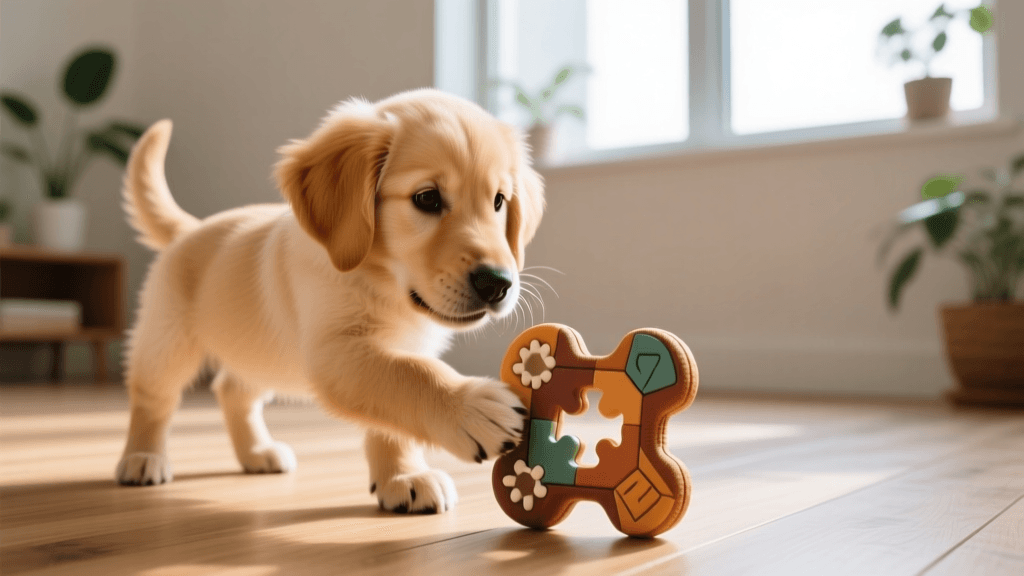
The West Paw Toppl remains a gold standard for force-free enrichment. Made from Zogoflex, a durable, non-toxic, and buoyant material, the Toppl features inner ridges that trap soft treats and liquids. The 2026 models offer enhanced interlocking capabilities, allowing you to connect a small and large Toppl together to create a complex, long-lasting puzzle that requires the puppy to use their paws and tongue, completely bypassing the need to use their teeth destructively.
2. Kong Classic Puppy (Gen 3 Rubber)
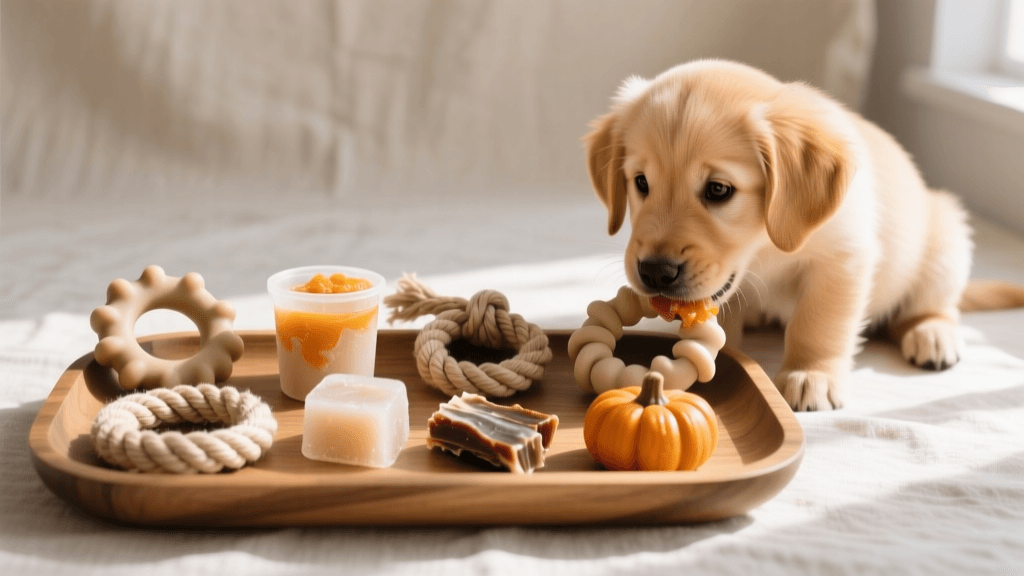
The Kong Classic Puppy is specifically formulated with a softer rubber compound designed for developing jaws. Stuffing a Kong with a mixture of plain Greek yogurt, pureed pumpkin, and low-sodium chicken broth, then freezing it overnight, provides a numbing effect on inflamed gums. The unpredictable bounce also engages the puppy's prey drive, redirecting their energy away from your ankles and hands.
3. Snuffle Mats and Lick Mats
For puppies who are overstimulated and biting out of frustration rather than teething pain, snuffle mats and silicone lick mats are invaluable. Licking and foraging are naturally soothing behaviors that release endorphins in a dog's brain. Spreading a thin layer of goat milk or peanut butter (xylitol-free) on a textured lick mat and freezing it can turn a chaotic, bitey puppy into a calm, focused one within minutes.
Step-by-Step Force-Free Bite Inhibition Protocol
When your puppy's teeth make contact with your skin, follow this structured, force-free protocol to teach bite inhibition effectively.
Step 1: The Redirect
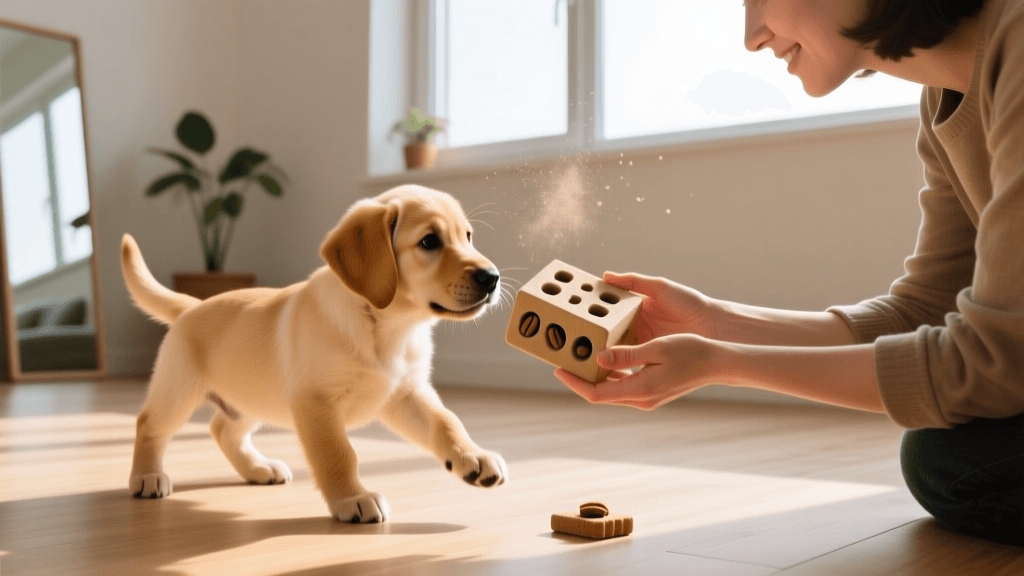
Before you even engage in play, have a teething toy nearby. The moment the puppy attempts to bite your hand, immediately present the toy. When they bite the toy instead of your skin, offer enthusiastic verbal praise and a small treat. This is positive reinforcement in action: you are rewarding the exact behavior you want to see repeated.
Step 2: The Disengage (Negative Punishment)
If the puppy bypasses the toy and bites your skin with hard pressure, use the disengage method. Let out a high-pitched, genuine yelp or a calm, firm “Ouch,” and immediately stand up, cross your arms, and look away. You are removing your attention (the reward). Wait for three to five seconds of calm behavior, then re-engage by offering the toy. If they bite you again, repeat the disengage, but leave the room for 10 seconds. This teaches the puppy that human skin is entirely off-limits and that biting makes the fun stop.
Step 3: Capturing Calm
Puppies often bite when they are overtired. In 2026, canine sleep science emphasizes that puppies need 18 to 20 hours of sleep per day. If your puppy is acting like a landshark, they likely need an enforced nap in their crate or playpen. Reward your puppy with a treat whenever you catch them lying down calmly on their bed. Capturing and reinforcing calmness reduces overall arousal levels, leading to less frantic biting.
2026 Interactive Puzzle Toy Comparison Chart
Choosing the right tool for your specific puppy's chewing style and size is essential. Below is a comparison of the top force-free teething toys available this year.
| Toy Name | Best For | Material | Freezable? | Price Range (2026) |
|---|---|---|---|---|
| West Paw Toppl | Aggressive chewers, puzzle lovers | Zogoflex Rubber | Yes | $18 - $25 |
| Kong Classic Puppy | Teething relief, solo play | Soft Puppy Rubber | Yes | $12 - $18 |
| Hyper Pet LickiMat | Overstimulated pups, grooming | Food-Grade Silicone | Yes | $10 - $15 |
| Nylabone Puppy Chew | Light chewers, texture seekers | Thermoplastic Polymer | No | $8 - $12 |
Common Mistakes to Avoid in Force-Free Training
Even well-intentioned owners can accidentally reinforce biting or create fear. To ensure your positive reinforcement strategy succeeds, avoid these common pitfalls:
- Avoid Bitter Sprays as a Primary Solution: While taste deterrents exist, they do not teach the puppy what they should do. Force-free training relies on teaching an incompatible alternative behavior, not just making the unwanted behavior taste bad.
- Never Hold the Mouth Shut: This is an aversive technique that can cause fear, defensiveness, and a breakdown of trust. It directly contradicts the LIMA (Least Intrusive, Minimally Aversive) principles championed by modern behaviorists.
- Do Not Push the Puppy Away: When a puppy bites your hands and you push them away, they often interpret this as an invitation to wrestle, which increases their arousal and leads to harder biting.
- Ensure Consistency: If you allow the puppy to bite your hands when you are wearing old clothes but scold them when you are wearing work clothes, the puppy will become confused. The rules must be the same 100% of the time.
Final Thoughts on Puppy Socialization
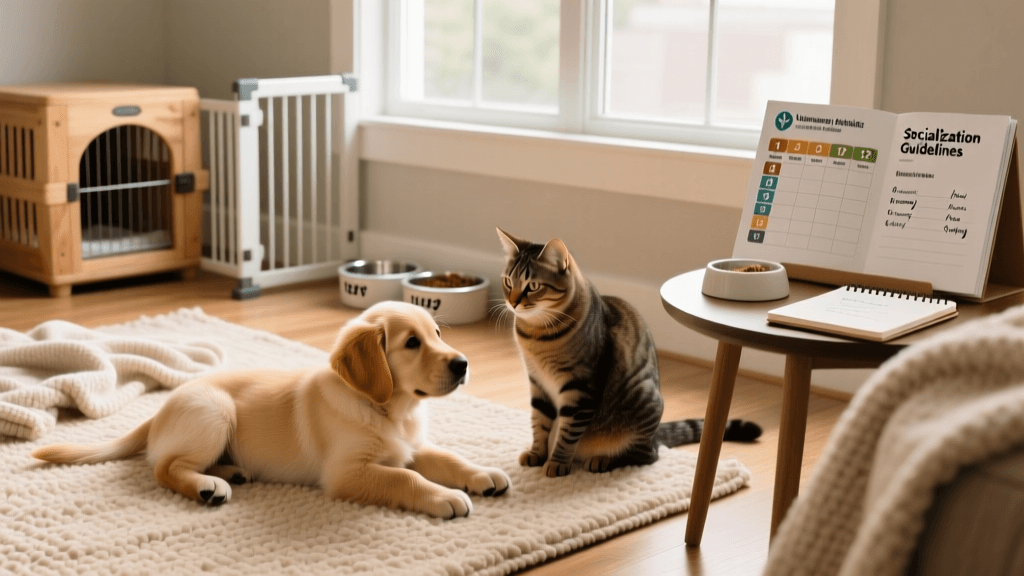
Bite inhibition is deeply intertwined with early socialization. The ASPCA's guide on puppy mouthing highlights that well-socialized puppies who attend force-free, positive reinforcement puppy classes learn bite inhibition much faster. Playing with other vaccinated, well-mannered puppies provides real-time, species-appropriate feedback that humans simply cannot replicate. When a puppy bites a littermate too hard, the sibling stops playing instantly. This peer-to-peer learning is invaluable.
Raising a puppy in 2026 means having access to more scientific knowledge and better enrichment tools than ever before. By committing to force-free methods, utilizing interactive puzzle toys like the West Paw Toppl and Kong Classic, and maintaining a consistent, reward-based protocol, you will guide your puppy through the teething phase with patience and empathy. Remember, puppy biting is a temporary developmental stage. With positive reinforcement, your sharp little landshark will soon mature into a gentle, well-mannered adult dog who knows exactly how to use their mouth appropriately.
robin-maitland
All our authors care for dogs every day — read more of their work on the authors page.