Understanding Leash Reactivity In 2026: Force-Free Calming Signals
Discover how to decode canine calming signals and use the force-free Look At That game to reduce leash reactivity in 2026 with science-based methods.
The Shift to Force-Free Reactivity Training in 2026
As we navigate the evolving landscape of canine behavior science in 2026, the dog training community has overwhelmingly rejected outdated, dominance-based paradigms. Today, certified behaviorists and veterinary professionals recognize that leash reactivity is not a display of stubbornness or a bid for alpha status. Instead, it is a complex emotional response rooted in fear, frustration, or over-arousal. By understanding the psychology behind your dog's behavior and utilizing force-free positive reinforcement methods, you can transform your stressful walks into peaceful bonding experiences.
The American Veterinary Society of Animal Behavior (AVSAB) continues to strongly advocate for reward-based training methods, noting that aversive tools like prong collars or shock collars can exacerbate anxiety and damage the human-animal bond. In 2026, the gold standard for addressing reactivity involves a dual approach: decoding your dog's subtle communication signals and implementing structured counter-conditioning protocols like the Look At That (LAT) game.
Decoding Canine Calming Signals: The Early Warning System
Before a dog barks, lunges, or snaps, they almost always communicate their discomfort through subtle body language. Norwegian dog trainer Turid Rugaas coined the term calming signals to describe these innate behaviors dogs use to self-soothe and de-escalate tense situations. According to the American Kennel Club (AKC), recognizing these micro-expressions is the foundational step in any force-free behavior modification plan.
Key Calming Signals to Watch For
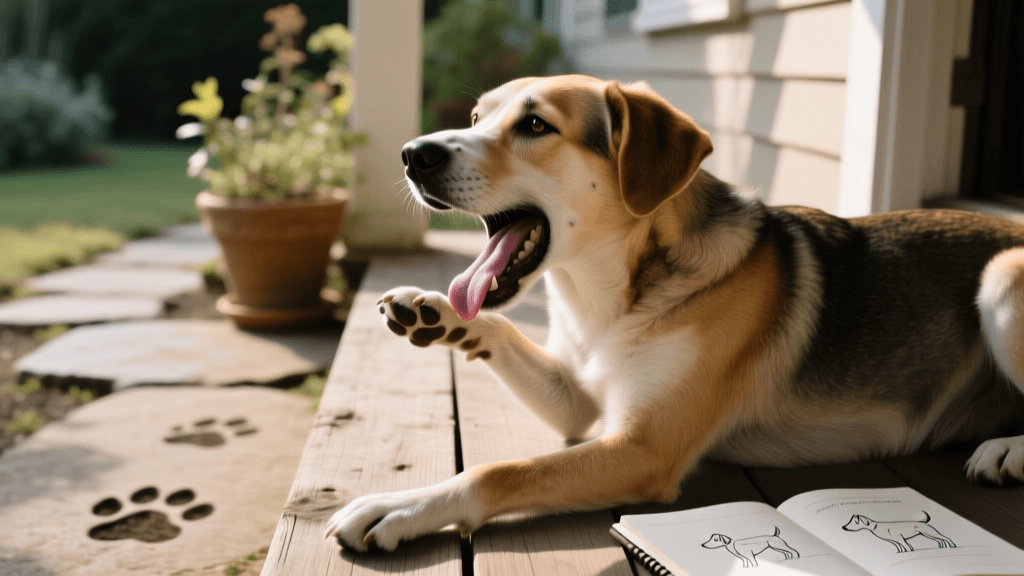
- Lip Licking and Yawning: While these can indicate hunger or tiredness, in a stressful context (like spotting another dog), they are primary indicators of rising cortisol levels.
- Sniffing the Ground: A sudden, intense interest in a patch of grass when a trigger approaches is a displacement behavior used to avoid direct eye contact and lower the emotional temperature.
- Turning the Head or Body Away: Direct, sustained eye contact is perceived as a threat in canine culture. A dog turning its head is actively trying to communicate peaceful intentions.
- Shaking Off: Similar to shaking off water, dogs do this when dry to reset their nervous system after a stressful encounter.
When you observe these signals, your dog is telling you they are approaching their stress threshold. In 2026, force-free trainers emphasize the importance of advocating for your dog at this exact moment by increasing distance from the trigger before the reactivity explosion occurs.
The Importance of Canine Consent and Agency
In 2026, force-free training places a massive emphasis on consent testing. If you reach out to pet your dog and they turn their head away or lick their lips, they are utilizing calming signals to ask for space. Respecting these signals in everyday life builds profound trust. When a dog learns that their communication is heard and respected by their handler, their overall baseline anxiety decreases, making them significantly more resilient when facing outdoor triggers.
The Look At That (LAT) Game: A Step-by-Step Protocol
Developed by Leslie McDevitt in her seminal book Control Unleashed, the LAT game is a revolutionary force-free technique that changes your dog's emotional response to a trigger. Instead of punishing the dog for looking at another dog, you reward them for noticing the trigger and then voluntarily turning their attention back to you.
Step 1: Establish the Sub-Threshold Distance
Find a distance where your dog can see the trigger (e.g., another dog) but remains under their reactivity threshold. This might be 50 feet or 150 feet, depending on the individual dog. If your dog is staring rigidly, barking, or ignoring high-value treats, you are too close.
Step 2: Mark and Reward the Look
The moment your dog glances at the trigger, use a marker word like Yes! or click a clicker. Then, deliver a high-value reward. In 2026, trainers recommend using biologically appropriate, high-motivation treats like air-dried venison or freeze-dried beef liver (expect to pay around $40 to $50 per pound for premium options like Ziwi Peak or K9 Natural). The goal is to create a classical conditioning loop: Trigger appears equals amazing food appears.
Step 3: Shape the Turn
Initially, you may need to lure your dog's head back to you after marking. Over several sessions, wait a half-second longer before marking. Your dog will eventually look at the trigger and immediately whip their head back to you in anticipation of the treat. You have now successfully rewired their emotional response.
Step 4: Decrease Distance Gradually
Only decrease the distance to the trigger when your dog is consistently offering the look and turn behavior with a relaxed body posture. If calming signals reappear, increase the distance immediately.
2026 Force-Free Equipment Guide for Reactive Dogs
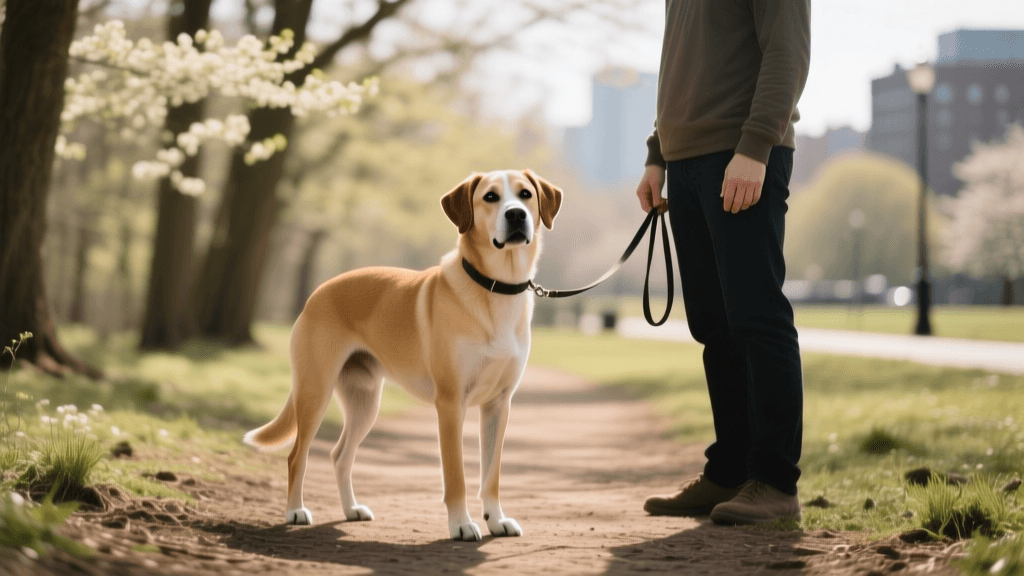
Using the right equipment is critical for safety and comfort. Aversive tools cause pain and associate that pain with the trigger, worsening reactivity. The ASPCA strongly advises against choke, prong, and electronic collars. Below is a comparison of the top force-free harnesses recommended by behaviorists in 2026.
| Brand and Model (2026) | Type | Best For | Approx. Price |
|---|---|---|---|
| Ruffwear Front Range (2026 Ed.) | Dual-Clip (Front and Back) | Mild pullers; everyday walks with reactive dogs | $45 - $50 |
| Perfect Fit Harness | Custom Modular (3-piece) | Escape artists and uniquely shaped breeds | $75 - $90 |
| Balance Harness | Dual-Clip (No restrictive armpits) | Dogs with shoulder mobility issues or gait sensitivities | $60 - $70 |
| Haqihana Double H | Back-Clip (H-Style) | Calmer dogs needing a secure, non-restrictive feel | $40 - $55 |
Pro Tip: Pair your front-clip harness with a 15-to-30-foot biothane long line. Biothane has become the industry standard in 2026 due to its waterproof, easy-to-clean properties, allowing you to give your dog the freedom to sniff and decompress while maintaining safe control in open areas.
The Role of Decompression Walks in 2026
Force-free reactivity training is not just about what you do when a trigger appears; it is equally about how your dog spends their downtime. Chronic stress keeps a dog's baseline cortisol levels elevated, meaning they are closer to their reactivity threshold before they even leave the house. In 2026, behaviorists heavily prescribe decompression walks or sniffaris as a mandatory component of any behavior modification plan.
Allowing your dog to sniff on a long line in a low-traffic, natural environment lowers their heart rate and engages their parasympathetic nervous system. Sniffing is mentally exhausting for dogs. Fifteen minutes of intense sniffing can provide the same cognitive enrichment as an hour of physical running. Incorporating two or three decompression walks per week ensures your dog's stress cup is emptied, giving them the emotional bandwidth to handle the LAT game and counter-conditioning work during your structured training sessions.
When selecting locations for these sniffaris, avoid high-traffic urban parks where unexpected off-leash dogs might appear. Instead, seek out quiet suburban fields, wooded trails, or even rent private, fenced-in yards through specialized apps that have surged in popularity throughout 2026. The goal is zero pressure and zero expectations, allowing for pure, unadulterated canine exploration.
Managing Thresholds, Timelines, and Expectations
One of the most common pitfalls for owners of reactive dogs is rushing the process. Neuroplasticity, the brain's ability to reorganize itself by forming new neural connections, takes time. Rewiring a dog's amygdala response to a perceived threat is not an overnight fix.
Behavior modification is a marathon, not a sprint. In 2026, we focus on the dog's emotional state rather than just suppressing the outward symptoms. A dog that is forced to sit and stare at a trigger while terrified is not obedient; they are in a state of learned helplessness.
Expect to spend 3 to 6 months of consistent, sub-threshold LAT games before you see a significant reduction in reactivity on standard walks. Keep your sessions short (10 to 15 minutes) to prevent cortisol fatigue. Always end on a positive note, and remember that advocating for your dog's space by calmly walking away from a trigger is a massive victory in force-free training.
Final Thoughts
Understanding your dog's leash reactivity through the lens of calming signals and positive reinforcement transforms a frustrating behavioral issue into an opportunity for deep communication. By honoring their boundaries, utilizing high-value rewards, and employing science-backed protocols like the LAT game, you are not just training your dog; you are helping them feel safe in a chaotic world.
robin-maitland
All our authors care for dogs every day — read more of their work on the authors page.