Dog Separation Anxiety vs Boredom: Diagnosis and Solutions
Is your dog destroying the house out of boredom or panic? Learn to diagnose separation anxiety versus boredom and apply proven behavioral solutions.
The Aftermath: Panic or Playtime?
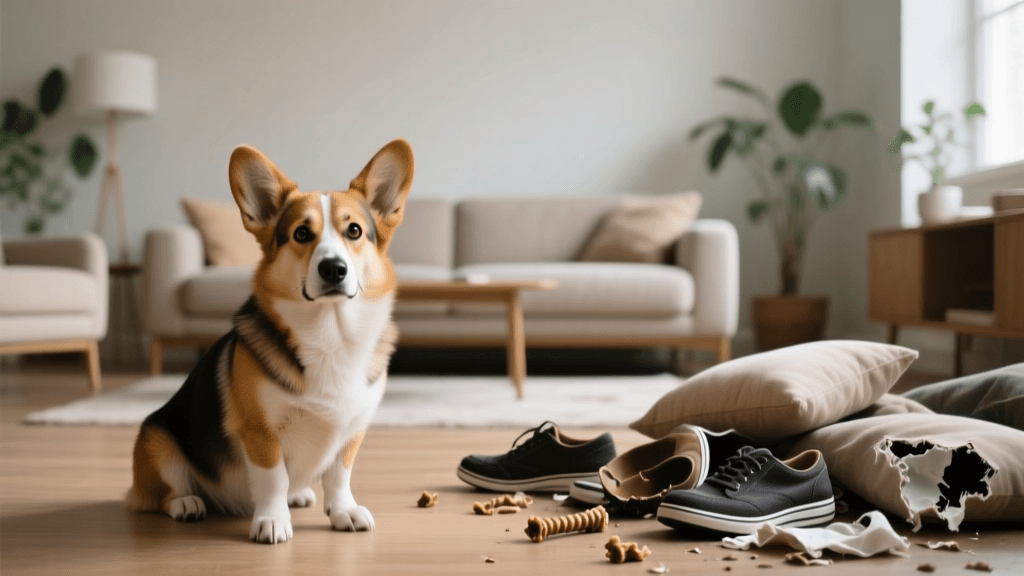
Coming home to a destroyed living room is one of the most disheartening experiences in dog ownership. You walk through the door, tired from a long day at work, only to find your favorite pillows shredded, the trash scattered across the kitchen floor, or deep scratch marks gouged into the front door. The immediate human reaction is often anger, followed by the assumption that the dog is acting out of spite or revenge. However, canine psychology tells a vastly different story. Dogs do not possess the cognitive capacity for spite. When a dog destroys your home while you are away, they are communicating a profound unmet need.
The critical first step in solving this problem is accurately diagnosing the root cause: is your dog acting out of sheer boredom, or are they experiencing the sheer panic of separation anxiety? Misdiagnosing the issue can lead to ineffective training methods, wasted money on the wrong products, and a deteriorating bond between you and your pet. According to the ASPCA, separation anxiety is a complex behavioral disorder that requires a vastly different intervention strategy than simple under-stimulation.
Diagnosing the Root Cause: Separation Anxiety vs. Boredom
Before you can implement a solution, you must understand the motivation behind the destruction. Boredom is a state of under-stimulation; the dog is looking for an outlet for their physical and mental energy. Separation anxiety, on the other hand, is a panic response triggered by the absence of their primary attachment figure. The Humane Society of the United States notes that dogs with separation anxiety are essentially experiencing a canine equivalent of a panic attack.
Use the diagnostic table below to help identify which issue your dog is facing. For the most accurate data, set up a cheap indoor Wi-Fi pet camera (like the Wyze Cam v3, approx. $35) to record your dog's behavior during the first hour of your absence.
| Behavioral Feature | Separation Anxiety | Boredom / Under-stimulation |
|---|---|---|
| Timing of Destruction | Usually begins within the first 15 to 30 minutes of departure. | Can happen at any time, often hours after you leave. |
| Target Items | Exit points (doors, windows), owner's scented items (shoes, bed). | Entertainment items (toys, trash, pillows, furniture legs). |
| Vocalization | Continuous howling, crying, or panting (caught on camera). | Occasional barking at outside noises, otherwise quiet. |
| Potty Accidents | Yes, urination/defecation despite being fully house-trained. | Rare; usually limited to chewing and scratching. |
| Greeting Behavior | Frantic, overly attached, shadowing owner constantly. | Happy to see you, but settles down quickly after greeting. |
The Psychology Behind the Destruction
Why do dogs chew and scratch when left alone? From an evolutionary standpoint, chewing is a self-soothing mechanism. The act of gnawing on an object releases endorphins in a dog's brain, which naturally lowers their heart rate and reduces stress. When a bored dog finds a pillow, they are essentially creating their own entertainment and self-soothing. When a dog with separation anxiety scratches at a doorframe, they are exhibiting 'escape behavior'—a desperate, instinctual drive to break through barriers to reunite with their pack leader. Punishing a dog for either behavior after the fact is entirely counterproductive, as dogs lack the episodic memory to connect your scolding with an action they performed hours ago.
Actionable Solutions for Boredom-Induced Destruction
If your diagnostic camera shows your dog calmly settling down for a nap, but later waking up to dismantle the trash can, you are dealing with boredom and excess energy. The solution here is a combination of physical exhaustion and mental enrichment.
1. The Pre-Departure Enrichment Protocol
A tired dog is a well-behaved dog, but mental fatigue is often more effective than physical fatigue. Before you leave for work, implement a 20-minute enrichment routine.
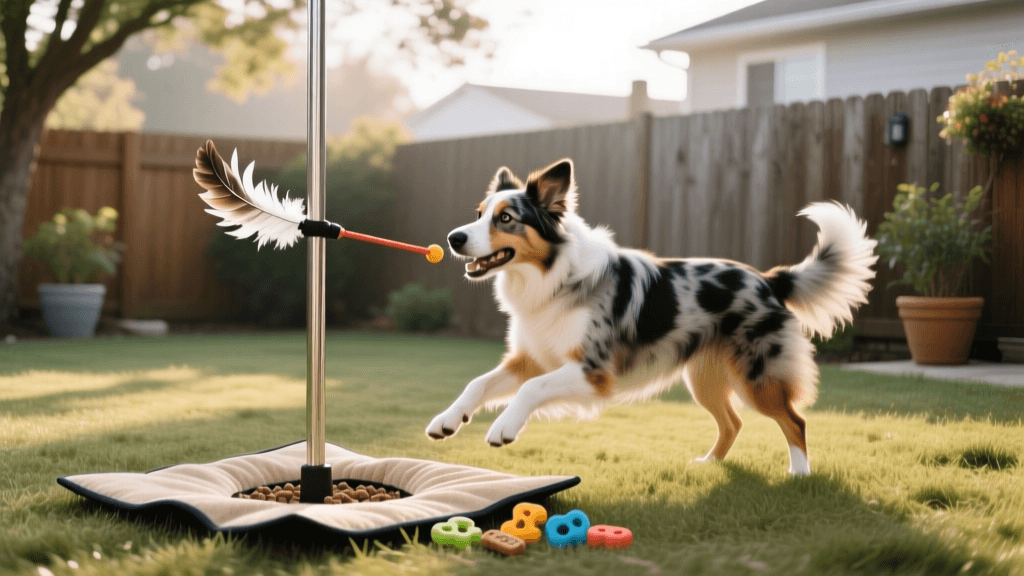
- The Frozen Kong Classic ($15 - $20): Use a medium or large Kong (depending on your dog's jaw strength). Fill it with a mixture of plain Greek yogurt, mashed banana, and a dollop of xylitol-free peanut butter. Freeze it overnight. This forces the dog to spend 30-45 minutes licking and chewing, which releases calming endorphins.
- Puzzle Toys: Invest in the Outward Hound Nina Ottosson Dog Brick Puzzle ($28). Hide high-value treats (like freeze-dried liver) in the compartments. This forces the dog to use their brain to slide and flip pieces to access the food.
- Snuffle Mats ($20 - $30): Scatter your dog's morning kibble across a fabric snuffle mat. Foraging for food mimics natural wild behaviors and can burn as much energy as a 30-minute walk.
2. Environmental Management
Set your dog up for success by managing the environment. Use a baby gate ($40) to restrict access to high-risk areas like the kitchen or living room. Provide a designated 'chew zone' with a durable bed (like the Kuranda Chewproof Bed, approx. $130) and a variety of textured chew toys.
Actionable Solutions for Separation Anxiety
If your camera footage reveals pacing, drooling, frantic scratching at doors, and immediate vocalization upon your departure, your dog is suffering from separation anxiety. The International Association of Animal Behavior Consultants (IAABC) emphasizes that this is a panic disorder, not a training deficit. You cannot 'obedience train' a dog out of a panic attack. You must use Desensitization and Counterconditioning (DS/CC).
1. Desensitizing Pre-Departure Cues
Dogs with separation anxiety begin to panic long before you leave the house. They recognize your 'departure cues'—picking up your keys, putting on your shoes, or grabbing your coat. You must decouple these actions from your actual departure.
- The Protocol: Pick up your keys, then sit back down on the couch and watch TV. Put on your shoes, then take them off and make a cup of coffee. Do this 10 to 15 times a day on your days off. Over a period of 2 to 3 weeks, your dog's brain will stop associating the sound of jingling keys with the terror of abandonment.
2. Graduated Absences
Once your dog is no longer reacting to departure cues, begin practicing micro-departures.
- Step out the front door and immediately step back in (1 second).
- Step out, close the door, wait 5 seconds, and re-enter.
- Gradually increase the time to 1 minute, 5 minutes, and 15 minutes over several weeks.
- Crucial Rule: Never leave the dog alone long enough for them to panic. If they panic at minute 10, your next training session must only be 8 minutes long. Pushing them past their threshold reinforces the panic response.
3. Pharmacological and Calming Support
For severe cases, behavioral modification must be paired with chemical support to lower the dog's baseline anxiety levels so learning can occur.
- Adaptil DAP Diffuser ($25 - $30): This plug-in diffuser releases a synthetic version of the canine appeasing pheromone. It covers up to 700 square feet and should be placed in the room where the dog spends the most time.
- Calming Supplements: Products containing L-Theanine, L-Tryptophan, or Hemp (such as Zesty Paws Calming Chews, approx. $26 for a 90-count bag) can take the edge off mild anxiety. Give them 45 minutes before departure.
- Prescription Medication: For dogs who injure themselves or cannot function, consult a veterinary behaviorist. Medications like Fluoxetine (Prozac) or Trazodone are frequently prescribed and can cost between $20 and $50 per month.
4. Hiring a Professional
Separation anxiety is notoriously difficult to treat alone. Consider hiring a Certified Separation Anxiety Trainer (CSAT). Expect to pay between $150 and $250 per hour for specialized virtual or in-home consultations. While it is a significant financial investment, it is often necessary to prevent the dog from being surrendered to a shelter.
Tracking Progress and Adjusting
Whether you are treating boredom or anxiety, data is your best friend. Keep a daily log of your departures, noting the duration of your absence, the enrichment tools provided, and the state of the house upon your return. If you are using a pet camera, review the footage weekly to look for subtle signs of stress, such as lip licking, yawning, or whale eye, which may indicate that you are progressing too quickly.
'Punishing a dog for destruction caused by separation anxiety is akin to punishing a child for crying when they are lost in a shopping mall. The behavior is a symptom of terror, not disobedience. Our goal is to change the dog's emotional response to being alone, not just suppress the symptoms.' — Consensus from Certified Applied Animal Behaviorists.
Conclusion
Diagnosing the 'why' behind your dog's destructive behavior is the key to restoring peace in your home and preserving your sanity. By carefully observing your dog's behavior, utilizing the right enrichment tools for boredom, and applying patient, science-backed desensitization protocols for separation anxiety, you can help your canine companion feel safe, stimulated, and secure. Remember that behavioral modification is a marathon, not a sprint. Celebrate the small victories, manage the environment to prevent rehearsal of bad habits, and never hesitate to seek professional guidance when the burden becomes too heavy to carry alone.
priya-sutaria
All our authors care for dogs every day — read more of their work on the authors page.