Force-Free Emergency Recall Training for Hiking in 2026
Learn force-free emergency recall training for hiking in 2026. Discover positive reinforcement techniques, top treat pouches, and whistle tips.
The Shift to Force-Free Recall in 2026
When you are navigating rugged hiking trails with your dog, a reliable emergency recall is not just a convenience—it is a critical safety tool. As of 2026, the dog training community has overwhelmingly shifted away from aversive tools like electronic shock collars. Instead, certified behaviorists and veterinary experts champion positive reinforcement (R+) and force-free methods. This approach builds a dog's intrinsic desire to return to you, ensuring that even in high-distraction environments, your dog chooses you over wildlife or other hikers.
Why Positive Reinforcement Outperforms Aversives
The science behind force-free training is rooted in operant conditioning and neurobiology. When a dog is rewarded with high-value treats or play for returning, their brain releases dopamine, reinforcing the neural pathway that associates the recall cue with a highly positive outcome. Conversely, aversive methods rely on fear and pain suppression. While a shock collar might interrupt a behavior in the moment, it does not teach the dog what to do instead, and it can severely damage the human-canine bond.
According to the American Veterinary Society of Animal Behavior (AVSAB), reward-based training is the most effective and humane method for all dogs, explicitly noting that aversive techniques can lead to increased stress, anxiety, and even aggression. In 2026, leading outdoor recreation areas have begun requiring proof of force-free recall training for off-leash permits, recognizing that dogs trained with positive reinforcement exhibit more reliable and enthusiastic compliance.
Essential Gear for Force-Free Recall Training
To successfully train an emergency recall, you need the right equipment to manage the environment and deliver rewards efficiently.
- Biothane Long Lines (15-30 feet): Biothane is waterproof, dirt-proof, and doesn't burn your hands if your dog bolts. In 2026, brands like Mighty Dog Gear and Signature K9 offer lightweight, 3/8-inch biothane lines perfect for hiking.
- The Acme 211.5 Gundog Whistle: Verbal cues can get lost in the wind or sound different when you are panicked. The Acme 211.5 produces a consistent, high-frequency pitch that cuts through forest noise and remains identical every time you blow it.
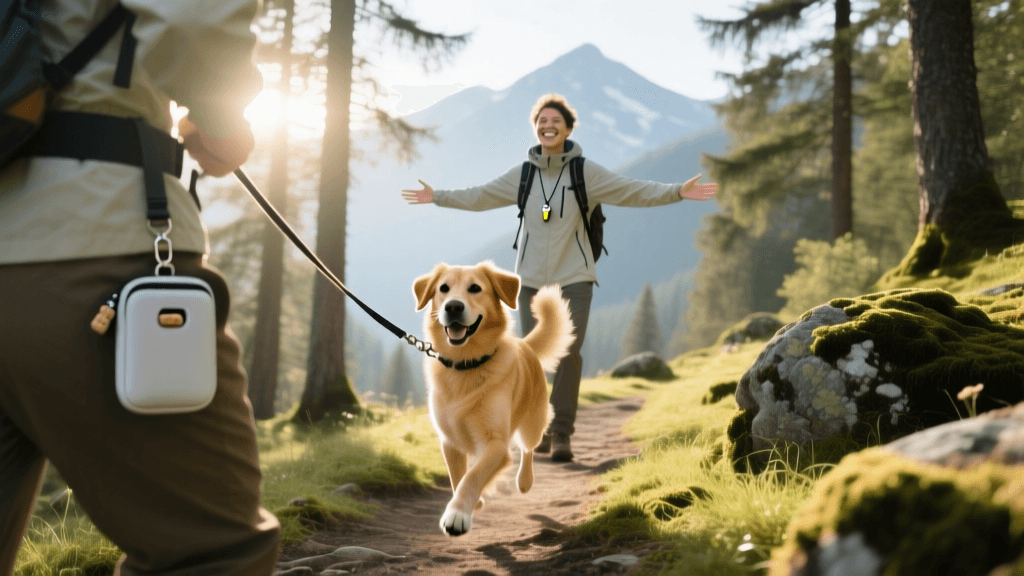
- High-Capacity Treat Pouch: The Ruffwear Treat Trader remains a top pick for hikers. Its magnetic closure allows for rapid access, which is crucial since the reward must be delivered within one to two seconds of the dog returning.
- High-Value Jackpot Treats: Kibble will not compete with a deer scent. Use freeze-dried beef liver, real cooked chicken, or commercial force-free training pastes.
Comparing Recall Cues for the Trail
| Cue Type | Pros | Cons | Best Use Case |
|---|---|---|---|
| Verbal | No equipment needed | Tone varies with emotion; carries poorly in wind | Indoor or quiet neighborhood walks |
| Whistle (Acme 211.5) | Consistent pitch; travels far | Requires carrying the whistle | Hiking, hunting, large open fields |
| Hand Signal | Silent; great for deaf dogs | Requires line of sight | Close proximity or agility courses |
The 4-Step Force-Free Emergency Recall Protocol
Building a bombproof recall takes time, patience, and a structured approach. The ASPCA emphasizes starting in low-distraction environments before gradually increasing the challenge.
Step 1: Charging the Cue (Weeks 1-2)
Before you ever call your dog away from something interesting, you must “charge” the new cue. If using a whistle, blow one short blast and immediately hand your dog a high-value treat. Do this 10 times per session, twice a day, inside your home. The dog learns: Whistle sound equals incredible food appears.
Step 2: Adding Distance in a Controlled Space (Weeks 3-4)
Move to your backyard or a quiet park. Attach the 15-foot biothane long line. Let your dog sniff around, then blow the whistle or use your verbal cue. If they don't respond immediately, gently reel them in using the long line—never yank. When they reach you, throw a jackpot party: give three to five treats in rapid succession.
Step 3: The 3 Ds - Distance, Duration, Distraction (Months 2-3)
Gradually increase only one “D” at a time. If you increase the distance to 30 feet, lower your expectation for distractions. If you move to a busier trail, decrease the distance to 10 feet. The American Kennel Club (AKC) recommends practicing recall on a long line hundreds of times before ever testing it off-leash in an unenclosed area.
Step 4: The Emergency Jackpot System
For a true emergency recall (a separate, special cue used only when your dog is heading toward danger), reserve a jackpot reward that your dog never gets at any other time. This could be a squeeze tube of peanut butter or a handful of warm roast beef. Use this cue sparingly so its value never dilutes.
Troubleshooting: Avoiding the Poisoned Cue
The most common mistake owners make is “poisoning” the recall cue. This happens when you call your dog to you for something they perceive as negative, such as a bath, nail trimming, or leaving the dog park. If the cue predicts the end of fun or an unpleasant experience, your dog will actively avoid you.
To maintain a force-free, positive association, always call your dog, reward them lavishly, and then release them back to play at least 80% of the time. If you must bring them inside, call them, reward, engage in a brief indoor game of tug, and then calmly transition to the next activity.
Managing High-Prey Drive Breeds on the Trail
For hounds, terriers, and spitz breeds, the instinct to chase wildlife is deeply ingrained. Force-free training does not ignore these instincts; it manages them. In 2026, behaviorists recommend predatory motor sequence training, where you teach your dog to redirect their chase drive onto a flirt pole or a specific recall toy. By fulfilling their biological need to chase in a controlled, positive way, their arousal levels on the trail decrease, making your emergency recall significantly more effective.
Conclusion
A reliable, force-free emergency recall is the ultimate key to off-leash freedom and a deeper bond with your dog. By utilizing consistent cues, high-value rewards, and humane management tools like long lines, you can navigate the hiking trails of 2026 with confidence, knowing your dog will always choose to come back to you.
beth-carrasco
All our authors care for dogs every day — read more of their work on the authors page.