Force-Free Chin Rest Training for Vet Exams in 2026
Learn force-free cooperative care chin rest training to reduce your dog's vet exam stress in 2026. Step-by-step positive reinforcement guide.
The Evolution of Veterinary Handling in 2026
As we navigate through 2026, the veterinary and animal welfare communities have overwhelmingly embraced force-free, positive reinforcement methodologies. Gone are the days when physical restraint and dominance-based handling were considered the gold standard for canine medical care. Today, cooperative care—where the dog is an active, willing participant in their own medical procedures—is recognized as a critical component of comprehensive health and wellbeing. According to the American Veterinary Medical Association (AVMA), minimizing stress during veterinary visits is not just a behavioral luxury; it is a medical necessity that directly impacts diagnostic accuracy, immune function, and long-term health outcomes.
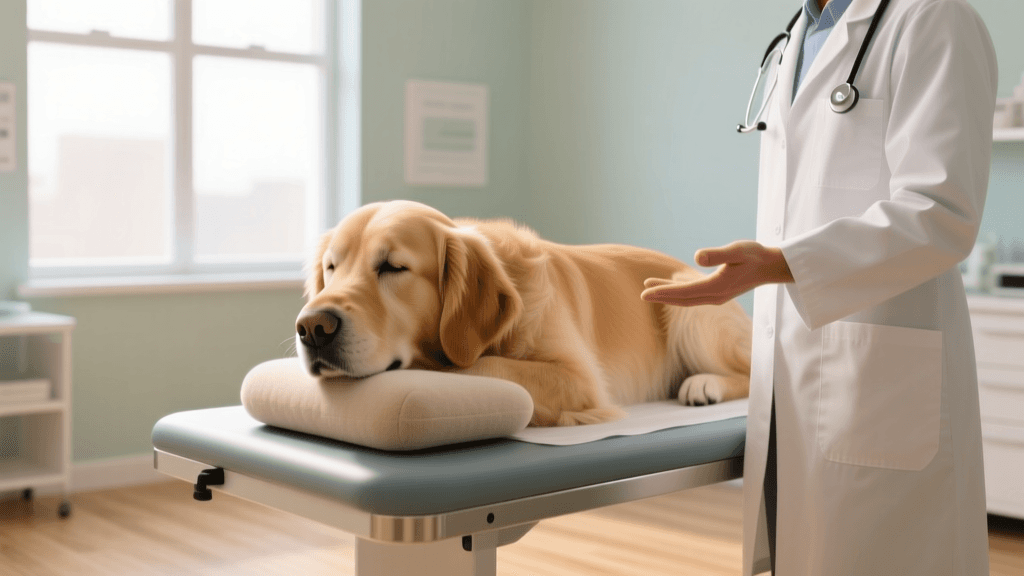
One of the most powerful and versatile tools in the cooperative care toolkit is the "chin rest." This force-free behavior allows a dog to voluntarily place their chin on a designated target, providing veterinary professionals with stable, safe access to the dog's head, ears, eyes, and neck without the need for restrictive holding. In this comprehensive guide, we will explore the science behind cooperative care, provide a detailed step-by-step training protocol for the chin rest, and highlight the best tools available in 2026 to ensure your dog's veterinary visits are entirely stress-free.
The Science of Stress and the Case for Force-Free Care
When a dog is physically restrained against their will, their sympathetic nervous system triggers a "fight or flight" response. This results in a massive spike in cortisol and adrenaline. From a health perspective, this chemical cascade can mask underlying medical issues, elevate heart rate and blood pressure to dangerous levels, and suppress the immune system. Furthermore, dogs possess excellent associative memories. A single traumatic, force-based veterinary experience can lead to lifelong veterinary phobia, causing owners to delay or skip necessary preventive care in the future.
Organizations like Fear Free Pets have spent years proving that when dogs are trained using positive reinforcement to participate in their own care, their baseline cortisol levels remain near normal during exams. This allows veterinarians to obtain accurate resting heart rates, perform thorough palpations without the dog tensing their abdominal muscles, and administer vaccinations with minimal tissue inflammation caused by stress-induced muscle rigidity.
What is the Chin Rest and the "Start Button"?
The chin rest is a foundational cooperative care behavior. The dog is taught to rest their chin on a specific target—this could be your hand, a specialized grooming stool, a yoga block, or a designated mat. However, the true magic of the chin rest lies in its function as a "start button" or an "opt-out" mechanism.
In force-free training, the dog must have the agency to say "no" or "I need a break." If the dog lifts their chin off the target, the procedure immediately stops. This gives the dog a profound sense of control, which paradoxically makes them much more willing to endure uncomfortable medical manipulations. When the dog knows they can stop the procedure at any time by simply lifting their head, their anxiety plummets, and their trust in the handler and the veterinarian skyrockets.
Step-by-Step Chin Rest Training Protocol
Training a reliable chin rest requires patience, high-value treats, and a strict adherence to force-free principles. Never physically push your dog's head down onto the target. The behavior must be entirely voluntary.
Phase 1: Capturing and Targeting
Begin in a quiet, low-distraction environment at home. Hold a target object (a small, soft cushion or your flat palm) at your dog's chest level. Wait for your dog to investigate the object. The exact millisecond their nose or chin makes contact with the target, mark the behavior with a clicker or a verbal "Yes!" and deliver a high-value treat, such as Zuke's Mini Naturals or a squeeze tube of Kong Easy Treat.
Repeat this process 10 to 15 times per session. Gradually, your dog will realize that touching the target with their chin makes the "treat machine" work. Once they are deliberately pressing their chin into the target, you can begin to add a verbal cue, such as "Chin" or "Rest."
Phase 2: Building Duration and the Opt-Out Mechanism
Once the dog understands the target, begin to delay the click and treat. Ask for "Chin," and wait one second before marking and rewarding. Gradually increase the duration to three seconds, five seconds, and eventually ten seconds.
Crucially, you must honor the opt-out. If your dog lifts their head before you have marked the behavior, do not scold them, and do not say "no." Simply withdraw the target, take a deep breath, and offer the target again after a brief pause. This reinforces that lifting their head is a valid form of communication, not a failure.
Phase 3: Generalizing to Veterinary Equipment
Dogs do not generalize well naturally. A chin rest on your hand on the living room rug does not automatically translate to a chin rest on a cold stainless steel exam table. You must generalize the behavior across different surfaces, heights, and locations. Practice on a sturdy cardboard box, a yoga block, and eventually, a folded towel on a table. In 2026, many veterinary clinics are equipped with adjustable cooperative care stations; ask your vet if you can visit the clinic during slow hours just to practice targeting on their specific equipment.
Phase 4: Adding Medical Manipulations
Only after your dog can comfortably hold a chin rest for 30 seconds should you begin adding veterinary-style manipulations. While the dog is resting their chin, gently touch their shoulder, then click and treat. Next session, touch the back of their neck. Progress to gently lifting an ear flap, simulating an otoscope exam, or lightly parting their lips to check teeth. If the dog lifts their head at any point, stop immediately, reset, and return to an easier step in the progression.
Traditional Restraint vs. Cooperative Care (2026 Data)
The shift toward force-free methods is backed by compelling behavioral and physiological data. The following table illustrates the differences observed in canine patients during routine physical examinations and blood draws.
| Metric | Traditional Physical Restraint | Cooperative Care (Chin Rest) |
|---|---|---|
| Average Heart Rate During Exam | 140 - 180 BPM (Elevated) | 80 - 110 BPM (Normal Resting) |
| Cortisol Recovery Time Post-Visit | 24 to 48 Hours | 15 to 30 Minutes |
| Accuracy of Abdominal Palpation | Low (Muscle Tensing) | High (Relaxed Posture) |
| Future Vet Visit Anxiety Levels | Progressive Increase (Sensitization) | Neutral to Positive (Desensitization) |
| Risk of Staff Injury (Bites/Scratches) | Moderate to High | Negligible |
Data aggregated from 2025-2026 Fear Free veterinary case studies and behavioral welfare reports.
Essential Tools for Success in 2026
To facilitate cooperative care, utilizing the right enrichment and targeting tools is vital. Here are the top recommendations for this year:
- LickiMat Soother Pro: Made from durable, veterinary-grade silicone, this mat can be suction-cupped to the wall or exam table. Smearing it with a dog-safe, xylitol-free peanut butter or goat milk keeps the dog happily stationary while the vet works on their hindquarters or draws blood from a lateral saphenous vein.
- Magnetic Target Sticks: Modern cooperative care often utilizes adjustable target sticks with magnetic bases that can be attached to metal exam tables. This keeps the target at the exact perfect height for your dog's chin, freeing up your hands to deliver treats or assist the vet.
- Squeeze Tube Treats: In 2026, squeeze tubes (like those from Chippin or Kong) are preferred over loose treats during medical procedures. They allow for continuous licking, which releases endorphins and naturally soothes the canine nervous system, all while keeping the dog's head perfectly positioned on the chin rest target.
- Snuffle Mats for Decompression: According to the ASPCA, engaging a dog's natural foraging instincts is one of the best ways to lower stress. Using a snuffle mat in the clinic waiting room before the exam begins can significantly lower baseline arousal levels.
Troubleshooting Common Challenges
My dog won't stay still for more than two seconds.
This usually means the rate of reinforcement is too low, or the treats are not valuable enough. Upgrade your treats to boiled chicken, freeze-dried liver, or low-sodium bone broth in a squeeze tube. Ensure you are clicking and treating before the dog decides to leave.
My dog gets frustrated and paws at the target.
This is a sign of "extinction burst" or frustration. You may be raising the criteria (duration) too quickly. Drop back to a one-second duration, reward heavily, and build up in micro-increments of just one or two seconds at a time.
The vet insists on using traditional restraint.
Advocating for your dog's wellbeing is a core part of responsible ownership. In 2026, you have the right to seek out a Fear Free Certified veterinary professional. If your current vet is unwilling to accommodate cooperative care or allow you to use a chin rest and lick mat, it is time to find a clinic that aligns with modern, force-free welfare standards.
Conclusion
Implementing force-free cooperative care, specifically the chin rest, is one of the most profound investments you can make in your dog's long-term health. By replacing fear and physical force with positive reinforcement and agency, you transform the veterinary clinic from a house of horrors into a place of routine, manageable interactions. Start your training today, honor your dog's opt-out cues, and watch as your canine companion learns to confidently participate in their own healthcare journey.
aaron-whyte
All our authors care for dogs every day — read more of their work on the authors page.