2026 FluentPet AAC Button Guide: Teach Your Dog To Talk
Discover how to teach your dog to communicate using FluentPet AAC sound buttons in 2026. Learn setup steps, costs, and canine body language cues.
The Evolution of Canine Communication in 2026
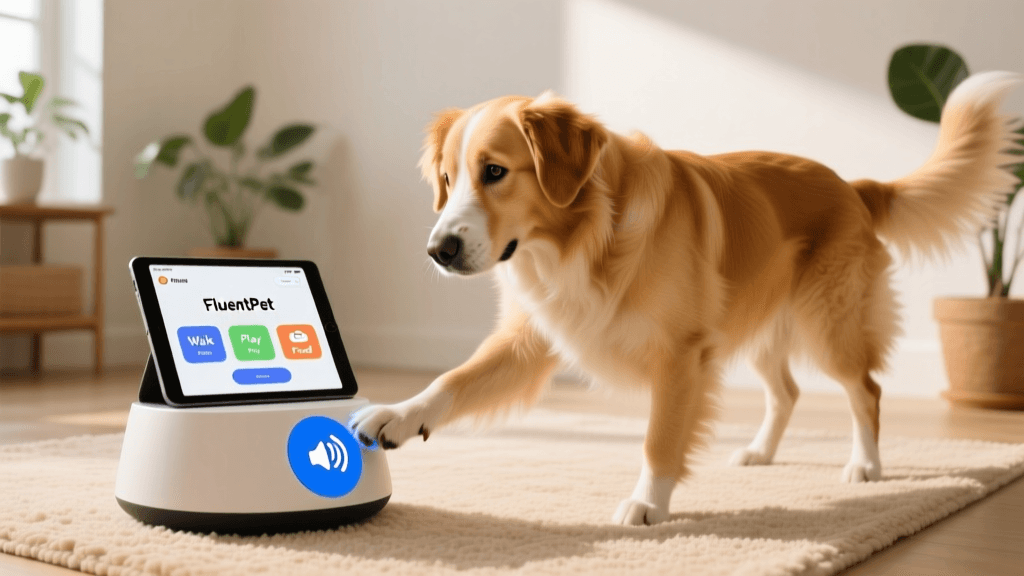
For decades, dog owners have relied on interpreting tail wags, ear positions, and vocalizations to understand their pets. However, as we move through 2026, Augmentative and Alternative Communication (AAC) sound buttons have transformed from a viral internet novelty into a scientifically respected tool for canine enrichment. Brands like FluentPet and Hunger for Words have refined their hardware and companion apps, making it easier than ever to teach your dog to express their needs, feelings, and observations using recordable sound buttons.
Teaching your dog to use AAC buttons is not just a fun trick; it is a profound exercise in interspecies communication. It requires patience, consistency, and a deep understanding of your dog's natural body language. In this comprehensive guide, we will explore the best AAC kits available in 2026, provide a step-by-step training protocol, and crucially, teach you how to read your dog's stress signals to ensure the learning process remains positive and frustration-free.
The Science Behind Canine AAC Button Training
At its core, button training relies on operant conditioning and associative learning. Dogs are masters of association. Just as they learn that the sound of a treat bag means food is coming, they can learn that pressing a button that says 'Outside' results in the door opening. According to veterinary behaviorists, dogs possess the cognitive ability to map specific auditory cues to environmental outcomes, a skill that has been extensively documented in recent canine cognition studies.
When you introduce AAC buttons, you are essentially giving your dog a new vocabulary. The American Veterinary Medical Association (AVMA) notes that mental stimulation and interactive training are critical for preventing behavioral issues and maintaining cognitive health in aging dogs. By engaging your dog's brain in two-way communication, you reduce anxiety, build confidence, and strengthen the human-animal bond.
Top AAC Button Kits Compared in 2026
The market for canine communication boards has matured significantly. When selecting a kit, you must consider the tile design, the recording quality, and the accompanying software. Below is a comparison of the top three AAC button systems available for dogs in 2026.
| Brand / Kit | Tile Shape & Design | 2026 Starter Kit Price | App & Tracking Features |
|---|---|---|---|
| FluentPet 'Get Started' Kit | Hexagonal (HexTiles) | $64.99 | Advanced (2026 AI spatial tracking, community insights) |
| Hunger for Words Starter | Circular (Foam-backed) | $49.99 | Standard (Basic logging, vocabulary suggestions) |
| Talking Paws Basic | Square (Hard plastic) | $29.99 | None (Standalone buttons, no app integration) |
Why Hexagonal Tiles? FluentPet's hexagonal design is not just for aesthetics. Canine spatial memory is highly developed, and the distinct shapes and colors of the hexagonal mats help dogs navigate their vocabulary board using tactile and visual cues, reducing the cognitive load when searching for the correct word.
Step-by-Step Button Training Protocol
Success with AAC buttons requires a structured approach. Do not put down twenty buttons at once and expect your dog to figure it out. Follow this phased protocol.
Phase 1: Target Training (Weeks 1-2)
Before introducing words, your dog must learn the physical mechanism of pressing a button. Use a single, unrecorded button or a target stick.
- Lure and Shape: Place a high-value treat (like freeze-dried liver) near the button. When your dog sniffs or paws the button to get to the treat, click a clicker or say 'Yes!' and reward them.
- Add a Cue: Once they reliably touch the button, add a verbal cue like 'Touch' or 'Press'.
- Generalize: Move the button to different rooms so the dog learns the action applies anywhere, not just in the kitchen.
Phase 2: Modeling the First Word (Weeks 3-5)
Start with a highly motivating, easily verifiable word. 'Outside' or 'Play' are excellent first choices. Avoid starting with 'Food' or 'Treat', as this can lead to obsessive button-mashing during meal times.
- Record the Button: Record your own voice saying the word clearly and enthusiastically. Keep it under two seconds.
- Model the Behavior: Every time you take your dog outside, say 'Outside,' press the button yourself, and immediately open the door. You are modeling the association.
- Prompt and Wait: When your dog signals they want to go out (sniffing the door, pacing), point to the button. If they press it, celebrate massively and go outside immediately.
Phase 3: Expanding Vocabulary and Spatial Arrangement (Month 2 and Beyond)
Once your dog reliably uses the first button, introduce a second contrasting concept, such as 'Inside' or 'Walk'. As your vocabulary grows to 5, 10, or 20 buttons, arrange them logically. Group nouns together, verbs together, and modifiers (like 'More' or 'All done') in a consistent location.
Decoding Canine Stress Signals During Training
While teaching your dog to 'talk' is exciting, we must never forget that dogs are already communicating constantly through their body language. Training sessions can be mentally taxing, and pushing a dog past their threshold leads to frustration. As an advocate for your dog, you must be fluent in canine calming and stress signals.
According to resources provided by the Humane Society of the United States, dogs use subtle physical cues to indicate discomfort, confusion, or stress long before they resort to growling or biting. When working with AAC buttons, watch closely for the following signals:
- Lip Licking and Yawning: If your dog yawns or flicks their tongue over their nose repeatedly while staring at the button board, they are likely feeling confused or pressured. This is a calming signal meant to diffuse tension.
- Whale Eye: If your dog turns their head away from the board but keeps their eyes fixed on it or on you, exposing the whites of their eyes, they are experiencing anxiety. Back off immediately and end the session on a positive note.
- Shaking Off: A full-body shake (as if they are wet) after a training session is a natural way for dogs to 'reset' their nervous system and release built-up cortisol.
- Ear Pinning and Tail Tucking: These are clear signs of distress. If you see these, the training environment may be too distracting, or your expectations are too high for that day.
If you observe these signals, do not force the interaction. Put the buttons away, engage in a familiar, easy game of tug or fetch, and try again the next day with shorter, more rewarding sessions.
Troubleshooting Common Communication Roadblocks
Even with the best 2026 technology and a solid training plan, you will encounter hurdles. Here is how to handle the most common issues.
The 'Demand' Button Mashing
Scenario: Your dog presses the 'Play' button 40 times in a row, or presses it at 3:00 AM.
Solution: Do not punish the dog for communicating. Instead, put the button out of reach or on a high shelf when you are unavailable to fulfill the request. Alternatively, introduce an 'All Done' button. When you are finished playing, press 'All Done,' put the toy away, and ignore subsequent 'Play' presses. Consistency is vital; if you give in to the 40th press, you have just taught your dog that the price of playing is 40 button pushes.
The Ghost Presses (Accidental Activations)
Scenario: Your dog steps on the 'Outside' button while walking by, you open the door, and they look confused and stay inside.
Solution: This is a spatial awareness issue. Ensure the buttons are placed on a dedicated mat in a low-traffic area of the room, not in the middle of a hallway where they are used as a stepping stone. Upgrading to a system with higher activation resistance (like the 2026 FluentPet Pro tiles) can also prevent accidental triggers from a passing paw.
Ignoring the Board Entirely
Scenario: Your dog used the buttons for a month and suddenly stopped.
Solution: Evaluate your responses. If your dog presses 'Walk' and you only take them to the backyard to potty, the word 'Walk' has lost its value. Ensure the outcome matches the dog's expectation. Additionally, check the hardware: in 2026, most premium buttons use rechargeable lithium cells, but if the audio has become distorted or quiet due to a dying battery, your dog may not recognize the sound.
Final Thoughts on Interspecies Dialogue
Integrating AAC sound buttons into your daily routine is a rewarding journey that fundamentally shifts how you view your dog's intellect. By combining the structured training protocols outlined above with a deep, empathetic reading of your dog's natural body language, you create a safe, enriching environment for two-way communication. Remember that the goal is not to create a parrot that mimics human speech, but to provide your dog with a functional tool to express their inner world. Be patient, observe their subtle cues, and enjoy the incredible experience of truly conversing with your best friend.
aaron-whyte
All our authors care for dogs every day — read more of their work on the authors page.