Best Puppy Breeds for Remote Workers in 2026: Top 5 Picks
Discover the best quiet and adaptable puppy breeds for remote workers in 2026. Learn to balance WFH schedules with early puppy training and care.
The Rise of the WFH Puppy in 2026
As we navigate the hybrid and fully remote work landscape of 2026, the home office has become a permanent fixture for millions of professionals. With this shift comes the growing trend of adopting a puppy to provide companionship during long hours at the desk. However, blending the demanding first year of puppy care with back-to-back virtual meetings requires careful planning. A high-energy, vocal herding breed might turn your morning stand-up into a chaotic nightmare, while a more independent, adaptable breed can nap quietly by your feet.
Choosing the right puppy is about more than just finding a cute face; it is about matching a dog's developmental needs and adult temperament to your daily schedule. In this guide, we explore the best puppy breeds for remote workers, focusing on low vocalization, moderate energy levels, and an independent streak that allows them to entertain themselves while you focus on deep work.
What Makes a Breed Remote-Work Friendly?
Before diving into specific breeds, it is essential to understand the criteria that make a puppy suitable for a work-from-home environment. When evaluating litters in 2026, responsible breeders and rescue coordinators look for the following traits:
- Low Vocalization: Puppies that are not genetically predisposed to alarm barking will save you from awkward interruptions during client calls.
- Adaptable Energy Levels: Breeds that require moderate, rather than extreme, physical exercise are easier to manage on a busy workday.
- Independence: While all puppies need socialization, breeds that do not suffer from severe velcro-dog syndrome can handle being placed in a playpen or crate for short intervals without developing separation anxiety.
- Trainability: A puppy that quickly grasps potty training and crate routines will drastically reduce your midday stress.
Top 5 Best Puppy Breeds for Remote Workers
1. Cavalier King Charles Spaniel
The Cavalier King Charles Spaniel remains a top choice for remote workers due to their incredibly affectionate yet relaxed demeanor. According to the American Kennel Club, Cavaliers are highly adaptable and tend to mirror their owner's energy levels. If you are working quietly at your desk, they are perfectly content to snooze on a nearby dog bed. Their moderate energy means a 20-minute neighborhood walk during your lunch break is usually sufficient to keep them happy. While they do require regular grooming to prevent matting, their eagerness to please makes early potty training relatively straightforward compared to more stubborn toy breeds.
2. Basset Hound
If you want a puppy that is practically guaranteed not to interrupt your Zoom calls with frantic zoomies, the Basset Hound is an excellent candidate. Known for their laid-back, almost lazy disposition, Bassets are scent hounds that prefer a good nap over high-intensity play. The AKC Basset Hound Guide notes that while they can be stubborn during obedience training, their low indoor energy makes them superb apartment and home-office companions. The main challenge with Basset Hound puppies is their propensity for chewing during the teething phase, so investing in durable, quiet chew toys is a must for protecting your desk cables.
3. Japanese Chin
Often described as cat-like in their behavior, the Japanese Chin is a small, quiet, and remarkably clean breed. They are known for their independent nature and tendency to find a warm sunbeam in your home office and stay there for hours. Because they are highly sensitive to their owner's moods, they thrive in the calm, structured environment of a remote worker's day. Their small size means they require very little space for indoor play, and their grooming needs, while present, are manageable with a quick daily brushing. They are exceptionally quiet, rarely barking without a very good reason.
4. Whippet
Whippets are the ultimate sprinters who double as professional couch potatoes. While a Whippet puppy will need a solid burst of outdoor running to burn off their physical energy, indoors they are famously quiet, gentle, and prone to long naps. For a remote worker who uses their morning or evening to go for a jog or visit a secure dog park, the Whippet is a perfect match. They are highly sensitive dogs that bond closely with their owners but do not typically demand constant, active engagement while you are typing away at your keyboard.
5. Shih Tzu
Bred specifically to be companions, the Shih Tzu is a sturdy, low-energy toy breed that excels in a home-office setting. They are generally less yappy than other small breeds like the Chihuahua or Pomeranian and are known for their happy, outgoing personalities. Shih Tzu puppies require consistent, positive reinforcement potty training, but once they grasp the routine, they are incredibly low-maintenance companions. Their long coat can be kept in a short 'puppy cut' to minimize daily grooming time, allowing you to focus more on your work and less on brushing.
2026 Breed Comparison Chart
To help you make an informed decision, here is a comparison of these remote-work-friendly breeds based on current 2026 data regarding temperament, care requirements, and average breeder pricing.
| Breed | Bark Level | Indoor Energy | WFH Suitability | 2026 Avg Puppy Cost |
|---|---|---|---|---|
| Cavalier King Charles | Low | Moderate | Excellent | $2,500 - $3,500 |
| Basset Hound | Low/Medium | Very Low | Excellent | $1,800 - $2,500 |
| Japanese Chin | Very Low | Low | Very Good | $2,000 - $3,000 |
| Whippet | Very Low | Low (High Outdoor) | Good | $1,500 - $2,500 |
| Shih Tzu | Low/Medium | Low | Very Good | $1,800 - $2,800 |
Managing Puppy Care on a Work-From-Home Schedule
Selecting the right breed is only the first step. The first year of a puppy's life involves critical developmental milestones, including potty training, teething, and early socialization. Here is how to manage these phases without sacrificing your productivity.
Potty Training Between Zoom Calls
Potty training a puppy while working from home requires a strict, proactive schedule. Puppies aged 8 to 12 weeks can only hold their bladders for about one to two hours. Utilizing a crate or an exercise pen equipped with a smart pet camera, like the Furbo 360, allows you to monitor your puppy's body language from your desk. When you notice them circling or sniffing, immediately pause your work and take them to their designated potty spot. The ASPCA recommends using a properly sized crate to aid in housebreaking, as dogs naturally avoid soiling their sleeping area. Feed your puppy at the exact same times every day—such as 7:00 AM, 12:00 PM, and 5:00 PM—to predict their bathroom needs and avoid mid-meeting accidents.
Surviving the Teething Phase Quietly
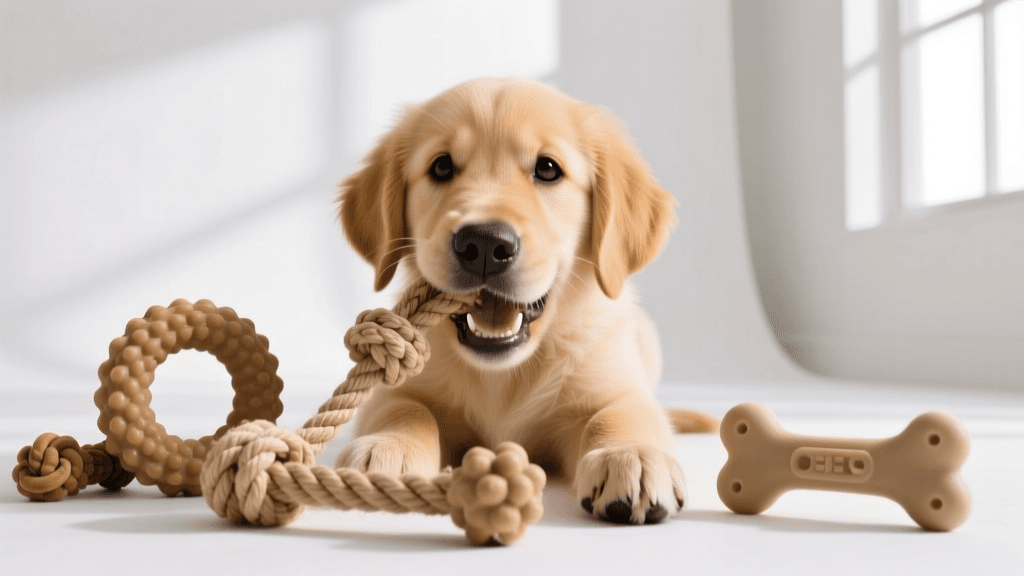
Between 12 and 24 weeks, your puppy will begin teething, which can lead to destructive chewing and whining. To keep your home office quiet and your equipment safe, provide a rotating selection of appropriate chew toys. The KONG Puppy Goodie Bone and Nylabone Puppy Chew are excellent choices for 2026, as they are designed to soothe sore gums without making loud squeaking noises that could bleed into your microphone. Keep a few of these toys stuffed with dog-safe peanut butter and frozen overnight. Handing your puppy a frozen KONG right before you log into an important presentation will keep them quietly occupied for up to 45 minutes.
Early Socialization on Your Lunch Break
Socialization is a critical milestone that peaks between 8 and 16 weeks. Remote workers have a unique advantage here: the ability to use lunch breaks for targeted socialization outings. You do not need to overwhelm your puppy with crowded dog parks. Instead, take them to a quiet outdoor cafe, sit on a park bench, and reward them with high-value treats for calmly observing the world. Expose them to different surfaces, distant traffic noises, and people wearing hats or carrying umbrellas. This builds a confident, well-adjusted adult dog who will not react fearfully or vocally when a delivery driver drops off a package at your home office door.
Pro Tip for 2026: Invest in a smart home routine that signals 'quiet time' to your puppy. Using automated dimming lights and playing low-frequency calming music through your smart speakers can help cue your puppy that it is time to settle down into their bed while you enter deep-focus work blocks.
Final Thoughts
Bringing a puppy into your home while working remotely is a deeply rewarding experience that requires strategic planning. By selecting a breed known for its quiet demeanor and adaptable energy, and by implementing a structured daily routine for potty training and teething, you can create a harmonious environment for both you and your new companion. Remember that the first year is an investment; the patience you show during those early developmental milestones will result in a calm, well-behaved office mate for years to come.
hannah-wickes
All our authors care for dogs every day — read more of their work on the authors page.