8-12 Week Puppy Care Guide: First Month Survival Tips
Discover essential care tips for your 8 to 12-week-old puppy. Learn feeding schedules, potty training basics, and early socialization milestones.
Welcome to the 8-12 Week Stage: What to Expect
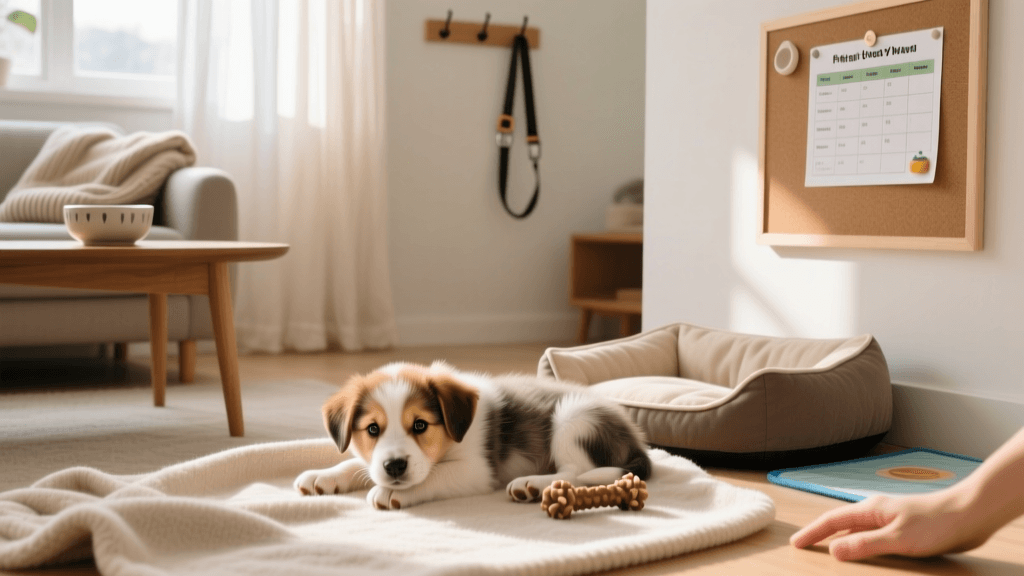
Bringing home an eight-week-old puppy is one of the most exciting milestones in a dog owner's life. However, the 8 to 12-week life stage is also one of the most demanding. During this critical developmental window, your puppy is essentially a canine infant. They are learning how to navigate the world, process new stimuli, and understand the rules of their new household. This period is characterized by rapid physical growth, the peak of the socialization window, and the very beginnings of foundational training.
As a new puppy parent, your primary goals during these first four weeks home should focus on establishing a predictable routine, building trust, and setting the stage for lifelong behavioral health. From managing their tiny bladders to navigating the complex world of puppy nutrition, this comprehensive survival guide will walk you through everything you need to know to thrive during your puppy's first month home.
Feeding Schedule and Nutrition for Young Puppies
At eight weeks of age, a puppy's digestive system is still developing, and their stomach capacity is remarkably small. Because they burn energy at a rapid rate, young puppies cannot eat large meals like adult dogs. According to the American Kennel Club (AKC), puppies in this age bracket require three to four evenly spaced meals per day to maintain stable blood sugar levels and support healthy bone and muscle development.
When you first bring your puppy home, it is crucial to feed them the exact same food the breeder or shelter was using. If you plan to switch to a different high-quality puppy kibble, do so gradually over a 7-to-10-day period to avoid gastrointestinal upset. Mix 25% of the new food with 75% of the old food for the first few days, slowly increasing the ratio of the new food.
Daily Feeding Chart by Expected Adult Weight
The following table provides a general guideline for the total daily amount of high-quality dry puppy kibble to feed an 8-to-12-week-old puppy, divided into three or four meals. Always consult your veterinarian for breed-specific recommendations.
| Expected Adult Weight | Total Daily Amount (8-12 Weeks) | Meals Per Day |
|---|---|---|
| Toy Breeds (Under 10 lbs) | 1/3 to 1/2 cup | 4 |
| Small Breeds (10-25 lbs) | 1/2 to 1 cup | 3 to 4 |
| Medium Breeds (25-50 lbs) | 1 to 1.5 cups | 3 |
| Large Breeds (50-90 lbs) | 1.5 to 2.5 cups | 3 |
| Giant Breeds (90+ lbs) | 2.5 to 4 cups | 3 |
Note: Always measure your puppy's food using a standard measuring cup or a digital kitchen scale rather than guessing, as overfeeding can lead to rapid growth spurts that damage developing joints, especially in large breeds.
Potty Training: Setting the Foundation
Potty training an 8-week-old puppy requires immense patience and a strict schedule. A general rule of thumb for puppy bladder control is that they can hold it for one hour per month of age. This means your 8-week-old puppy can only hold their bladder for about two hours during the day, and perhaps three hours at night.
The ASPCA emphasizes that consistency and positive reinforcement are the cornerstones of successful house training. You must take your puppy outside to their designated potty spot immediately after they wake up, after every meal, after vigorous play sessions, and right before bedtime.
Essential Potty Training Rules
- Use an Enzymatic Cleaner: Accidents will happen. Clean all indoor accidents with an enzymatic cleaner like Nature's Miracle to completely break down the uric acid crystals. Standard household cleaners will not remove the scent, and your puppy will return to the same spot if they can still smell it.
- The Tethering Method: When you cannot actively supervise your puppy, keep them tethered to you with a hands-free leash or place them in a properly sized puppy playpen. This prevents them from wandering off into another room to have an accident.
- Crate Training Synergy: Dogs naturally avoid soiling their sleeping area. Use a wire crate with a divider panel so the space is only large enough for them to stand up, turn around, and lie down. If the crate is too large, they will potty in one corner and sleep in the other.
- Throw a Potty Party: Every time your puppy eliminates outside, immediately reward them with a high-value treat (like tiny pieces of boiled chicken or freeze-dried liver) and offer enthusiastic verbal praise.
Pro Tip: Never punish a puppy for indoor accidents, and never rub their nose in it. This outdated method only teaches your puppy to fear you and to hide behind furniture when they need to eliminate, making potty training significantly harder.
The Critical Socialization Window
The 8 to 12-week period falls squarely within the most critical socialization window of a dog's life. The American Veterinary Medical Association (AVMA) notes that a puppy's primary socialization period closes around 12 to 16 weeks of age. During this time, their brains are uniquely wired to accept new experiences, people, animals, and environments without fear.
However, because your puppy is not fully vaccinated against life-threatening diseases like Parvovirus until they are around 16 weeks old, you must socialize them safely. Avoid high-risk areas like dog parks, pet store floors, or public sidewalks where unknown dogs frequent.
Safe Socialization Checklist
- Carry Your Puppy: Use a puppy sling or carrier to take them to outdoor cafes, hardware stores, and busy parks. Let them observe the world from the safety of your arms.
- Surface Exposure: Let your puppy walk on grass, gravel, tile, hardwood floors, metal grates, and tarps. Reward them for bravely navigating unstable or novel textures.
- Sound Desensitization: Play recordings of thunderstorms, fireworks, vacuums, and city traffic at a very low volume while feeding them their meals. Gradually increase the volume over several weeks.
- Handling Exercises: Gently touch your puppy's paws, ears, mouth, and tail daily. This prepares them for future veterinary exams, nail trims, and grooming sessions.
- Invite Guests Over: Ask friends and family to visit your home. Instruct them to ignore the puppy until the puppy is calm and sitting, then reward the puppy with treats for polite behavior.
Teething Prep and Bite Inhibition
While your puppy's baby teeth won't start falling out until they are around 12 to 16 weeks old, the urge to chew and explore the world with their mouth begins the moment they come home. Puppies use their mouths to play, investigate, and communicate. It is your job to teach them 'bite inhibition'—the ability to control the force of their bite.
When your puppy bites your skin, let out a high-pitched 'yelp' to mimic the sound of a littermate, and immediately withdraw your attention by standing up and turning away for 10 seconds. This teaches them that biting humans makes the fun stop. Always redirect their chewing energy onto appropriate toys. The KONG Classic Puppy Toy (made of softer, pink or blue rubber) is an excellent choice. You can stuff it with a mixture of plain Greek yogurt and mashed bananas, then freeze it to provide soothing relief for sore gums.
Sleep, Crate Training, and Enrichment
It is completely normal for an 8-to-12-week-old puppy to sleep between 18 and 20 hours a day. Their growing bodies and developing brains require massive amounts of rest. However, puppies rarely know when to put themselves to sleep; they will often become overtired, leading to 'puppy zoomies' and excessive nipping.
Enforce mandatory nap times in your puppy's crate every 90 minutes to two hours. To make the crate a comforting den, consider using a Snuggle Puppy Behavioral Aid, which includes a battery-operated heartbeat simulator and a heat pack to mimic the feeling of sleeping next to their mother and littermates. Covering the top and sides of the crate with a breathable blanket can also help block out visual stimuli, signaling to your puppy that it is time to wind down and rest.
By focusing on structured feeding, proactive potty training, safe socialization, and enforced sleep schedules, you will help your puppy navigate this crucial life stage with confidence. The effort you invest during these first four weeks will pay dividends for the next decade, resulting in a well-adjusted, healthy, and deeply bonded adult dog.
priya-sutaria
All our authors care for dogs every day — read more of their work on the authors page.