Diagnosing and Solving Leash Reactivity in Adult Dogs
Is your dog lunging and barking on walks? Learn how to diagnose the root causes of leash reactivity and apply proven, step-by-step training solutions.

Understanding Leash Reactivity: It Is Not Just Aggression
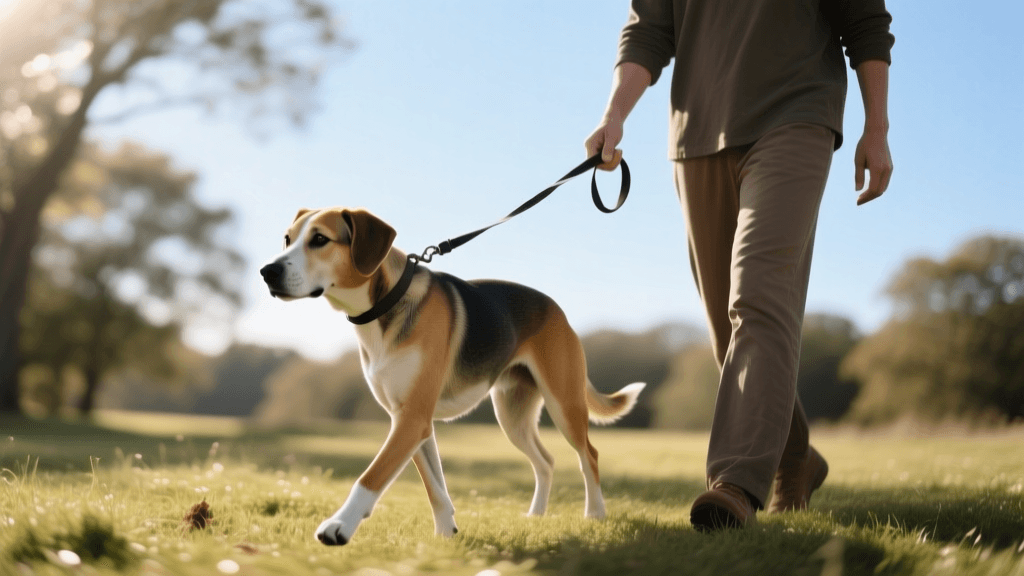
Walking your dog should be a relaxing bonding experience, but for owners of reactive dogs, it often feels like navigating a minefield. If your dog barks, lunges, or growls at the end of the leash when they see other dogs, people, or bicycles, you are dealing with leash reactivity. According to the ASPCA, reactivity is frequently misunderstood as outright aggression. In reality, it is an overreaction to a specific trigger, often rooted in fear, anxiety, or barrier frustration. The leash itself acts as a barrier that prevents your dog from performing natural greeting behaviors or fleeing from perceived threats, amplifying their emotional response.
Diagnosing the exact motivation behind your dog's behavior is the critical first step toward a solution. Without understanding the 'why,' training protocols will fall short. Let us break down how to diagnose your dog's specific type of reactivity and implement actionable, step-by-step solutions to transform your daily walks.
Diagnosing the Root Cause: Fear vs. Frustration
Before you can fix the problem, you must accurately diagnose it. Leash reactivity generally falls into two primary categories: fear-based reactivity and frustration-based reactivity (often called leash frustration). While the outward behavior—barking, lunging, and pulling—looks nearly identical, the internal emotional state of the dog is completely opposite.
Fear-based reactivity is driven by a desire to increase distance from the trigger. The dog is essentially saying, 'You are scary, stay away from me.' Frustration-based reactivity, on the other hand, is driven by a desire to decrease distance. The dog wants to greet, play, or investigate, but the leash restrains them, causing an explosive outburst of pent-up energy. The American Kennel Club (AKC) emphasizes that misdiagnosing frustration as aggression can lead to inappropriate and damaging training methods that worsen the dog's anxiety.
Reactivity Comparison Chart
| Behavioral Clue | Fear-Based Reactivity | Frustration-Based Reactivity |
|---|---|---|
| Off-Leash Behavior | Avoids other dogs, hides, or shows defensive posturing when free. | Plays well, greets politely, and is highly social when off-leash. |
| Body Language | Tucked tail, pinned ears, whale eye, tense muscles, trembling. | Wagging tail (often high and stiff), whining, play bows, pulling forward. |
| Recovery Time | Takes a long time to calm down after the trigger passes. | Calms down relatively quickly once the trigger is out of sight. |
| Primary Goal | To make the scary thing go away (increase distance). | To reach the trigger to interact (decrease distance). |
Essential Gear for Managing Reactive Dogs
You cannot train a dog that is physically pulling you down the street. Upgrading your equipment provides immediate safety and better communication. Expect to invest around $80 to $120 in proper gear.
- Front-Clip Harness: A harness with a leash attachment on the chest (such as the Ruffwear Front Range or the 2 Hounds Design Freedom Harness, costing $30-$45) gently redirects your dog's momentum back toward you when they lunge, preventing tracheal damage and giving you mechanical leverage.
- Fixed-Length Leash: Ditch the retractable leash immediately. Retractable leashes teach dogs that pulling gets them more freedom and offer zero control in an emergency. Use a 6-foot leather or Biothane leash ($30-$50). Biothane is highly recommended as it does not slip through your hands if it rains and is easy to clean.
- High-Value Treat Pouch: You need treats that are significantly better than the environment. Freeze-dried beef liver, boiled chicken breast, or string cheese are excellent. Carry them in an easily accessible treat pouch ($15-$20) worn on your hip.
Step-by-Step Solution: The Engage and Disengage Game
Once you have diagnosed the root cause and secured the right gear, it is time to implement a behavioral modification protocol. The gold standard for leash reactivity is the 'Engage and Disengage' game, originally developed by Leslie McDevitt in her Control Unleashed program. This method uses classical and operant conditioning to change your dog's emotional response to their triggers.
Step 1: Find the Threshold Distance
Your dog's 'threshold' is the distance at which they notice a trigger but remain under their emotional boiling point. If your dog is barking, lunging, or refusing treats, you are over threshold. You must start training at a distance where your dog can look at the trigger and still eat a treat. For some dogs, this is 50 feet; for others, it is half a mile. Find an open park or an empty parking lot where you can control the distance.
Step 2: Mark and Reward (Engage)
When your dog looks at the trigger (the 'engage' phase), wait one to two seconds. If they do not react explosively, use a marker word like 'Yes!' or click a clicker, then immediately feed a high-value treat. The sequence is: Dog looks at trigger -> You say 'Yes!' -> Dog turns to you for the treat. You are teaching the dog that seeing a trigger predicts a fantastic reward.
Step 3: Decrease the Distance Gradually
Over weeks of consistent practice, your dog will begin to voluntarily look at the trigger and then immediately look back at you, anticipating the treat. This is the 'disengage' phase. Once your dog is consistently disengaging at your current distance, take one step closer to the trigger and repeat the process. According to VCA Animal Hospitals, gradual desensitization combined with counter-conditioning is the most scientifically sound method for altering reactive behaviors without causing undue stress.
Environmental Management and Decompression
Training sessions are only 10% of your dog's life. The other 90% is management. If your dog practices reactive behavior on their daily bathroom walks, the training will not stick. You must manage their environment to prevent rehearsals of the unwanted behavior.
- Time Your Walks: Walk your dog during off-peak hours, such as early morning (before 7 AM) or late evening, when foot and dog traffic are minimal.
- Use Visual Barriers: If a dog approaches unexpectedly, use parked cars, large bushes, or fences to block your dog's line of sight. Cross the street immediately.
- Decompression Walks (Sniffaris): Reactive dogs carry immense chronic stress. Take your dog to a quiet, enclosed area on a 15-foot long line once a week and let them sniff. Sniffing lowers a dog's heart rate and releases dopamine, acting as a natural stress reliever.
Emergency Protocols: The U-Turn and Find It
Even with perfect management, you will eventually be ambushed by an off-leash dog or someone turning a corner too quickly. You need an emergency exit strategy.
Teach the Emergency U-Turn in your living room first. Say 'Let us go!' in a cheerful voice, pivot 180 degrees, and run a few steps away, dropping a jackpot of treats on the floor. Practice this daily until it becomes a reflex. When a surprise trigger appears on a walk, immediately execute the U-Turn to create distance before your dog hits their threshold.
Alternatively, use the 'Find It' cue. Toss a handful of treats into the grass and say 'Find it!' This forces your dog to drop their head, engage their nose, and disengage visually from the approaching trigger, effectively diffusing the tension.
When to Seek Professional Help
While many dogs improve with consistent owner-led training, some cases require professional intervention. If your dog has a bite history, if their reactivity is causing you severe physical strain, or if you see no improvement after four to six weeks of consistent threshold training, it is time to hire a professional. Look for a Certified Professional Dog Trainer (CPDT-KA) or a Certified Applied Animal Behaviorist (CAAB). Expect to pay between $120 and $200 per private session. A professional will provide real-time feedback on your timing, leash handling, and body language, which are often the hidden roadblocks to success.
Remember, leash reactivity is a marathon, not a sprint. By accurately diagnosing the root cause, managing the environment, and applying compassionate, reward-based training, you can help your dog navigate the world with confidence and calm.
anouk-beaumont
All our authors care for dogs every day — read more of their work on the authors page.