Diagnosing and Fixing Dog Leash Reactivity: A Guide
Is your dog lunging and barking on walks? Learn how to diagnose leash reactivity and apply proven, step-by-step solutions to restore peaceful walks.
Understanding Leash Reactivity: More Than Just 'Bad' Behavior
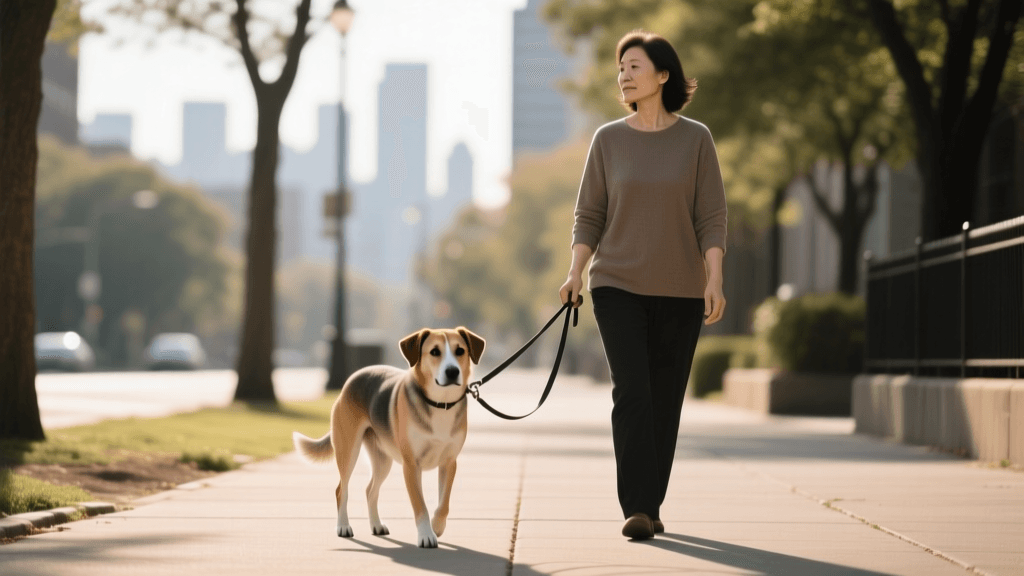
Leash reactivity is one of the most common and stressful behavioral issues reported by dog owners. If your dog lunges, barks, growls, or pulls frantically when they see other dogs, people, or vehicles while on a walk, you are dealing with reactivity. It is crucial to understand that reactivity is not necessarily aggression, nor does it mean you have a 'bad' dog. Instead, it is a symptom of an underlying emotional response—usually fear, anxiety, or intense frustration—compounded by the physical restriction of a leash.
When a dog is off-leash, they have the autonomy to approach, avoid, or flee from a trigger. The leash removes that choice, creating a feeling of being trapped. According to the ASPCA, reactivity is often rooted in a lack of early socialization, past traumatic experiences, or barrier frustration. To effectively solve this problem, we must first accurately diagnose the root cause before applying targeted, positive reinforcement solutions.
Diagnosing the Root Cause: Fear vs. Frustration
Before you can fix the behavior, you must understand the emotion driving it. Leash reactivity generally falls into two distinct categories: fear-based reactivity and frustration-based reactivity (often called barrier frustration). Misdiagnosing the root cause can lead to training methods that inadvertently make the problem worse. For example, forcing a fearful dog into a 'sit-stay' while another dog approaches can flood them with anxiety, while punishing a frustrated dog can increase their negative association with the trigger.
The American Veterinary Society of Animal Behavior (AVSAB) strongly advises against using punishment-based tools like prong collars or shock collars for reactivity, as these suppress the outward symptoms (barking) without resolving the underlying emotional distress, often leading to escalated aggression later. Instead, use the diagnostic table below to identify your dog's primary motivation.
| Feature | Fear-Based Reactivity | Frustration-Based Reactivity |
|---|---|---|
| Body Language | Cowering, tucked tail, whale eye, pinned ears, lunging to create distance | Pulling forward, wagging tail, whining, play-bows, barking to get closer |
| Off-Leash Behavior | Avoids, hides, or shows defensive aggression to create space | Rushes to play, highly social, greets other dogs warmly and politely |
| Primary Emotion | Anxiety, need for distance, feeling trapped by the leash | Excitement, barrier frustration, FOMO (Fear Of Missing Out) |
| Core Training Goal | Build confidence, increase distance, counter-conditioning | Teach impulse control, calmness, and alternative behaviors |
Essential Gear for Reactive Dog Training
Having the right equipment is critical for safety and effective communication. Retractable leashes (like Flexi brands) and choke chains should be entirely avoided, as they provide poor control and can cause physical injury to the trachea. Invest in the following gear to set yourself up for success:
- Front-Clip Harness: A harness with a D-ring on the chest (such as the Rabbitgoo No-Pull Dog Harness or the Freedom No-Pull Harness) gently redirects your dog's momentum toward you when they pull. Cost: $25 to $45. Ensure the girth strap sits behind the ribcage, not on the shoulder joints.
- Long Line Leash: A 10-foot to 15-foot Biothane long line gives your dog enough space to decompress and sniff while maintaining your control. Biothane is waterproof, easy to clean, and doesn't burn your hands if your dog suddenly lunges. Cost: $30 to $50.
- High-Value Treats: Dry kibble will not compete with the adrenaline of seeing another dog. Use high-value, strongly scented treats like boiled chicken breast, low-sodium hot dogs, or Zuke's Mini Naturals. Cost: $5 to $15 per week.
- Treat Pouch: A dedicated treat pouch (like the Dog Gone Smart or PetSafe Elite) allows for rapid treat delivery. Timing is everything in reactive dog training; fumbling in your pockets for a treat will cost you the training opportunity.
Step-by-Step Solutions: The 'Engage-Disengage' Game
The most effective, science-backed method for treating leash reactivity is a combination of desensitization and counter-conditioning. The 'Engage-Disengage' game (also known as the 'Look at That' protocol developed by Leslie McDevitt) teaches your dog that seeing a trigger predicts good things, rather than a threat or a barrier.
Step 1: Find the Threshold Distance
Your dog's 'threshold' is the distance at which they notice a trigger but remain under their emotional breaking point. At this distance, they can look at the trigger, hear you, and eat a treat. For some dogs, this is 20 feet; for others, it is 150 feet. If your dog is barking, lunging, or refusing treats, you are over threshold. You must start your training at a sub-threshold distance, which may require walking in empty parking lots or large parks rather than busy neighborhood sidewalks.
Step 2: Mark and Reward (Engage)
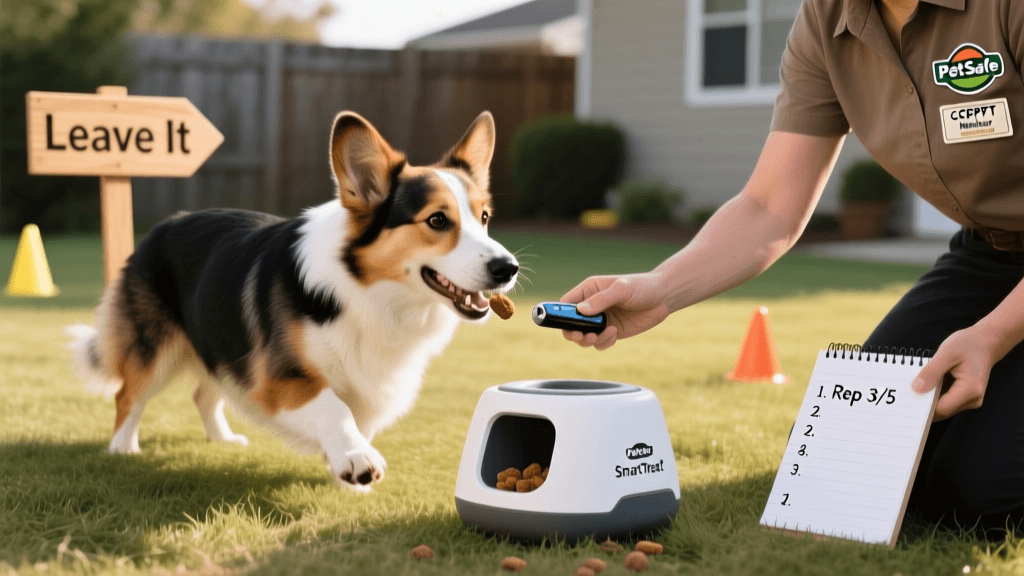
When your dog spots a trigger (e.g., another dog at 50 feet away), immediately use a marker word like 'Yes!' or click a clicker within 0.5 seconds. The marker tells the dog exactly what behavior earned the reward. After the marker, present the high-value treat. The sequence is: Dog looks at trigger -> You mark -> Dog turns to you for the treat. If the dog does not turn to you, the trigger is too close, or your treats are not valuable enough.
Step 3: Decrease the Distance Gradually
Once your dog consistently disengages from the trigger and looks at you for a treat at 50 feet, you can decrease the distance by 5 to 10 feet in the next session. Keep training sessions short—10 to 15 minutes maximum. Reactive dog training is mentally exhausting for your dog due to the high levels of cortisol and adrenaline involved. Always end the session on a positive note, well before your dog shows signs of fatigue or frustration.
Daily Management Strategies for Peaceful Walks
While you are actively training the Engage-Disengage game, you must manage your dog's daily environment to prevent them from rehearsing the reactive behavior. Every time your dog lunges and barks, the behavior is reinforced because the trigger eventually moves away (which rewards a fearful dog) or they get to burn off adrenaline. Management strategies include:
- The Emergency U-Turn: Teach a cue like 'Let's Go!' in a calm environment. When you are on a walk and a trigger suddenly appears around a corner, cheerfully say 'Let's Go!', pivot 180 degrees, and jog away while tossing treats on the ground for your dog to chase and eat.
- Visual Barriers: Use parked cars, hedges, or fences to block your dog's line of sight to approaching triggers. Stepping behind a large tree and asking your dog to do a 'hand target' (touching their nose to your palm) is an excellent way to keep their brain engaged while a trigger passes.
- Decompression Sniffaris: The American Kennel Club (AKC) highlights the importance of mental enrichment for behavioral health. Take your dog to quiet, open fields on a 15-foot long line and let them sniff for 30 minutes. Sniffing lowers a dog's heart rate and reduces baseline anxiety, making them less prone to reacting later in the day.
When to Seek Professional Help
Leash reactivity is a complex behavioral issue that can escalate if mishandled. If your dog has a history of biting, if you feel physically unable to hold them back, or if you are experiencing severe walk-related anxiety yourself, it is time to hire a professional. Look for a certified behavior consultant (such as an IAABC-certified CDBC or a CPDT-KA trainer) who explicitly uses force-free, positive reinforcement methods. Expect to pay between $100 and $200 per hour for private in-home or field sessions. A professional will help you accurately read your dog's subtle stress signals, manage your leash handling mechanics, and build a customized desensitization plan.
Fixing leash reactivity is not an overnight process; it is a journey of rebuilding your dog's trust and changing their emotional response to the world. By accurately diagnosing the root cause, utilizing the right gear, and consistently applying counter-conditioning techniques, you can transform your stressful walks into peaceful, bonding experiences.
tom-renshaw
All our authors care for dogs every day — read more of their work on the authors page.