First-Year Dog Training Progression Plan: 8 Weeks to Adult
Master your puppy's first year with our step-by-step dog training progression plan. Discover weekly milestones, essential gear, and expert tips.

Why a Structured Training Progression Plan Matters
Raising a well-behaved dog does not happen by accident. It requires a deliberate, structured training progression plan that evolves alongside your dog's physical and cognitive development. Many new owners make the mistake of either rushing advanced commands before foundational skills are solid, or expecting a four-month-old puppy to have the impulse control of an adult dog. According to The Humane Society of the United States, utilizing positive reinforcement and setting age-appropriate expectations are the cornerstones of successful behavioral conditioning. By breaking your dog's first year into distinct phases, you can systematically build reliability, focus, and trust without overwhelming your canine companion.
Phase 1: The Foundation Stage (8 to 12 Weeks)
The first month you have your puppy is entirely about building trust, establishing routines, and capitalizing on the critical socialization window. The American Kennel Club (AKC) emphasizes that the primary socialization period for puppies closes around 12 to 14 weeks of age. During this time, your progression plan should prioritize exposure over strict obedience.
Actionable Milestones and Metrics
- Session Timing: Puppies have incredibly short attention spans. Keep training sessions to exactly 3 to 5 minutes, repeating them three times a day.
- Treat Sizing: Use high-value, soft treats (like boiled chicken or Zuke's Mini Naturals) cut into pea-sized pieces. A puppy should consume no more than 10% of their daily caloric intake in training treats to prevent gastrointestinal upset.
- Name Recognition: Say the puppy's name once. When they look at you, mark the behavior with a clicker or a verbal 'Yes!' and deliver the treat within one second.
- Bite Inhibition: Instead of punishing mouthing, redirect to an appropriate chew toy. If teeth touch skin, let out a high-pitched 'Ouch!' and withdraw attention for exactly 10 seconds.
Crate Training and Potty Progression
Crate training should progress in micro-increments to prevent separation anxiety. Start by feeding meals inside the crate with the door open. Next, close the door for the duration of the meal, then immediately open it. Progress to closing the door for 5 minutes while you sit nearby, then 10 minutes while you step out of sight. For potty training, the general rule of thumb is that a puppy can hold their bladder for one hour per month of age, plus one. Therefore, an 8-week-old (2-month-old) puppy needs a potty break every 3 hours. Track these intervals meticulously in a notebook or app to identify patterns and prevent indoor accidents.
Phase 2: Core Obedience (3 to 6 Months)
As your puppy's brain matures and their attention span lengthens, you can transition into core obedience. This phase introduces the 'Big Five' commands: Sit, Down, Stay, Come (Recall), and Loose Leash Walking.
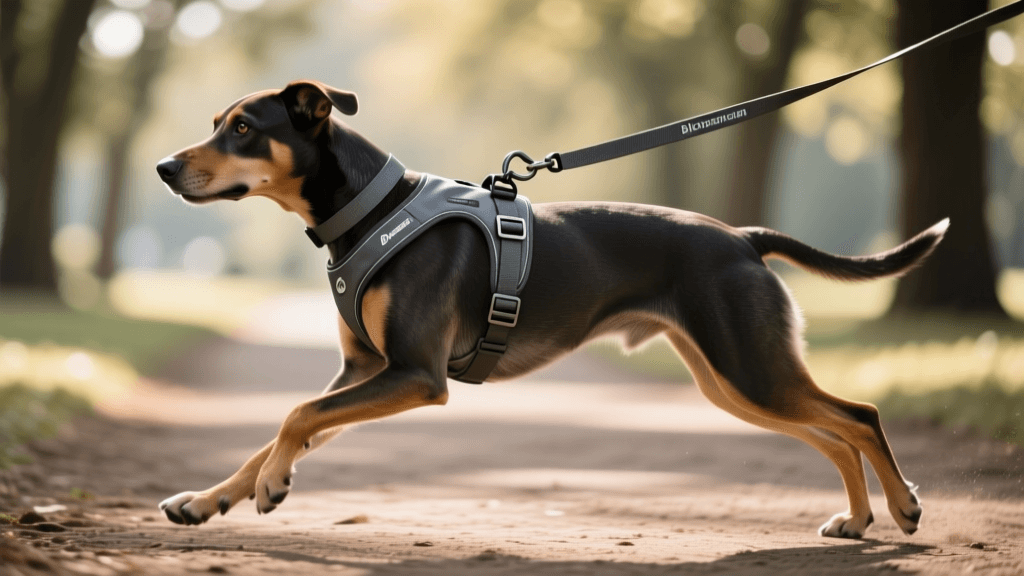
At this stage, your gear matters significantly. Ditch the retractable leash. Retractable leashes teach dogs that pulling creates more slack, which is the exact opposite of what you want. Instead, invest in a 6-foot Biothane or leather leash and a front-clip harness, such as the Ruffwear Front Range. The front clip gently redirects the dog's momentum toward you when they pull, making loose leash walking progression much more manageable.
Scaling the Difficulty
When teaching 'Stay,' do not immediately walk away. Progression requires micro-steps. First, ask for a 'Sit.' Then say 'Stay,' wait two seconds, and reward. Once the dog can hold a sit-stay for 10 seconds with you standing directly in front of them, you can begin to add a single step backward. If the dog breaks the stay, you have progressed too quickly. Return to the last successful step.
The 'Come' Command (Recall) Progression
Recall is arguably the most critical safety command your dog will learn. Begin indoors on a 6-foot leash. Say your dog's name, followed by 'Come,' and take three steps backward to trigger their natural instinct to chase. Reward heavily with a 'jackpot' (3-4 treats at once) when they reach you. Never call your dog to you for something they perceive as negative, such as a bath or nail trim, as this will poison the cue. Always make coming to you the best part of their day.
Training is not about winning a battle of wills; it is about building a shared language based on trust, clear communication, and incremental progression.
Phase 3: Adolescent Proofing and The 3 Ds (6 to 12 Months)
Dog adolescence is notoriously challenging. Hormonal shifts and brain restructuring can cause temporary 'regression,' where a dog seems to forget everything they learned. The ASPCA notes that consistency and patience during this developmental phase are vital to prevent long-term behavioral issues. This is where 'proofing' comes in, governed by the 3 Ds of dog training: Duration, Distance, and Distraction.
A common mistake is increasing all three variables simultaneously. If you want your dog to hold a 'Down-Stay' for a longer duration, you must decrease the distance and the distractions. Only increase one 'D' at a time.
The 3 Ds Progression Matrix
| The 'D' | Definition | Progression Metric | Example Scenario |
|---|---|---|---|
| Duration | How long the dog holds the behavior. | Increase by 2-3 seconds per successful repetition. | Extending a 'Stay' from 5 seconds to 30 seconds in the living room. |
| Distance | How far you are from the dog. | Add one full step backward per successful session. | Recalling your dog from 10 feet away vs. 50 feet away in the yard. |
| Distraction | Environmental stimuli competing for focus. | Move from a quiet room to the yard, then to a quiet park. | Practicing 'Sit' while a family member walks by or a squirrel is visible. |
Essential Training Gear and Estimated First-Year Costs
Investing in the right tools prevents frustration and accelerates your training progression. Here is a practical breakdown of the gear you will need during your dog's first year, along with estimated costs:
- High-Value Training Treats (e.g., Zuke's Mini Naturals or Real Meat Co.): $15–$25 per month. Essential for high-distraction environments where standard kibble won't cut it.
- Front-Clip No-Pull Harness (e.g., Ruffwear Front Range): $40–$45. Provides steering control without applying pressure to the trachea.
- 6-Foot Biothane Leash: $25–$35. Weatherproof, easy to sanitize, and provides the exact length needed to enforce boundaries during loose-leash training.
- Enrichment Toys (e.g., Kong Classic or West Paw Toppl): $15–$25. Vital for teaching independent settling, crate training, and preventing destructive boredom.
- Group Puppy Socialization Classes: $150–$250 for a 6-week course. Crucial for safe, controlled dog-to-dog interactions and learning in a mildly distracting environment.
Conclusion: Trust the Process
A successful training progression plan is a marathon, not a sprint. By respecting your dog's developmental stages, utilizing the 3 Ds to systematically proof behaviors, and investing in proper gear, you set the stage for a lifetime of harmonious companionship. Remember to celebrate the small victories, keep your sessions short and positive, and always end on a successful note. Your future well-behaved adult dog is being built in the incremental steps you take today.
hannah-wickes
All our authors care for dogs every day — read more of their work on the authors page.