2026 First-Week Puzzle Setup for Newly Adopted Rescue Dogs
Discover the ultimate 2026 first-week mental enrichment routine for newly adopted rescue dogs using puzzle toys, snuffle mats, and calming lickimats.
Bringing a newly adopted rescue dog home is one of the most rewarding experiences in a person's life. However, the transition from a shelter environment to your living room can be incredibly overwhelming for a dog. As of 2026, leading veterinary behaviorists and shelter medicine experts universally agree that the first week should prioritize mental decompression over physical exhaustion. While many new owners instinctively try to tire their new dog out with long, strenuous walks, this approach can actually spike cortisol levels in a stressed, decompressing dog. Instead, strategic mental enrichment and puzzle games offer a calming, endorphin-boosting alternative that builds confidence and fosters a secure bond.
The Science of Decompression: Why Mental Enrichment Wins
The transition period for a rescue dog is often guided by the '3-3-3 Rule': three days to decompress, three weeks to learn your routine, and three months to feel truly at home. During those critical first three days, your dog is processing a massive amount of novel sensory information. According to The Humane Society of the United States, providing a quiet, predictable environment with low-stress enrichment activities is the most effective way to help a new dog settle in.
Mental enrichment leverages a dog's natural foraging instincts. Sniffing and licking are self-soothing behaviors. When a dog engages with a puzzle toy or a snuffle mat, their heart rate naturally decreases, and their brain releases dopamine and endorphins. The American Kennel Club (AKC) notes that just 15 minutes of intensive sniffing or puzzle-solving can tire a dog out as much as a one-mile walk, but without the physical joint stress or the overstimulation that can trigger reactivity in a fearful rescue dog.
Essential 2026 Puzzle Gear for the First Week
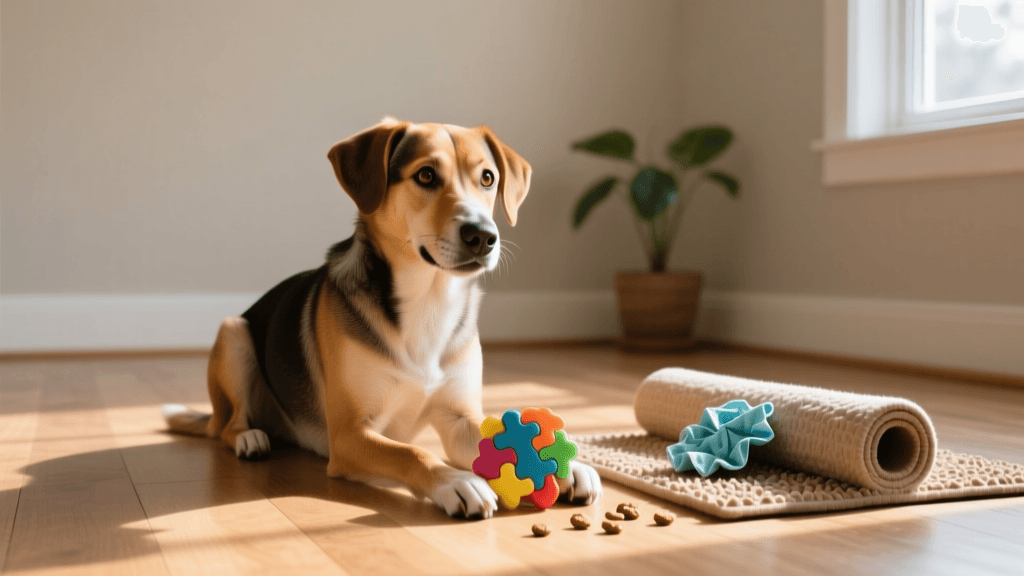
To set up a successful first-week enrichment routine, you need the right tools. The market has evolved, and the best puzzle toys for newly adopted dogs in 2026 focus on adjustable difficulty and soothing repetitive motions rather than frustrating, high-stakes problem-solving.
1. LickiMat Soother (TPR Model)
The LickiMat Soother remains a gold standard for anxiety relief. The textured nubs encourage prolonged licking, which is scientifically proven to lower a dog's heart rate. In 2026, the thermoplastic rubber (TPR) models are preferred over silicone for their durability and ease of cleaning in the dishwasher. Cost: Approximately $12 to $15.
2. Paw5 Wooly Snuffle Mat
For dogs that are food-motivated but easily frustrated by hard plastic puzzles, the Paw5 Wooly Snuffle Mat is ideal. Made from upcycled, machine-washable materials, it allows you to hide dry kibble deep within the fabric strips. This mimics natural foraging and keeps a dog quietly occupied for 20 to 30 minutes. Cost: Around $45.
3. West Paw Toppl (Large and Small Interlocking)
The West Paw Toppl is a versatile, stuffable toy made from Zogoflex, a durable and non-toxic material. For the first week, use it as an open bowl to serve meals, which builds the dog's confidence. By week two, you can interlock the small and large Toppls to create a complex puzzle. Cost: $25 to $35 depending on size.
4. Kong Classic (Red Rubber)
A timeless staple. The classic red rubber Kong provides a predictable, reliable food-dispensing experience. For a newly adopted dog, keep the stuffing loose so they are immediately rewarded for interacting with it, preventing early frustration. Cost: $15 to $20.
The First-Week Mental Enrichment Schedule
Routine is the antidote to anxiety. Below is a structured, daily enrichment schedule designed specifically for the first seven days with a newly adopted rescue dog. This schedule replaces traditional meal bowls and high-energy play sessions with calming, brain-based activities.
| Time of Day | Activity / Tool | Purpose & Benefit | Estimated Duration |
|---|---|---|---|
| 7:00 AM (Breakfast) | Snuffle Mat Foraging | Encourages calm waking and natural scent work. | 15 - 25 mins |
| 10:00 AM (Mid-Morning) | Frozen LickiMat Soother | Soothes the nervous system while you work or do chores. | 20 - 30 mins |
| 1:00 PM (Lunch/Top-up) | West Paw Toppl (Open) | Builds confidence with easy, high-value food retrieval. | 10 - 15 mins |
| 5:00 PM (Pre-Dinner) | Decompression Sniffari | A slow, leash-guided walk where the dog dictates the pace and sniffs everything. | 20 mins |
| 7:00 PM (Dinner) | Kong Classic (Loose Stuffing) | Provides a satisfying, predictable evening meal routine. | 15 - 20 mins |
| 9:00 PM (Wind Down) | Chew Time (Bully Stick / Yak Cheese) | Chewing releases endorphins to promote deep, restorative sleep. | 15 - 30 mins |
Step-by-Step Recipes for Calming Puzzle Fillers
To make the most of your LickiMats and Kongs during the first week, you need fillers that are highly palatable, easy to digest, and safe for freezing. Here are three 2026-approved recipes designed to maximize licking time and soothe an upset shelter tummy.
Recipe 1: The Pumpkin & Bone Broth Soother
- 2 tablespoons of 100% pure pumpkin puree (not pie filling).
- 1 tablespoon of plain, unsweetened Greek yogurt.
- 1 tablespoon of low-sodium, onion-free dog bone broth.
- Instructions: Mix the pumpkin and yogurt, then spread it thickly into the grooves of the LickiMat. Pour a thin layer of bone broth over the top and freeze for 3 hours. The frozen broth creates an engaging, long-lasting licking challenge.
Recipe 2: The Kibble & Peanut Butter Kong
- 1/2 cup of your dog's regular daily kibble.
- 1 tablespoon of xylitol-free, dog-safe peanut butter.
- Warm water or low-sodium chicken broth.
- Instructions: Place a dab of peanut butter at the very bottom of the Kong to act as an anchor. Add the dry kibble, then pour just enough warm liquid to cover the kibble. Let it soak for 10 minutes until the kibble expands and creates a mash. Freeze overnight. This ensures the dog gets their full daily nutrition without the risk of gastrointestinal upset from too many new treats.
Recipe 3: The Sardine & Sweet Potato Toppl
- 1/2 cup of mashed, cooked sweet potato.
- 1 sardine packed in water (mashed, bones included for calcium).
- Instructions: Mash the sardine and sweet potato together. The strong scent of the fish is incredibly enticing for dogs who might be too stressed to eat, while the sweet potato provides gentle, soluble fiber to firm up shelter-induced diarrhea.
Crucial Safety Protocols and Caloric Management
While mental enrichment is highly beneficial, it introduces a hidden danger for new dog owners: caloric overload. Puzzle toys often require the use of high-value treats, pastes, and wet foods. In 2026, veterinary nutritionists emphasize the 'Enrichment Diet Adjustment.' You must subtract the calories used in puzzle toys from your dog's daily measured meals. If your dog requires 600 calories a day, and your LickiMat and Kong recipes total 250 calories, you must only feed 350 calories of dry kibble in their snuffle mat to maintain a healthy weight.
Furthermore, supervision is non-negotiable during the first week. Rescue dogs may have unknown resource-guarding tendencies or a history of swallowing objects whole. Always remain in the room while your dog is working on a puzzle toy. If the dog begins to frantically chew the rubber or fabric of the toy rather than licking or foraging for the food, calmly interrupt the behavior, remove the toy, and offer a simpler alternative. The goal is to build a positive, frustration-free association with enrichment.
Transitioning to Week Two and Beyond
As your dog crosses the seven-day mark and begins to show signs of settling—such as sleeping more deeply, seeking out affection, and displaying relaxed body language—you can begin to increase the difficulty of the puzzles. Transition from loose Kong stuffings to tightly packed, frozen meals. Introduce the interlocking feature of the West Paw Toppl. Start scattering the snuffle mat across different rooms to encourage spatial confidence.
By prioritizing mental enrichment and puzzle games during those critical first days, you are not just keeping your new dog occupied; you are actively rewiring their brain to associate your home with safety, predictability, and reward. This foundational week sets the stage for a confident, well-adjusted companion for years to come.
hannah-wickes
All our authors care for dogs every day — read more of their work on the authors page.