First Week Home: Step-by-Step Dog Potty Training Guide
Master your new dog's potty training in the first week with our step-by-step guide. Learn schedules, crate setup, and accident prevention tips.
Welcome Home: Setting the Stage for Potty Success
Bringing a new dog or puppy into your home is one of life’s most rewarding milestones, but the first few days can quickly become overwhelming without a structured plan. When you are in the "getting a dog" phase, it is easy to focus entirely on breed selection, adoption paperwork, and buying cute beds. However, the true test of a smooth transition lies in your first-week training strategy. Potty training is arguably the most critical skill your new dog will learn, as it dictates the hygiene of your home and the foundation of trust between you and your pet.
Rather than waiting for accidents to happen and reacting to them, proactive dog owners use the first seven days to establish a bulletproof routine. According to the American Kennel Club (AKC), consistency, supervision, and positive reinforcement are the three pillars of successful house training. This step-by-step guide will walk you through the exact gear, daily schedules, and actionable protocols you need to potty train your new dog during their crucial first week home.
Essential Gear for Your First Week
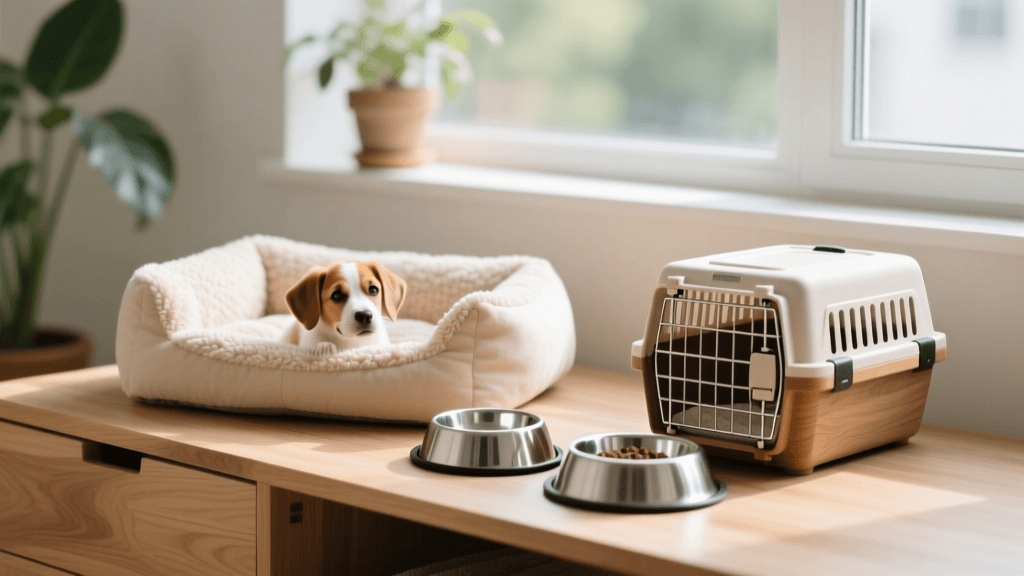
Before your dog’s paws cross the threshold, you need to have the right tools on hand. Investing in the proper equipment upfront saves time, money, and frustration. Here is your step-by-step gear checklist, complete with estimated costs and specific product recommendations:
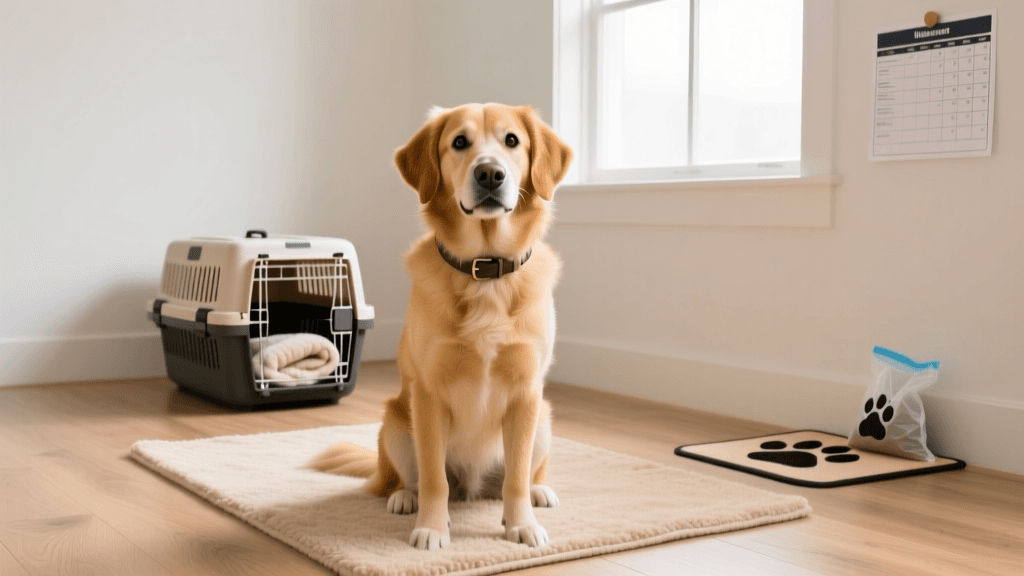
- Wire Crate with a Divider Panel ($45 - $80): A wire crate allows your dog to see their surroundings while keeping them contained. The MidWest Homes for Pets iCrate is an industry standard. The divider panel is vital; it allows you to shrink the crate's interior so your dog has just enough room to stand up, turn around, and lie down. If the crate is too large, they may use one corner as a bathroom.
- Enzymatic Cleaner ($12 - $20): Standard household cleaners do not break down uric acid crystals, meaning your dog will still smell their previous accidents and return to the same spot. Nature's Miracle Advanced Stain & Odor Eliminator or Rocco & Roxie Professional Strength are essential for completely neutralizing biological odors.
- 15-Foot Biothane Long Line ($20 - $30): A long line gives your dog enough space to sniff and find the perfect potty spot in the yard while keeping you in total control. Biothane is waterproof, easy to clean, and won't get heavy when wet.
- High-Value, Low-Calorie Treats ($8 - $12): You will be rewarding your dog multiple times an hour. Use soft, low-calorie treats like Zuke's Mini Naturals (under 3 calories each) to prevent gastrointestinal upset and unwanted weight gain.
The 7-Day Step-by-Step Potty Training Plan
The first week is about building a psychological association: outside equals bathroom, and bathroom equals high-value rewards. Here is how to structure your first seven days.
Days 1-2: Observation and Baseline Setting
Your dog is decompressing. The Humane Society of the United States emphasizes that newly adopted dogs may experience stress-induced accidents. During the first 48 hours, keep your dog on a leash tied to your waist or belt loop while inside the house. This "umbilical cord" method prevents them from wandering into another room to sneak a potty break. Take them outside on their 15-foot long line every 60 to 90 minutes. Do not interact or play; simply stand still and let them sniff. The moment they eliminate, say your marker word ("Yes!"), deliver a treat within one second, and offer quiet praise.
Days 3-5: Building the Routine and Cue
Now that your dog understands that going outside yields treats, introduce a verbal cue. As your dog begins to squat or lift their leg, calmly say "Go potty" or "Do your business." By Day 5, you should say the cue right before they begin to eliminate. Continue the strict 90-minute daytime schedule. You can begin to drop the indoor waist-leash, but only if you are actively watching them. If you need to cook, shower, or look away for even a minute, place them in their properly sized crate.
Days 6-7: Testing and Expanding Freedom
It is time to test your dog's reliability. Allow them 10 to 15 minutes of supervised, off-leash freedom in a single, dog-proofed room immediately after they have successfully emptied their bladder outside. Watch closely for "tells"—sniffing the baseboards, circling, or suddenly leaving the room. If they show these signs, immediately clap your hands once to interrupt the thought process, leash them, and guide them outside. If they succeed, expand their freedom to a second room on Day 7.
Daily Potty Break Schedule and Bladder Capacity
Understanding your dog's physical limitations is key to preventing accidents. Puppies and newly adopted adult dogs need a structured schedule based on their biological bladder capacity. Use the chart below to plan your daytime routine:
| Dog Age / Stage | Estimated Bladder Hold Time | Recommended Daytime Potty Breaks |
|---|---|---|
| 8-10 Weeks (Puppy) | 1 to 2 Hours | Every 1-2 hours, plus immediately after meals, naps, and play |
| 11-16 Weeks (Puppy) | 2 to 3 Hours | Every 2-3 hours, maintaining post-activity breaks |
| Adult (New Adoption) | 4 to 6 Hours | Every 3-4 hours initially to build trust and establish a baseline |
Note: Always take your dog out within 15 minutes of drinking a large bowl of water or eating a full meal, as digestion stimulates the digestive and urinary tracts.
Handling Accidents: The Interruption Protocol
Even with a perfect plan, accidents will happen. How you react dictates how quickly your dog recovers and learns. Never rub your dog's nose in the mess, yell, or use physical punishment. The ASPCA explicitly warns that punishment only teaches your dog to be afraid of you, often resulting in them hiding behind furniture to eliminate where you cannot see them.
The Step-by-Step Interruption Protocol:
- Interrupt: If you catch them in the act, make a sharp, sudden noise (like a loud clap or saying "Oops!") to startle them into stopping. Do not scream.
- Relocate: Immediately scoop them up or leash them and carry/walk them directly to their designated outdoor potty spot.
- Reward: If they finish their business outside, reward them heavily with treats and praise.
- Clean: Indoors, blot up the moisture with paper towels. Saturate the area with your enzymatic cleaner, allowing it to sit for 10-15 minutes before blotting dry. This ensures the enzymes have time to break down the uric acid.
Nighttime Crate Training and Water Cutoffs
Nighttime potty training requires a different strategy than daytime training. To set your dog up for success, implement a strict water cutoff time. Remove all water bowls exactly two to two and a half hours before bedtime. For example, if you plan to sleep at 11:00 PM, pick up the water at 8:30 PM. Take your dog out for one final, boring potty break right before you turn off the lights.
Place the crate in your bedroom for the first week. Dogs are social animals, and hearing your breathing reassures them. If your puppy whines at 3:00 AM, wait three minutes. If the whining continues, take them outside on the leash, let them potty, and immediately return them to the crate without play or affection. Puppies under 12 weeks will almost certainly need one middle-of-the-night bathroom break; set an alarm for 4 hours after bedtime to take them out before they wake up and cry.
Final Thoughts on the First Week
Getting a dog is a massive lifestyle adjustment, but treating the first week as an intensive, step-by-step training boot camp will pay dividends for the next decade. By managing their environment with a crate, utilizing enzymatic cleaners, adhering to a strict schedule, and rewarding outdoor success, you are communicating clearly with your new companion. Stay patient, keep your treats handy, and celebrate the small victories as your new dog learns the ropes of their forever home.
priya-sutaria
All our authors care for dogs every day — read more of their work on the authors page.