First-Time Puppy Owner Guide: Essential Gear & Home Prep
Discover essential gear, exact costs, and step-by-step puppy-proofing tips to prepare your home for a new dog. Perfect for first-time owners!
Welcome to Dog Ownership: Preparing for Your New Puppy
Bringing a new puppy home is one of life is most exciting milestones, but for first-time owners, the transition can quickly become overwhelming. Between selecting the right food, puppy-proofing your living space, and establishing a routine, the sheer volume of decisions can lead to analysis paralysis. The secret to a smooth transition lies in preparation. By setting up your home and gathering the right tools before your puppy is paws cross the threshold, you set the stage for a lifetime of good behavior and a strong bond.
This comprehensive guide is designed specifically for first-time dog owners. We will cover exact measurements, specific product recommendations, realistic cost estimates, and a step-by-step timeline for your first 24 hours together. According to the American Kennel Club (AKC), having a structured environment ready before arrival drastically reduces puppy anxiety and accelerates house-training.
Puppy-Proofing Your Home: Room by Room
Puppies explore the world with their mouths, and their low vantage point means they notice hazards you might overlook. Get down on your hands and knees to view your home from a puppy is perspective.
Electrical Cords and Small Objects
Chewed electrical cords can cause severe burns or fatal electrocution. Use split loom tubing or cable concealers (such as the JOTO Cable Management Sleeve, roughly $15 for 10 feet) to bundle and hide wires behind furniture. Pick up small items like coins, hair ties, and children is toys, which pose serious choking or intestinal blockage risks.
Toxic Plants and Chemicals
Many common household plants are highly toxic to dogs. Sago palms, lilies, oleander, and pothos can cause organ failure even in small quantities. Consult the ASPCA Animal Poison Control database to audit your indoor and outdoor flora. Relocate toxic plants to high shelves or fenced outdoor areas. Store all cleaning supplies, especially those containing bleach or ammonia, in cabinets secured with child-proof latches.
Physical Barriers
Invest in pressure-mounted baby gates to restrict access to high-risk areas like staircases, kitchens, and bathrooms. The Regalo Easy Step Walk Thru Gate (approximately $40) is a highly rated, durable option that fits standard doorways without requiring you to drill into your walls.
The First-Day Essentials Checklist and Costs
Walking into a pet store can result in hundreds of dollars spent on unnecessary gadgets. Below is a curated, practical list of what you actually need for day one, complete with estimated costs and specific product types.
| Essential Item | Recommended Type or Brand | Estimated Cost | Purpose and First-Time Owner Tip |
|---|---|---|---|
| Wire Crate with Divider | MidWest Life Stages Double Door (Sized for adult weight) | $50 - $80 | Provides a safe den and accelerates potty training. Use the divider to shrink the space so the puppy can stand, turn, and lie down, but not potty in one corner and sleep in the other. |
| Enzymatic Cleaner | Nature is Miracle Advanced Stain and Odor Eliminator | $15 - $20 | Crucial for destroying urine proteins. Standard household cleaners leave behind pheromones that invite repeat accidents. |
| Chew Toys | KONG Classic Puppy (Pink or Blue rubber) | $10 - $15 | Offers safe teething relief. Fill with plain yogurt and freeze for a soothing treat. |
| Harness and Leash | Ruffwear Front Range Harness + 6ft nylon leash | $40 - $50 | Protects a puppy is delicate trachea from collar strain. A 6-foot leash offers the ideal balance of freedom and control. |
| Food and Water Bowls | Stainless Steel (e.g., Petmate) | $15 - $25 | Stainless steel is non-porous and easy to sanitize, preventing canine acne and bacterial buildup common in plastic bowls. |
Expert Tip: Never use ammonia-based cleaning products in your home. Ammonia smells like urine to a dog, which can actually encourage them to mark the same spot repeatedly.
Setting Up the Safe Space and Potty Station
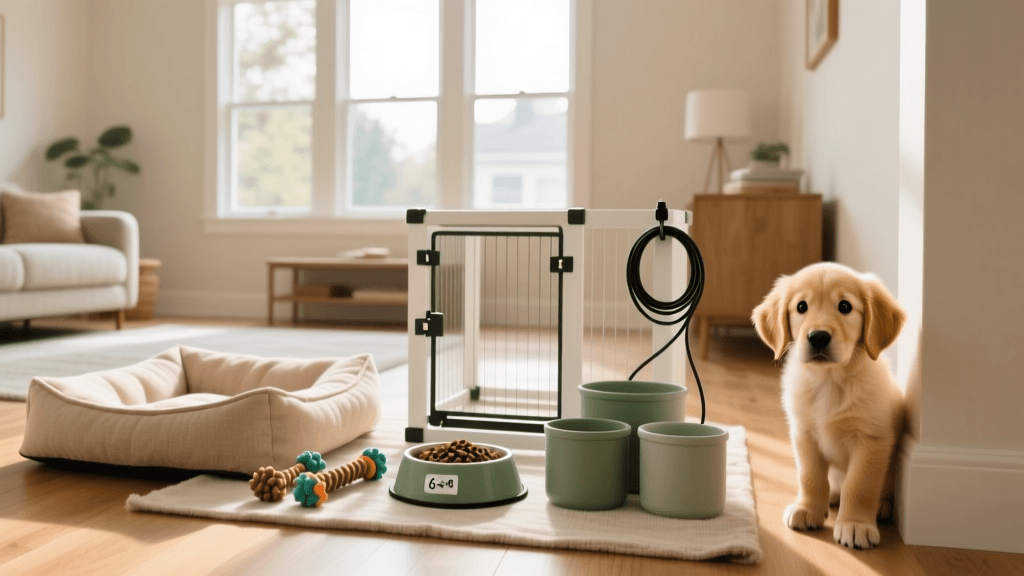
First-time owners often make the mistake of giving a new puppy free roam of the entire house. This leads to accidents and destructive chewing. Instead, set up a designated 'safe space' using an exercise pen (X-pen) connected to the puppy is crate.
Configure a 4x4 foot or 4x8 foot wire exercise pen. Place the open crate at one end, a water bowl in the middle, and a potty station at the opposite end. If you are using indoor potty training, use washable, reusable pee pads or a synthetic grass patch like the DoggieLawn. Keeping the sleeping area and potty area as far apart as possible leverages a dog is natural instinct not to soil their sleeping den, making house-training significantly easier.
The First 24 Hours: A Timeline for Success
The first day sets the precedent for your puppy is behavior. Keep the environment calm; avoid inviting friends and family over for a 'welcome party,' as overstimulation leads to stress and biting.
- Hour 0 (Arrival): Carry your puppy immediately outside to their designated potty spot. Wait quietly. The moment they eliminate, offer a high-value treat and calm praise. This builds an immediate positive association.
- Hour 1-2 (Leashed Tour): Put the puppy on a leash and walk them through the main living area. Sniffing is mental exercise and helps them decompress. Keep the tour brief and low-energy.
- Hour 2-4 (Crate Nap): Puppies need 18 to 20 hours of sleep a day. Place them in their crate with a stuffed KONG and a snuggle toy that mimics a heartbeat (like the SmartPetLove Snuggle Puppy). Cover the crate with a light sheet to create a den-like atmosphere.
- Hour 4 (First Meal): Feed them the exact same food they were eating at the breeder or shelter to avoid gastrointestinal upset. Measure portions precisely using a standard measuring cup, typically 3/4 to 1 cup depending on the breed and brand guidelines.
- Evening (Wind Down): Take them out for a final potty break right before bed. Set an alarm to take them out once in the middle of the night, as young puppies cannot hold their bladders for a full 8 hours.
Veterinary and Health Preparations
Before bringing your puppy home, schedule a wellness exam with a local veterinarian within the first 48 hours. According to The Humane Society of the United States, an early vet visit is critical to establish a baseline of health, check for congenital issues, and set up a vaccination schedule.
Prepare a small folder with your puppy is medical records, including proof of initial vaccinations and deworming. Discuss a heartworm, flea, and tick prevention plan tailored to your specific geographic region. Do not take your puppy to public dog parks or pet stores until they have completed their full series of core vaccines (typically around 16 weeks of age), as parvovirus and distemper are highly contagious and often fatal in unvaccinated puppies.
Common First-Time Owner Mistakes to Avoid
Even with the best intentions, new owners often fall into a few common traps. First, avoid the temptation to comfort a crying puppy by taking them out of the crate. This teaches them that crying equals freedom. Instead, wait for a brief moment of silence before opening the door. Second, do not rely on punishment for accidents. If you find a puddle on the rug hours after it happened, the puppy cannot connect your frustration to the act of peeing. Simply clean it with your enzymatic cleaner and adjust your potty schedule to take them out more frequently. Finally, remember that socialization is not just about meeting other dogs; it is about exposing your puppy to different surfaces, sounds, and environments in a positive, controlled manner. By preparing your home, investing in the right gear, and sticking to a patient routine, you will navigate the puppy phase with confidence and build a foundation for a well-adjusted adult dog.
jonas-cole
All our authors care for dogs every day — read more of their work on the authors page.