The Ultimate First-Time Puppy Daily Schedule and Routine Guide
Discover the perfect daily schedule for your first puppy. Learn potty training timelines, feeding routines, and sleep tips for new dog owners.
Surviving the First Weeks: Why a Puppy Schedule is Your Best Friend
Bringing home a new puppy is one of the most exciting milestones in life, but as any first-time owner will quickly discover, it is also overwhelmingly chaotic. Between the midnight whining, the surprise puddles on your favorite rug, and the boundless energy that seems to strike at the worst possible times, new dog owners often feel like they are losing control. The secret to regaining your sanity and setting your new furry companion up for lifelong success is establishing a strict, predictable daily routine.
Dogs are creatures of habit. According to the ASPCA, puppies thrive on predictability. A structured schedule helps regulate their digestive systems, accelerates potty training, and significantly reduces separation anxiety. When your puppy knows exactly what to expect and when, they feel secure, which translates to fewer behavioral issues and a happier household.
The 24-Hour First-Time Puppy Schedule Breakdown
While every dog is an individual, an eight-to-twelve-week-old puppy requires a very specific cadence of eating, playing, pottying, and sleeping. Puppies this age need up to 18 to 20 hours of sleep per day. Here is a blueprint for a highly effective daily routine.
Morning Routine (6:00 AM - 9:00 AM)
6:00 AM - Wake Up and Immediate Potty: The moment you hear your puppy stir, take them directly outside. Do not stop for coffee. Carry them if necessary to prevent accidents on the way to the door. Use a consistent cue word like 'Go potty' and reward immediately with a high-value treat, such as Zuke's Mini Naturals (approx. $6 per bag).
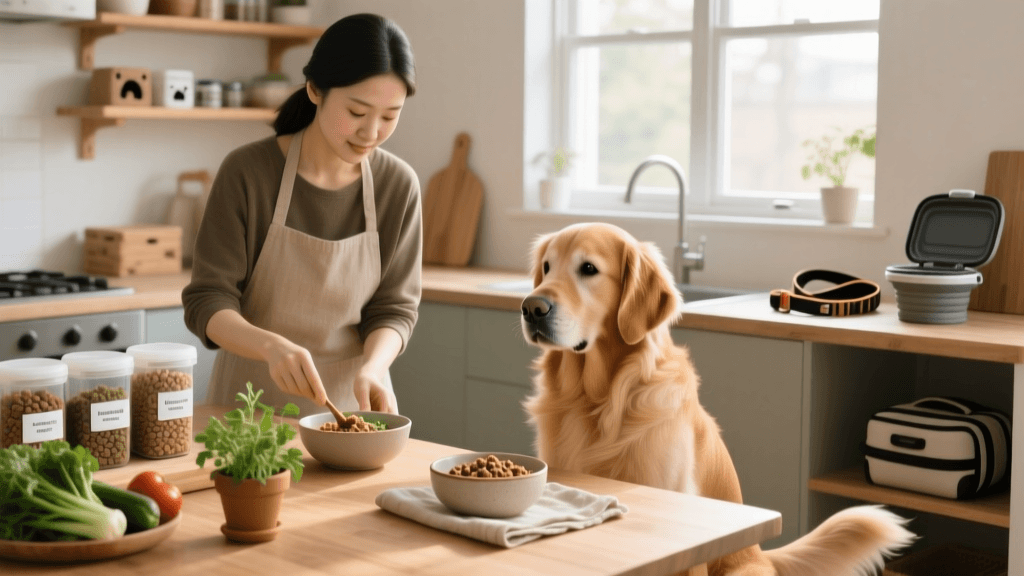
6:30 AM - Breakfast: Serve the first meal of the day. Stick to a high-quality puppy formula like Purina Pro Plan Puppy or Royal Canin Puppy. Measure the food precisely according to the package guidelines based on your dog's estimated adult weight to prevent rapid, unhealthy growth.
7:00 AM - Play and Training: Engage in 15 to 20 minutes of gentle play or basic obedience training (like 'sit' or 'name recognition'). Keep sessions short to avoid overstimulation.
7:30 AM - Potty and Nap: Take them out for another potty break, then place them in their crate or designated pen for a morning nap.
Mid-Day and Afternoon (9:00 AM - 5:00 PM)
During the day, the cycle revolves around the 'Eat, Play, Potty, Sleep' loop. A young puppy can only stay awake for about 45 to 60 minutes before they become overtired and cranky (often resulting in the dreaded 'puppy zoomies' or nipping).
9:30 AM, 12:30 PM, 3:30 PM - Potty, Play, Potty, Nap: Wake the puppy up, take them outside immediately. Follow with a short play session using interactive toys like the Kong Classic (approx. $15). Mental stimulation tires a puppy out just as much as physical exercise. Incorporate snuffle mats (approx. $20) or frozen Kong toys stuffed with plain pumpkin puree and puppy kibble to keep them occupied during crate transitions. After 20 minutes of activity, take them out to potty one last time before returning them to their crate for a 2-hour nap.
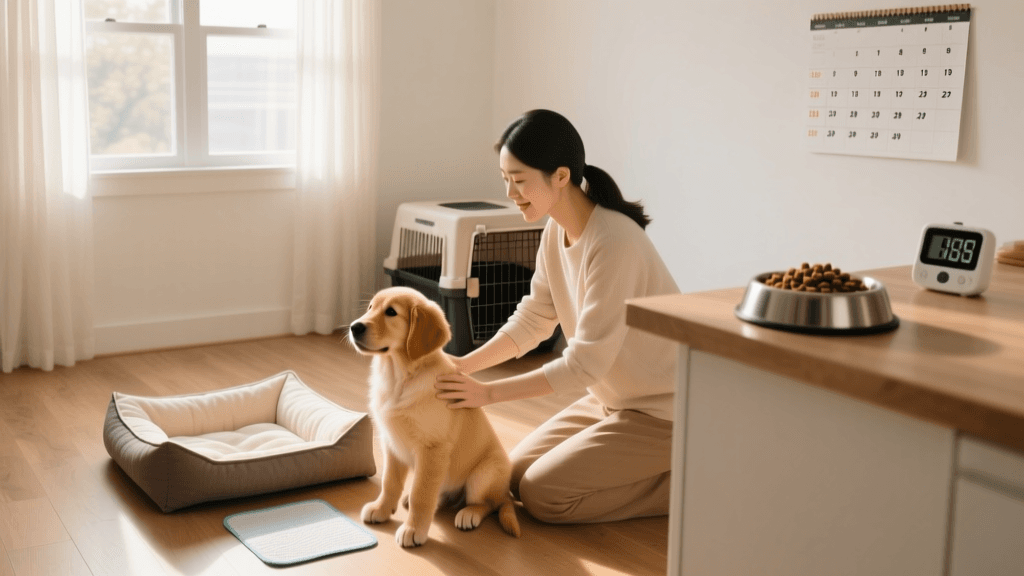
The crate is not a punishment; it is a den. To build a positive association, feed your puppy their meals inside the crate with the door open. Toss high-value treats into the back of the crate and use a cue word like 'Kennel' or 'Place'. If your puppy whines when the door is closed, wait for a brief moment of silence before letting them out, so you do not accidentally reward the whining behavior.
Evening and Bedtime (5:00 PM - 10:00 PM)
5:00 PM - Dinner: Serve the final meal of the day.
6:00 PM - Evening Activity: This is a great time for a short, leisurely walk (if your puppy has completed their vaccination series) or indoor enrichment games like hide-and-seek with kibble.
7:30 PM - Water Cutoff: Pick up the water bowl. This is a crucial, often overlooked step for first-time owners. Removing water two to three hours before bedtime drastically reduces the need for midnight potty emergencies.
8:30 PM - Final Play and Potty: Wind down with gentle petting and a final outdoor trip.
9:30 PM - Bedtime: Place the puppy in their crate. To ease the transition and mimic the warmth of littermates, use a behavioral aid like the SmartPetLove Snuggle Puppy (approx. $40), which includes a simulated heartbeat and heat pack.
Mastering Potty Training: Timings and Bladder Capacity
Potty training is arguably the most stressful aspect of bringing home a new dog. The American Kennel Club (AKC) emphasizes that supervision and a strict schedule are the foundations of house training. You cannot expect a puppy to 'tell you' they need to go; you must take them out before they have the urge.
A general veterinary rule of thumb is that a puppy can hold their bladder for one hour per month of age, up to a maximum of about eight hours. However, this applies to resting puppies. An active, playing puppy will need to go much more frequently. Keep a potty log on your refrigerator or use a smartphone app to track when your puppy eats, drinks, sleeps, and eliminates. This data will quickly reveal their natural biological rhythms, allowing you to anticipate their needs before accidents occur.
| Puppy Age | Maximum Bladder Capacity (Resting) | Required Potty Break Frequency (Active) |
|---|---|---|
| 8 Weeks (2 Months) | 2 Hours | Every 30 - 45 Minutes |
| 12 Weeks (3 Months) | 3 Hours | Every 1 - 1.5 Hours |
| 16 Weeks (4 Months) | 4 Hours | Every 1.5 - 2 Hours |
| 6 Months | 6 Hours | Every 3 - 4 Hours |
Always take your puppy out immediately after: waking up, eating or drinking, playing vigorously, or being released from their crate. If an accident happens indoors, never punish the puppy. Simply interrupt them with a neutral 'Oops!' and carry them outside to finish. Clean indoor accidents thoroughly with an enzymatic cleaner like Nature's Miracle Advanced Stain and Odor Eliminator (approx. $12) to completely break down the uric acid crystals and prevent repeat offenses.
Essential Gear for Your New Routine
To execute this schedule flawlessly, you need the right tools. Here is a quick shopping list for first-time owners:
- Properly Sized Crate: A wire crate like the MidWest iCrate (approx. $50 - $80) is ideal. Use the included divider panel so the crate is only large enough for the puppy to stand up, turn around, and lie down. If it is too large, they will potty in one corner and sleep in the other.
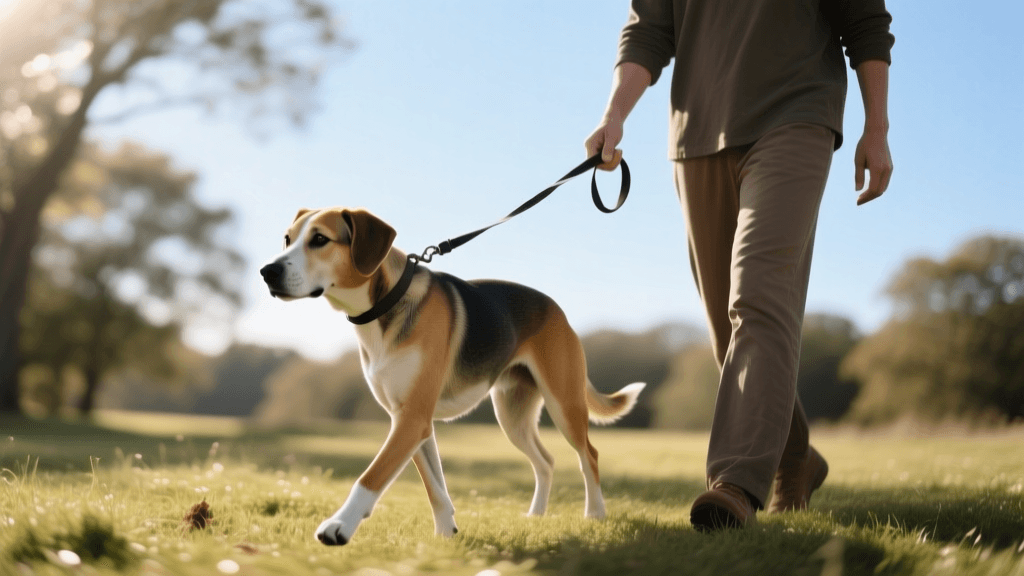
- Long-Line Leash: A 10-to-15-foot lightweight training leash allows you to give your puppy freedom in the yard while maintaining control to guide them back to their designated potty spot.
- Treat Pouch: Wear a treat pouch (like the Ruffwear Treat Trader, approx. $30) around your waist during all waking hours so you can instantly reward good behavior and outdoor potty successes.
- Puppy Playpen: For times when you cannot actively supervise but the puppy is awake, an exercise pen provides a safe, confined space with room for toys and a water bowl.
- GPS Tracker: While not strictly necessary for indoor routines, a lightweight GPS tracker like the Fi Smart Collar or Tractive (approx. $13/month subscription) provides immense peace of mind for first-time owners once outdoor walks begin, ensuring you can locate your puppy instantly if they slip their harness.
Consistency is the Ultimate Key
As a first-time owner, it is easy to become lax on the weekends or after a long day at work. However, the Humane Society of the United States notes that inconsistency is the primary reason dogs fail to learn household rules. Your puppy does not understand the concept of 'sleeping in' on a Saturday. If you deviate from the schedule, you risk confusing your dog and setting your potty training back by weeks.
Stick to the plan, enlist the help of family members or a professional dog walker to cover mid-day breaks if you work outside the home, and remember that this intense phase is temporary. By the time your puppy reaches six months of age, their bladder capacity will increase, their sleep needs will normalize, and the rigid schedule will naturally evolve into a relaxed, harmonious daily rhythm. Embrace the routine now, and you will build a foundation of trust and obedience that will last a lifetime.
tom-renshaw
All our authors care for dogs every day — read more of their work on the authors page.