The Ultimate First-Time Puppy Daily Schedule Guide
Discover the perfect daily schedule for your new puppy. Learn potty training timelines, feeding routines, and sleep tips for first-time dog owners.
Welcome Home: Why a Routine is Your Puppy's Best Friend
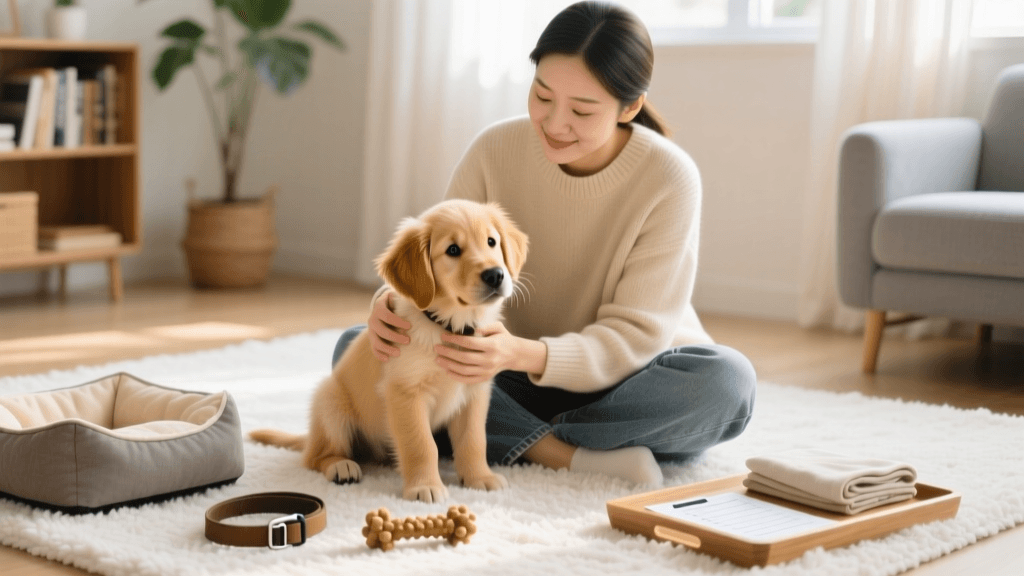
Bringing a new puppy home is one of the most exhilarating experiences in life. The soft fur, the clumsy paws, and the joyful tail wags are enough to melt anyone's heart. However, many first-time owners are quickly blindsided by the sheer exhaustion and chaos that accompanies those first few weeks. Between the midnight whining, the unexpected potty accidents on your favorite rug, and the relentless chewing, it is incredibly common to feel overwhelmed. In the dog training community, this emotional crash is often referred to as the 'puppy blues,' and it affects a vast majority of new pet parents.
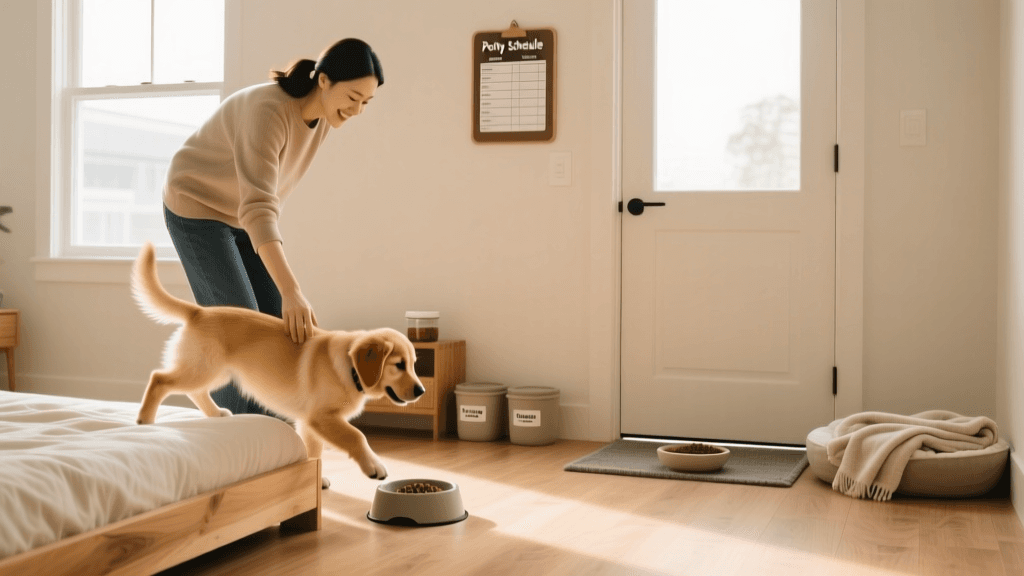
The ultimate antidote to the puppy blues and household chaos is a strict, predictable daily schedule. Dogs are creatures of habit who thrive on routine. When a puppy knows exactly what to expect and when to expect it, their anxiety decreases, their confidence grows, and your household regains its peace. According to the American Kennel Club (AKC), establishing a consistent routine from day one is the single most effective way to accelerate potty training and promote healthy behavioral development.
The 8-to-10-Week-Old Puppy Daily Schedule
Puppies at this age require a significant amount of sleep—often up to 18 to 20 hours a day. Their awake windows are very short, usually lasting only 45 to 60 minutes before they become overtired and prone to nipping or hyperactivity. Below is a foundational schedule tailored for a young puppy.
| Time | Activity | Details & First-Time Owner Tips |
|---|---|---|
| 7:00 AM | Wake Up & Potty | Carry them outside immediately to prevent accidents. |
| 7:15 AM | Breakfast | Feed in the crate or a quiet area to build positive associations. |
| 7:45 AM | Potty & Play | 15 minutes of gentle play, followed by another potty break. |
| 8:15 AM | Morning Nap | Crate time. Puppies need to be enforced to sleep. |
| 10:30 AM | Potty & Training | 5 minutes of basic training (sit, name recognition), then potty. |
| 11:00 AM | Midday Nap | Back in the crate or a secure playpen. |
| 1:00 PM | Potty & Lunch | Second meal of the day, followed by a potty break. |
| 1:30 PM | Afternoon Nap | Longest nap window of the day. |
| 4:00 PM | Potty & Socialization | Carry them outside to hear sounds, see people, and explore safely. |
| 5:00 PM | Dinner | Final meal of the day. Remove water 2 hours before bed. |
| 6:00 PM | Evening Play & Potty | Gentle chewing toys, snuffle mats, and multiple potty trips. |
| 8:00 PM | Wind Down & Bedtime | Last potty trip at 10:00 PM, then crate for the night. |
Potty Training: Timing, Tools, and Techniques
Potty training is arguably the most stressful aspect of bringing home a new dog. The golden rule of puppy potty training is based on bladder capacity: a puppy can generally hold their bladder for one hour per month of age. Therefore, an 8-week-old (2-month-old) puppy can only hold it for about two hours maximum, and even less when they are active or playing.
To succeed, you must take your puppy outside at critical transition times: immediately upon waking up, within 15 minutes after eating or drinking, after a vigorous play session, and right before bedtime. When they eliminate outdoors, use a specific marker word like 'Yes!' or a clicker, and immediately reward them with a high-value treat, such as small pieces of boiled chicken or Zuke's Mini Naturals training treats.
Essential Potty Training Products
- Enzymatic Cleaner: Standard household cleaners do not break down the uric acid in dog urine. You must use an enzymatic cleaner like Nature's Miracle Advanced Stain and Odor Eliminator (approx. $12-$15). If the puppy can still smell their previous accident, they will return to that spot.
- Treat Pouch: A wearable treat pouch (like the Outward Hound Treat Tote) ensures you have rewards on hand the second they finish their business outside.
- Bell Training: Hanging a set of potty bells (approx. $8) on the door handle can teach your puppy to alert you when they need to go out, though this should be introduced after they understand the basic concept of going outdoors.
Feeding and Hydration Guidelines
Free-feeding (leaving a bowl of food out all day) is highly discouraged for first-time owners. Scheduled feeding not only aids in potty training by making their digestive output predictable, but it also allows you to monitor their appetite, which is a key indicator of overall health. The ASPCA recommends feeding puppies three measured meals a day until they are about six months old, at which point you can transition to two meals a day.
For an average medium-breed puppy, this might look like 1/2 to 3/4 cup of high-quality puppy kibble per meal, measured with a standard 8 oz measuring cup. Brands like Purina Pro Plan Puppy or Royal Canin Size Health Nutrition are excellent choices backed by veterinary nutritionists. Expect to spend around $60 to $85 per month on premium puppy food.
Hydration Tip: Puppies need constant access to fresh water during the day. However, to help your puppy (and you) sleep through the night, pick up the water bowl exactly two hours before bedtime. If bedtime is 10:00 PM, water goes away at 8:00 PM. Take them out for one final potty break right before they go into their crate.
Crate Training and Sleep
A crate is not a punishment; it is a den. It provides a safe space for your puppy to decompress and is an invaluable tool for preventing destructive chewing and nighttime accidents. The Humane Society of the United States emphasizes that crate training taps into a dog's natural instinct to keep their sleeping area clean, which heavily supports potty training efforts.
For a growing puppy, invest in a wire crate that will fit their adult size, but use a divider panel to section off the space. If the crate is too large, the puppy will use one corner as a bathroom and sleep in the other. A 24-inch or 30-inch MidWest Homes for Pets iCrate (approx. $45-$60) with an adjustable divider is an industry standard. Line the crate with a washable fleece blanket rather than a plush bed, as puppies are prone to chewing and ingesting stuffing, which can cause fatal intestinal blockages.
To ease the transition of sleeping alone, consider using a SmartPet Love Snuggle Puppy (approx. $40). This toy features a simulated heartbeat and a heat pack, which mimics the feeling of sleeping littermates and can drastically reduce nighttime crying.
"Consistency is the bridge between confusion and confidence for your new puppy. Every time you stick to the schedule, you are telling your dog that they are safe, and that you are a reliable leader."
Exercise and the 5-Minute Rule
First-time owners often make the mistake of over-exercising their puppies in an attempt to 'tire them out.' Puppies have soft, developing growth plates in their joints, and excessive forced exercise (like long runs or repetitive fetch on hard surfaces) can cause long-term orthopedic damage. Instead, follow the widely accepted '5-Minute Rule': a puppy should have no more than 5 minutes of structured, forced exercise per month of age, twice a day. Therefore, an 8-week-old puppy needs only 10 minutes of leash walking or structured play per session. Mental stimulation, such as snuffle mats, frozen Kongs, and short training sessions, will tire out a puppy's brain much faster and more safely than physical exertion.
Estimated First-Month Costs for New Owners
Budgeting is a crucial part of responsible pet ownership. While the initial setup requires a larger investment, knowing these costs upfront prevents financial stress. Below is a breakdown of essential first-month expenses for a first-time puppy owner.
| Item / Service | Estimated Cost | Frequency |
|---|---|---|
| Adjustable Wire Crate & Divider | $45 - $70 | One-time |
| Enzymatic Stain & Odor Cleaner | $12 - $18 | As needed |
| Premium Puppy Kibble (30lb+ bag) | $60 - $85 | Monthly |
| Snuggle Puppy (Heartbeat Toy) | $40 - $50 | One-time |
| Initial Veterinary Exam & First Vaccines | $100 - $250 | First Month |
| Flea, Tick, & Heartworm Prevention | $40 - $60 | Monthly |
| Basic Training Treats & Pouch | $20 - $30 | Monthly |
Final Thoughts on Surviving the Puppy Phase
The first month with a new puppy is a test of endurance, patience, and consistency. There will be nights when you are awake at 3:00 AM, standing in the rain in your pajamas, waiting for a tiny dog to find the perfect blade of grass to pee on. There will be moments of frustration when your favorite pair of shoes becomes a chew toy. But by leaning heavily on a structured daily schedule, utilizing the right tools like enzymatic cleaners and properly sized crates, and managing your expectations regarding exercise and sleep, you will navigate this phase successfully.
Remember that every interaction is a training opportunity. The effort you invest in these early weeks lays the unbreakable foundation for a well-adjusted, confident, and deeply bonded adult dog. Take a deep breath, stick to the schedule, and enjoy the fleeting, beautiful chaos of puppyhood.
robin-maitland
All our authors care for dogs every day — read more of their work on the authors page.