First-Time Puppy Owner Guide: Daily Routines & Schedules
Discover the ultimate daily routine and schedule for your new puppy. Learn feeding, potty, and sleep timings to help first-time owners succeed.
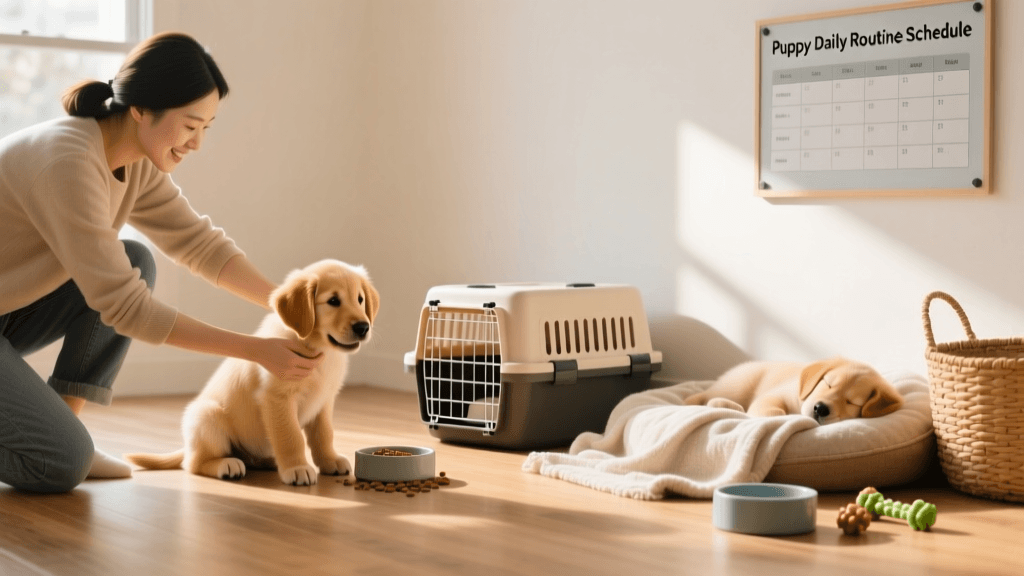
Bringing a new puppy home is one of the most exciting milestones in life, but it can quickly become overwhelming for first-time dog owners. Without a structured plan, you may find yourself dealing with midnight whining, carpet accidents, and a chaotic household. The secret to a well-adjusted, happy dog isn't just love—it is a predictable, consistent daily routine.
Why Predictability is Your Puppy's Best Friend
Dogs are creatures of habit. According to the American Society for the Prevention of Cruelty to Animals (ASPCA), establishing a routine early on helps puppies feel secure. When a puppy knows what to expect and when to expect it, their anxiety levels drop significantly. This predictability accelerates house training, reduces destructive behaviors born from boredom or stress, and helps regulate their digestive and circadian systems.
For a first-time owner, a schedule also serves as a personal roadmap. It removes the guesswork from your day, allowing you to balance your work, social life, and the demanding needs of a growing canine.
The Ideal Daily Schedule for an 8-to-12-Week-Old Puppy
Puppies at this age sleep between 18 to 20 hours a day, but their awake windows are intense and require strict management. Below is a foundational schedule designed for a young puppy.
| Time | Activity | Duration | First-Time Owner Notes |
|---|---|---|---|
| 6:30 AM | Wake Up & Immediate Potty | 15 mins | Carry them outside to prevent accidents. |
| 6:45 AM | Breakfast & Hydration | 20 mins | Measure food precisely; remove bowl after 15 mins. |
| 7:15 AM | Potty Break & Play | 30 mins | Engage in gentle tug or fetch. No intense jumping. |
| 7:45 AM | Morning Nap (Crate) | 2 hours | Provide a safe chew toy; ignore initial whining. |
| 9:45 AM | Potty Break & Training | 20 mins | Practice sit and come using high-value treats. |
| 10:15 AM | Mid-Day Nap | 2 hours | Enforced quiet time in the crate or playpen. |
| 12:15 PM | Potty, Lunch, & Play | 45 mins | Second meal of the day. Followed by sniffari walk. |
| 1:00 PM | Afternoon Nap | 2.5 hours | Puppies need this rest to process morning learning. |
| 3:30 PM | Potty & Socialization | 30 mins | Expose to new sounds, surfaces, and distant dogs. |
| 4:00 PM | Late Afternoon Nap | 1.5 hours | Shorter nap to prepare for the evening witching hour. |
| 5:30 PM | Dinner & Potty | 30 mins | Final meal. Pick up water bowl by 7:00 PM. |
| 6:00 PM | Active Play & Bonding | 45 mins | Use puzzle toys to tire their brain. |
| 6:45 PM | Evening Wind Down | 1 hour | Calm petting, gentle grooming, low lighting. |
| 8:00 PM | Final Potty & Bedtime | 15 mins | Crate covered with a breathable blanket. |
| 2:00 AM | Midnight Potty Break | 10 mins | Keep lights dim, no talking, straight back to bed. |
Mastering the Potty Training Loop
House training is often the most stressful hurdle for first-time owners. The key to success lies in understanding a puppy's bladder capacity. The general rule of thumb, supported by the Humane Society of the United States, is that a puppy can hold their bladder for one hour per month of age, plus one. Therefore, an eight-week-old (two-month-old) puppy can only hold it for approximately three hours maximum, and much less when active or playing.
To prevent accidents, you must take your puppy out:
- Immediately upon waking up from a nap or crate rest.
- Within 15 to 30 minutes after eating or drinking.
- Immediately after a vigorous play session.
- Every 1 to 2 hours during active awake windows.
Furthermore, incorporating sniffaris into your potty breaks is highly beneficial. Instead of rushing your puppy back inside the moment they eliminate, allow them five to ten minutes to sniff the grass, bushes, and trees. Mental stimulation through scent work is incredibly tiring for a dog. A fifteen-minute sniffing session can expend as much mental energy as a mile-long walk, ensuring your puppy is ready for their next scheduled crate nap without acting out in frustration.
Pro-Tip: Always use an enzymatic cleaner like Nature’s Miracle Advanced Stain and Odor Eliminator for any indoor accidents. Standard household cleaners leave behind uric acid crystals that humans cannot smell, but a dog's sensitive nose will detect, prompting them to soil the same spot again.
Feeding Guidelines and Nighttime Water Fasting
Free-feeding (leaving a bowl of kibble out all day) is a common mistake among novice owners. It makes potty training nearly impossible because you cannot predict when the puppy will need to eliminate. Instead, feed your puppy three measured meals a day until they are six months old.
Portion sizes vary wildly by breed. A Chihuahua may only need 1/4 cup per meal, while a Golden Retriever might require 1 to 1.5 cups. Always consult the feeding chart on your specific premium dog food brand and adjust based on your vet's body condition scoring. When selecting a food bowl, opt for stainless steel or ceramic over plastic. Plastic bowls can harbor microscopic scratches that trap bacteria, potentially leading to canine acne or gastrointestinal upset. Additionally, using a slow-feeder bowl can extend meal times, aiding digestion and preventing dangerous bloat in deep-chested breeds.
The Water Fasting Rule: To ensure you get some uninterrupted sleep, pick up your puppy's water bowl two hours before bedtime. If bedtime is 8:00 PM, remove water at 6:00 PM. Offer a single ice cube or a small sip of water if they seem excessively thirsty, but avoid a full bowl right before crating.
Crate Training and Sleep Hygiene
The American Kennel Club (AKC) highly recommends crate training, noting that it taps into a dog's natural denning instinct. A crate is not a punishment; it is a safe haven that prevents your puppy from chewing on electrical cords or swallowing dangerous objects when you cannot supervise them.
For first-time owners, invest in a wire crate with a divider panel, such as the MidWest Homes for Pets iCrate. The divider allows you to expand the space as your dog grows. The crate should be just large enough for the puppy to stand up, turn around, and lie down comfortably. If it is too large, they may designate one corner for sleeping and the opposite corner for eliminating.
One of the most common mistakes first-time owners make is rushing to the crate the second the puppy whines. If you know your puppy has recently eliminated and is safe, you must wait for a brief moment of silence before opening the door or offering praise. Otherwise, you are actively training them to vocalize to get your attention.
- Location: Keep the crate in your bedroom for the first few weeks. Your scent and the sound of your breathing will reduce separation anxiety.
- Covering: Drape a breathable cotton sheet over the top and sides to create a den-like atmosphere and block out visual stimuli.
- White Noise: A fan or a white noise machine can drown out household sounds that might trigger alert barking.
Enrichment and the Witching Hour
Many first-time owners are caught off guard by the infamous puppy witching hour, which typically occurs in the early evening between 6:00 PM and 8:00 PM. During this window, a seemingly exhausted puppy will suddenly transform into a landshark, exhibiting hyperactive zoomies, excessive nipping, and an inability to settle. This behavior is rarely a sign of excess energy; rather, it is a classic symptom of overtiredness and overstimulation. Puppies lack the self-regulation skills to put themselves to sleep when they are exhausted.
To survive this period and maintain your routine, you must proactively manage their environment. Introduce high-value, long-lasting chews such as frozen carrots, Yak milk chews, or a KONG Classic stuffed with plain pumpkin puree and frozen overnight. Chewing releases endorphins in a dog's brain, which naturally soothes their nervous system and helps transition them from a state of high arousal to a restful state, perfectly setting the stage for your evening wind-down and bedtime routine.
Essential Routine Supplies and Estimated Costs
Setting up a successful routine requires a few upfront investments. Here is a breakdown of essential items first-time owners should budget for to maintain a smooth daily schedule.
| Item | Recommended Brand/Type | Estimated Cost | Purpose in Routine |
|---|---|---|---|
| Wire Crate with Divider | MidWest iCrate (36 or 42 inch) | $60 - $80 | Safe sleep and potty training management. |
| Enzymatic Cleaner | Nature's Miracle (32 oz) | $12 - $15 | Eliminating accident odors to prevent re-soiling. |
| Interactive Food Toy | KONG Classic (Red or Black) | $15 - $20 | Mental enrichment during crate or quiet time. |
| Long Training Leash | 15ft to 30ft Nylon or Biothane | $20 - $35 | Safe outdoor potty breaks and recall training. |
| Treat Pouch | Clip-on silicone or canvas pouch | $10 - $15 | Immediate reward delivery during potty/training. |
Adjusting the Schedule as Your Puppy Grows
As your puppy matures, their physical stamina and bladder capacity will increase. By the time they reach four to six months of age, you can begin consolidating their naps and transitioning from three meals a day down to two. The midnight potty break will likely become unnecessary by 12 to 14 weeks of age, provided you stick to the water-fasting rule and maintain a consistent evening potty routine.
Remember that flexibility within the framework is necessary. Some days, a trip to the vet or a sudden change in weather will disrupt your schedule. When this happens, rely on your core pillars: supervise closely, offer frequent potty opportunities, and enforce naps when your puppy becomes overly bitey or hyperactive.
Embracing a structured routine as a first-time owner is the greatest gift you can give your new dog. It builds a foundation of trust, accelerates learning, and transforms the chaotic puppy phase into a deeply rewarding bonding experience.
aaron-whyte
All our authors care for dogs every day — read more of their work on the authors page.