Dog Separation Anxiety: Diagnosis and Proven Solutions
Is your dog destroying the house when alone? Learn how to diagnose true separation anxiety and implement proven, step-by-step solutions to restore peace.
Diagnosing the Problem: Is It Truly Separation Anxiety?
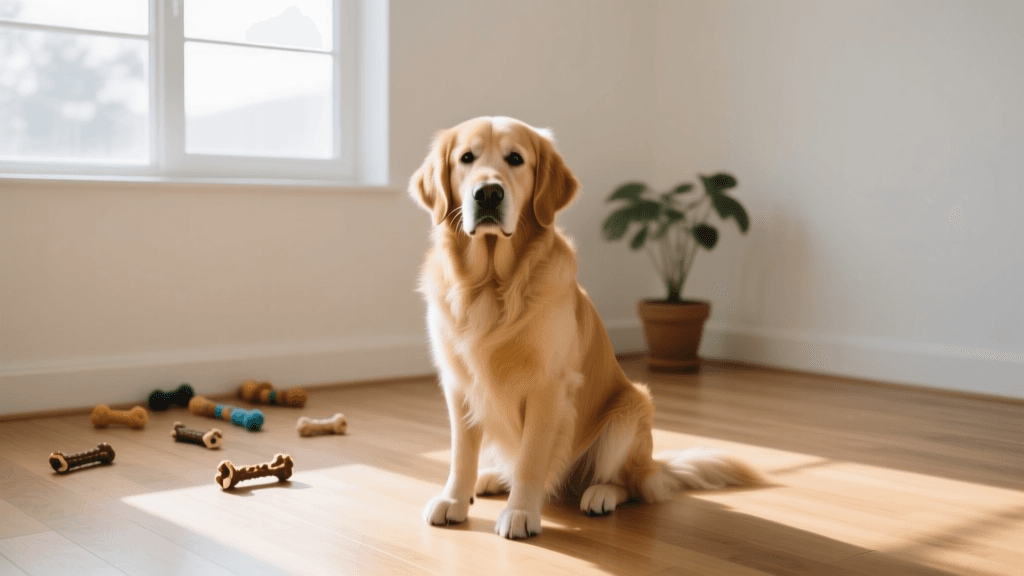
Coming home to chewed baseboards, shredded pillows, or neighbor complaints about incessant barking is incredibly frustrating. However, before you can solve the problem, you must accurately diagnose it. Many dog owners mistakenly label any bad behavior that happens while they are away as "separation anxiety." In reality, true separation anxiety is a severe panic disorder triggered specifically by the owner's absence, and it requires a very different approach than training a bored or under-stimulated dog.
The 30-Minute Camera Test
The most effective way to diagnose separation anxiety is to observe your dog's behavior immediately after you leave. Set up an affordable pet camera, such as the Wyze Cam V3 (approximately $35) or a Furbo (approximately $199), to record the first 30 to 45 minutes of your absence. According to the ASPCA, dogs with true separation anxiety typically exhibit signs of extreme distress within the first 15 to 30 minutes of their owner's departure. Look for the following clinical signs on your footage:
- Pacing in a repetitive, fixed pattern
- Heavy panting, drooling, or trembling
- Howling, crying, or high-pitched barking that does not subside
- Frantic scratching or digging at exit points (doors and windows)
- Inappropriate elimination (urination or defecation) despite being house-trained
If your dog settles down after 10 minutes, chews a toy, or takes a nap, you are likely dealing with boredom, confinement distress, or a lack of exercise, rather than clinical separation anxiety.
Common Triggers and Root Causes
Separation anxiety rarely develops without a catalyst. Understanding the root cause can help you tailor your management strategy. Common triggers include:
- Schedule Changes: A sudden shift from working at home to returning to the office is currently the leading cause of separation anxiety in adult dogs.
- Relocation: Moving to a new home or apartment disrupts a dog's sense of security and environmental familiarity.
- Loss of a Household Member: The passing or departure of a human family member or a companion pet can trigger severe grief and anxiety.
- Changes in Family Dynamics: Divorce, a new baby, or even a child leaving for college can destabilize a dog's routine.
What NOT to Do: Avoiding Common Mistakes
When dealing with a panicked dog, human intuition often leads to counterproductive solutions. Avoid these common mistakes:
- Punishment: Yelling at your dog or rubbing their nose in an accident when you get home only increases their anxiety. They will associate your return with punishment, making your next departure even more terrifying for them.
- Getting a Second Dog: While companionship is great, a second dog will not cure separation anxiety if the dog is hyper-attached to you. You may simply end up with two anxious dogs.
- Crate Training a Panicked Dog: If your dog suffers from true separation anxiety, confining them to a crate can result in severe injuries as they attempt to escape (broken teeth, torn nails). Unless they are already crate-trained and view it as a safe haven, avoid crating an anxious dog.
Step-by-Step Solutions for Separation Anxiety
Treating separation anxiety requires patience, consistency, and a structured behavior modification protocol. The VCA Animal Hospitals emphasize that desensitization and counterconditioning are the gold standards for treatment.
1. Desensitizing Pre-Departure Cues
Dogs are masters of pattern recognition. Long before you walk out the door, your dog knows you are leaving based on your "departure cues"—picking up your keys, putting on your shoes, or grabbing your coat. For an anxious dog, these cues trigger a panic response.
The Protocol: Perform these cues without actually leaving. Pick up your keys and sit back down on the couch. Put on your coat and make a sandwich. Tie your shoes and watch TV. Do this 10 to 15 times a day. Over a few weeks, your dog's brain will stop associating these specific actions with the terror of your departure, effectively neutralizing the trigger.
2. Graduated Absence Training
This is the core of separation anxiety treatment. You must teach your dog that you always come back, starting with absences so short they don't trigger anxiety.
The Protocol: 1. Walk out the front door, close it, and immediately open it and walk back in. (1 second absence). 2. If the dog remains calm, wait 5 minutes, then try a 5-second absence. 3. Gradually increase the time: 10 seconds, 30 seconds, 1 minute, 3 minutes, 5 minutes. 4. The Golden Rule: Never push the dog past their panic threshold. If your dog panics at the 2-minute mark, you have moved too fast. Drop back to 30 seconds and build up more slowly. 5. Keep your departures and arrivals completely boring. Do not say emotional goodbyes or offer enthusiastic greetings when you return. This teaches the dog that coming and going is a non-event.
3. Creating a Supportive Safe Space
Instead of a crate, set up a dog-proofed room or a gated area equipped with calming aids. Plug in an Adaptil DAP diffuser (approximately $25 for a 30-day refill) which releases synthetic dog-appeasing pheromones to promote a sense of security. Play white noise or specialized classical music (like "Through a Dog's Ear") at around 50 decibels to mask outside noises like passing cars or neighbors that might trigger vocalization.
Management Tools: Comparison Chart
While training is the long-term cure, management tools are essential to keep your dog safe and your home intact while the behavior modification takes effect. Below is a comparison of common tools used in separation anxiety protocols.
| Management Tool | Estimated Cost | Best Application | Limitations |
|---|---|---|---|
| Pet Camera (e.g., Wyze, Furbo) | $35 - $200 | Monitoring panic thresholds and recording departure triggers. | Does not treat the anxiety; strictly a diagnostic and monitoring tool. |
| Adaptil Pheromone Diffuser | $25 (per month) | Creating a baseline of calm in the dog's designated safe room. | Mild effect; will not stop a severe panic attack on its own. |
| Food Puzzles (e.g., Frozen Kong) | $15 - $25 | Distracting dogs with mild boredom or very mild separation distress. | Dogs with true SA will refuse food. A rejected Kong is a diagnostic indicator of high stress. |
| White Noise Machine | $20 - $40 | Masking environmental triggers (hallway noises, street traffic). | Must be placed safely out of chewing range; requires a power outlet. |
Enrichment vs. Distraction: What Works When?
Many well-meaning owners try to solve separation anxiety by leaving their dog with a high-value treat, like a Kong stuffed with peanut butter and frozen overnight. While mental enrichment is vital for a dog's overall well-being, it is crucial to understand the difference between enrichment and distraction. A frozen Kong is an excellent tool for a bored dog. However, according to The Humane Society of the United States, a dog in the grip of a severe panic attack will not eat. If you leave a frozen Kong and find it untouched on the floor when you return, this is a strong indicator that your dog's anxiety is too high for simple distraction techniques, and you must rely on graduated absence training and potentially medication.
When to Seek Professional Help and Medication
If your dog is injuring themselves, escaping their enclosure, or if you have been consistently practicing graduated absences for several weeks with no progress, it is time to consult a professional. Seek out a Certified Applied Animal Behaviorist (CAAB) or a Veterinary Behaviorist (Dip ACVB).
For moderate to severe cases, behavior modification alone is often not enough because the dog's brain is too flooded with stress hormones (cortisol and adrenaline) to learn new coping mechanisms. A veterinarian can prescribe anti-anxiety medications, such as SSRIs like Fluoxetine (Prozac) or Clomipramine. These medications do not "sedate" the dog; rather, they lower the baseline anxiety enough for the dog to actually absorb the desensitization training. Medication combined with a structured training protocol is widely considered the most humane and effective approach to severe separation anxiety.
Final Thoughts on Restoring Peace
Living with a dog that suffers from separation anxiety is emotionally and financially draining. It requires a massive shift in your daily routine, as you can no longer leave the house spontaneously while the training protocol is in place. However, by accurately diagnosing the issue via camera, avoiding punishment, desensitizing departure cues, and systematically building up your dog's tolerance to being alone, you can help your canine companion find peace. Remember that progress is rarely linear; there will be good days and bad days. Stay patient, lean on your management tools, and do not hesitate to bring a veterinary professional onto your team to help your dog overcome their fear of being left behind.
priya-sutaria
All our authors care for dogs every day — read more of their work on the authors page.