The 3-3-3 Rule: Helping Your Rescue Dog Decompress
Discover the 3-3-3 rule for rescue dog adoption. Learn practical decompression tips, essential gear, and a timeline to help your new dog feel at home.

The Reality of Rescue Dog Adoption
Adopting a rescue dog is a profoundly rewarding experience, but the transition from a shelter environment to a quiet home is a massive shock to a dog's nervous system. Many new adopters expect their new companion to be immediately grateful, relaxed, and ready to play. However, the reality is often quite different. Shelter environments are inherently stressful, characterized by echoing barks, unfamiliar scents, and a lack of predictable routine. According to the ASPCA, dogs in shelters experience elevated cortisol levels, which can lead to a state of chronic stress or "shutdown." When you finally bring your rescue dog home, they are not just learning a new house; they are recovering from sensory overload.
Understanding this physiological and emotional transition is the key to a successful adoption. Rather than expecting immediate obedience or affection, new owners must focus on decompression. This means providing a low-stimulation environment where the dog can slowly process their new reality at their own pace. By managing your expectations and setting up a structured, calming environment, you lay the groundwork for a lifelong bond built on trust rather than forced compliance.
Understanding the 3-3-3 Rule of Rescue Dog Adoption
The 3-3-3 rule is a widely recognized guideline in the rescue community that outlines the general timeline a shelter dog goes through when adjusting to a new home. While every dog is an individual and trauma can alter this timeline, the 3-3-3 rule provides a vital roadmap for adopters to gauge their dog's emotional state.
The First 3 Days: Overwhelm and Shutdown
During the first 72 hours, your dog is likely to feel overwhelmed, scared, and unsure of their surroundings. They may not eat or drink normally, they might hide in corners or crates, and they may sleep excessively as a coping mechanism. Some dogs may even exhibit stress-induced diarrhea or pacing. This is not the time for training, house tours, or meeting the extended family. This is survival mode.
The First 3 Weeks: Settling and Testing Boundaries
By the three-week mark, your dog is beginning to realize that this new environment might be permanent. They will start to show more of their true personality, which includes testing boundaries. You might see resource guarding emerge, leash reactivity, or separation anxiety as they figure out the rules of the house. They are learning your routine and figuring out where they fit into the family dynamic.
The First 3 Months: The True Personality Emerges
After three months, most rescue dogs finally feel secure enough to let their guard down completely. The "honeymoon phase" is over, and you are now living with the real dog. Trust has been established, and their genuine quirks, play styles, and affection levels become apparent. This is when true behavioral training and deep bonding can flourish.
Setting Up a Decompression Zone
Before your dog even crosses the threshold, you must prepare a dedicated decompression zone. This should be a quiet, easily manageable space, such as a spare bedroom or a gated-off section of the living room. Avoid high-traffic areas like the kitchen or the front hallway. Use a sturdy, hardware-mounted baby gate (such as the Cardinal Gates Auto-Close Safety Gate) to restrict access to the rest of the house. This prevents the dog from becoming overwhelmed by too much space, which can trigger anxiety and house-soiling accidents.
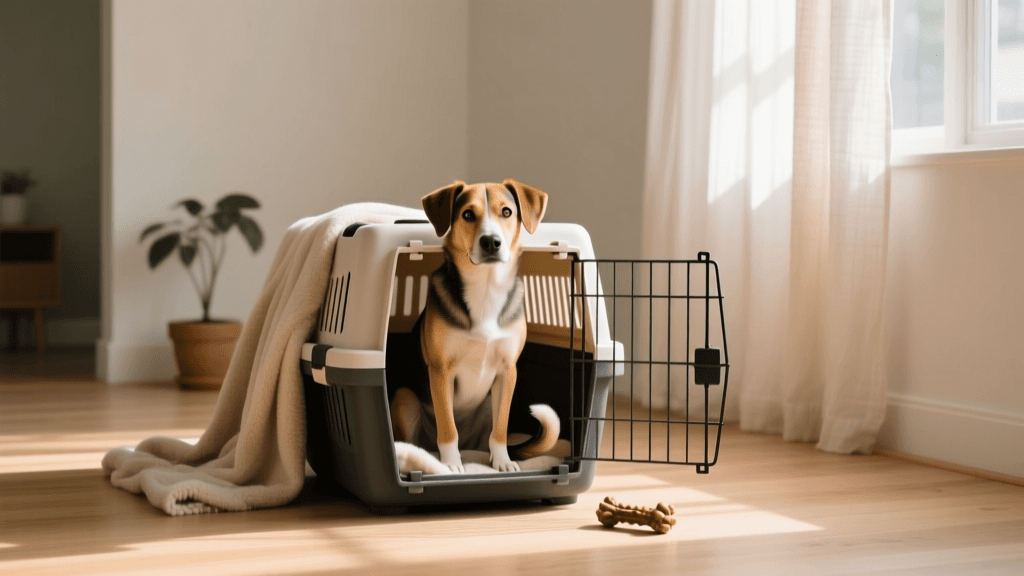
Keep the lighting dim and consider using a white noise machine or a box fan to drown out household sounds and neighborhood noise. Place their crate in the corner of the room with a blanket draped over the top to create a den-like atmosphere. For large breeds (50-70 lbs), a 42-inch wire crate (like the MidWest Homes for Pets iCrate, measuring 42x28x30 inches) provides ample room to stand and turn around without feeling exposed.
Essential Gear and Estimated Costs for Rescue Dogs
Investing in the right decompression gear can significantly reduce your dog's anxiety and prevent early behavioral issues. Below is a structured list of essentials for the first 30 days.
| Item | Purpose | Estimated Cost | Recommended Brand/Type |
|---|---|---|---|
| 42-inch Wire Crate | Safe den space and potty training aid | $70 - $100 | MidWest Homes for Pets iCrate |
| Calming Orthopedic Bed | Joint support and anxiety reduction | $40 - $80 | Furhaven Orthopedic Bolster Bed |
| 15-foot Long Line | Safe decompression walks (sniffaris) | $25 - $40 | Biothane or Nylon Tracking Leash |
| Pheromone Diffuser | Emits calming synthetic dog-appeasing pheromones | $20 - $30 | Adaptil Calm Home Diffuser |
| Interactive Puzzle Toys | Mental stimulation without high physical arousal | $15 - $25 | Kong Classic or Outward Hound Nina Ottosson |
| High-Value Training Treats | Building positive associations and trust | $15 - $20 | Zuke's Mini Naturals or Stella & Chewy's Freeze-Dried |
Days 1 to 3: Survival Mode and the "Sniffari"
During the first three days, your primary goal is to facilitate a stress-free potty routine and allow for mental decompression. Avoid the "dog park trap." Many well-meaning adopters take their new rescue to the dog park to "burn off energy," but this is a recipe for a fight-or-flight response. Instead, engage in "sniffaris." A sniffari is a decompression walk where the dog is allowed to lead the way on a 15-foot long line, sniffing the environment at their own pace. Sniffing lowers a dog's heart rate and engages their brain, providing more mental exhaustion than a mile-long run.
Keep your interactions calm and quiet. Sit on the floor in their decompression zone and read a book out loud in a soothing voice. Do not force eye contact or physical touch. Let the dog initiate contact. If they approach, offer a low-value toss treat (like a kibble piece) to build positive associations without the pressure of taking food directly from your hand.
Weeks 1 to 3: Establishing Routine and Boundaries
As your dog begins to settle in, establishing a predictable daily routine becomes your most powerful tool. Dogs thrive on predictability. Feed them at the exact same times, walk them on the same routes, and implement a consistent bedtime. According to the American Kennel Club, maintaining a strict schedule helps build a rescue dog's confidence by removing the anxiety of the unknown.
This is also the time to gently enforce house rules. If you do not want the dog on the furniture, consistently redirect them to their orthopedic bed using a positive marker word like "Yes!" followed by a high-value treat. Avoid punitive measures or scolding, as rescue dogs often have unknown histories and may react to raised voices with fear-based aggression or extreme submission.
Months 1 to 3: Building Trust and True Personality
By month two, you can begin slowly introducing your dog to new environments, trusted friends, and structured training classes. Pay close attention to their body language. Lip licking, yawning, whale eye (showing the whites of the eyes), and a tucked tail are all signs that your dog is over threshold and needs a break. Advocate for your dog by politely asking strangers not to pet them until the dog initiates the greeting.
This is the ideal time to introduce scent work or basic obedience games inside the house. Mental enrichment builds confidence. Hide treats in a snuffle mat or scatter them in the grass during your sniffaris. You are teaching your dog that the world is full of good things and that you are the provider of those resources.
When to Call a Professional
While the 3-3-3 rule covers general decompression, some rescue dogs carry deep-seated trauma that manifests as severe resource guarding, fear-based aggression, or debilitating separation anxiety. If your dog freezes, growls, or snaps when approached while eating, or if they destroy the home when left alone, do not attempt to fix it with internet advice. Punishing a growl only suppresses the warning system, leading to a dog that bites without warning.
Instead, seek out a certified professional. The Certification Council for Professional Dog Trainers (CCPDT) maintains a directory of science-based, force-free behavior consultants who specialize in rescue dog rehabilitation. A professional will help you implement a behavior modification plan, such as desensitization and counter-conditioning, ensuring both you and your dog remain safe during the adjustment period.
Conclusion
Adopting a rescue dog is not a transaction; it is a relationship built on patience, empathy, and time. By respecting the 3-3-3 rule, investing in proper decompression gear, and allowing your dog to navigate their new world at their own pace, you are giving them the greatest gift possible: the freedom to heal. The first thirty days may be exhausting and emotionally taxing, but the moment your rescue dog finally lets out a deep sigh, rests their chin on your knee, and truly comes home, you will know that every second of patience was worth it.
robin-maitland
All our authors care for dogs every day — read more of their work on the authors page.