First 30 Days With a Rescue Dog: Vet & Trainer Q&A
Expert vets and trainers answer top questions about the first 30 days with a rescue dog. Discover timelines, costs, and essential integration tips.
Bringing a rescue dog into your home is a deeply rewarding experience, but the first month can be a whirlwind of behavioral adjustments, veterinary visits, and sleepless nights. To help you navigate this critical window, we consulted with veterinary professionals and certified professional dog trainers (CPDT-KA) to answer the most common questions new adopters face. From managing stress-induced colitis to understanding the famous '3-3-3 rule,' this expert Q&A provides a comprehensive, actionable roadmap for your dog's first thirty days.
Veterinary Q&A: Health, Diet, and the First Exam
When should I schedule the first veterinary visit?
Many adopters rush to the vet the very next morning. However, our veterinary experts advise a slightly different approach unless there is an obvious medical emergency. 'Shelter environments are incredibly stressful, and that stress suppresses the immune system,' explains our consulting veterinary panel. 'Give the dog forty-eight to seventy-two hours to decompress in a quiet room before taking them to a busy clinic.' Schedule your comprehensive wellness exam within the first seven to fourteen days. This initial visit, which typically costs between $150 and $250, should include a full physical exam, a fecal float test for intestinal parasites, and a heartworm antigen test.
How do I handle stress-induced gastrointestinal issues?
It is exceedingly common for rescue dogs to experience diarrhea or vomiting during their first week due to stress colitis and sudden dietary changes. To mitigate this, experts recommend a strict seven-day diet transition protocol. Do not immediately switch the dog to your preferred premium kibble. Instead, feed the exact food the shelter or foster provided, and slowly introduce your new food using the following schedule:
- Days 1-2: 75% shelter food, 25% new food.
- Days 3-4: 50% shelter food, 50% new food.
- Days 5-6: 25% shelter food, 75% new food.
- Day 7: 100% new food.
If soft stools persist, veterinarians often recommend adding a canine-specific probiotic, such as Purina Pro Plan Veterinary Supplements FortiFlora, to help restore gut flora balance. Always ensure fresh, clean water is available, and consult your vet if diarrhea contains blood or lasts more than forty-eight hours.
Trainer Q&A: Behavior, Decompression, and the 3-3-3 Rule
What is the '3-3-3 Rule' of rescue dog adoption?
Certified trainers universally reference the 3-3-3 rule to set realistic expectations for new adopters. According to The Humane Society of the United States, understanding this timeline prevents owners from prematurely returning dogs to the shelter due to perceived behavioral flaws that are actually just symptoms of stress.
- The First 3 Days (Overwhelm): Your dog may hide, refuse to eat, test boundaries, or sleep excessively. They are processing a massive environmental shift. Keep interactions low-key and limit visitors.
- The First 3 Weeks (Settling In): The dog's true personality begins to emerge. They learn your routine, figure out where the resources are, and may start testing house rules. This is the time to establish firm, positive boundaries and begin basic obedience training.
- The First 3 Months (Bonding): Trust and a deep attachment are formed. The dog finally feels secure enough to show you their complete, unfiltered personality.
How should I set up a 'Decompression Space'?
Trainers strongly advise against giving a new rescue dog free roam of the entire house on day one. This can lead to territorial marking, destructive chewing, and severe anxiety. Instead, create a dedicated decompression space. This should be a quiet room or a gated section of the house equipped with a properly sized wire crate. For a medium-sized dog (30-50 lbs), a 36-inch crate is ideal; for large breeds (50-90 lbs), opt for a 42-inch crate. Cover the top and sides with a breathable blanket to create a den-like atmosphere. Plug in an Adaptil Dog Appeasing Pheromone (DAP) diffuser nearby, which releases synthetic calming pheromones proven to reduce stress-related behaviors.
What is the most effective potty training schedule for a rescue?
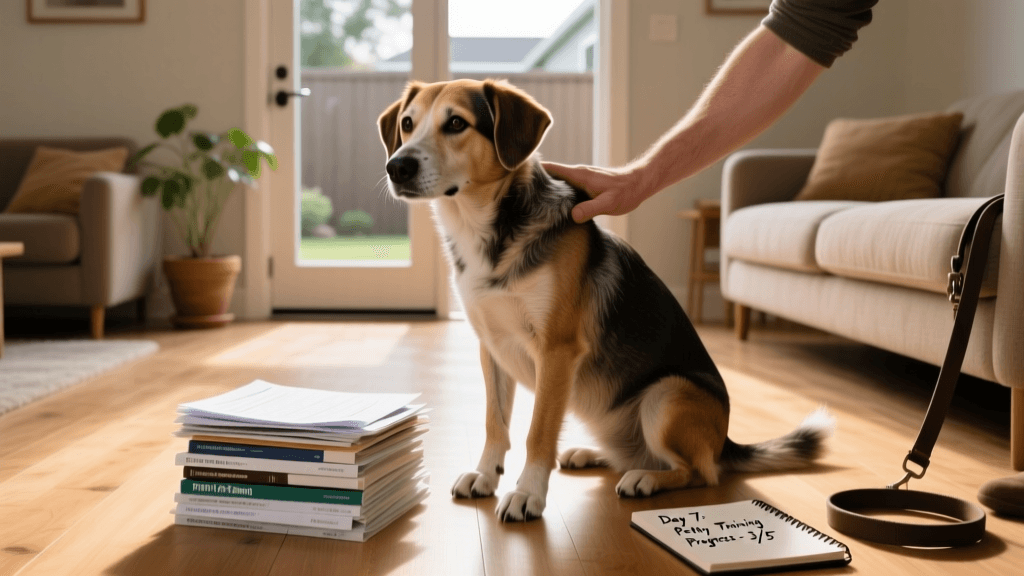
Even if a rescue dog was previously house-trained, moving to a new environment often causes regression. Treat every rescue as if they are a young puppy for the first two weeks. Experts recommend a strict management schedule: take the dog outside on a 6-foot leash immediately upon waking up, within ten minutes of every meal, after every play session, and right before bed. When they eliminate outdoors, use a marker word like 'Yes!' and immediately reward with a high-value treat. If an accident happens indoors, never punish the dog. Simply interrupt them with a neutral sound, carry or lead them outside to finish, and clean the indoor spot thoroughly with an enzymatic cleaner to remove the scent markers.
First Month Budget & Gear Essentials
Preparing your home requires specific investments to ensure safety and comfort. Below is a structured breakdown of the essential gear and estimated costs for the first thirty days, as recommended by our expert panel.
| Item / Service | Estimated Cost | Expert Recommendation & Purpose |
|---|---|---|
| Initial Vet Exam & Fecal Test | $150 - $250 | Essential for establishing a baseline health record and checking for parasites. |
| Wire Crate (36' or 42') | $50 - $80 | MidWest Homes for Pets iCrate. Crucial for safe confinement and potty training. |
| Enzymatic Cleaner | $15 - $20 | Nature's Miracle Advanced. Completely breaks down uric acid to prevent repeat accidents. |
| Adaptil DAP Diffuser | $25 - $35 | Provides continuous calming pheromones in the dog's primary decompression room. |
| 6-Foot Biothane Leash | $25 - $40 | Waterproof, easy to clean, and provides the exact right amount of slack for loose-leash walking. |
| High-Value Training Treats | $15 - $25 | Zuke's Mini Naturals or boiled chicken. Necessary for positive reinforcement and recall training. |
Socialization and Household Safety
When and how should I introduce my dog to new people and environments?
While you want your dog to be well-adjusted, forcing interactions during the decompression period can trigger fear-based reactivity. The American Kennel Club (AKC) emphasizes that socialization is about exposure, not necessarily direct interaction. Let your dog observe the world from a distance. Sit on a park bench and reward them with high-value treats for calmly watching cars, bicycles, and strangers pass by.
When introducing the dog to children or other household pets, safety must be the priority. The Centers for Disease Control and Prevention (CDC) notes that most dog bites occur in the home, often involving children who inadvertently invade a dog's safe space. Always supervise interactions, teach children to never approach a dog that is eating or sleeping in their crate, and use baby gates to manage the physical environment.
'The biggest mistake new adopters make is loving the dog too much, too fast. Smothering a fearful rescue with hugs and constant attention can increase their anxiety. Let the dog come to you on their own terms.' — Certified Professional Dog Trainer
Conclusion
The first thirty days with a rescue dog require patience, structured routines, and a well-prepared environment. By following veterinary guidelines for health transitions and adhering to a trainer-approved decompression protocol, you lay the groundwork for a lifelong, trusting bond. Remember the 3-3-3 rule, invest in the right gear, and give your new companion the time they need to finally feel at home.
hannah-wickes
All our authors care for dogs every day — read more of their work on the authors page.