First-Day Puppy Essentials: A New Owner's Checklist
Discover the ultimate first-day puppy essentials checklist. Learn what to buy, how to puppy-proof your home, and tips for a smooth transition for new owners.
Welcome Home: Preparing for Your New Puppy
Bringing a puppy home for the first time is a milestone filled with excitement, joy, and inevitably, a healthy dose of anxiety. As a first-time dog owner, the sheer volume of advice, products, and training philosophies available can feel overwhelming. The secret to a smooth transition lies not in buying every gadget on the market, but in strategic preparation. By focusing on first-day essentials, puppy-proofing your environment, and establishing a predictable routine, you set the foundation for a lifetime of trust and good behavior. This comprehensive guide will walk you through exactly what you need to buy, how to prepare your home, and how to navigate those critical first twenty-four hours.
Essential Gear: What to Buy Before Arrival
Before your puppy's paws ever touch your floor, you need to have the right equipment ready. Avoid the temptation to buy cheap, temporary gear; investing in high-quality, durable items from day one will save you money and frustration in the long run.
The Right Crate and Bedding
A crate is not a cage; it is your puppy's den and the most effective tool for housebreaking and preventing destructive behavior. Opt for a sturdy wire crate that includes a divider panel. This allows you to purchase a crate sized for your dog's adult dimensions while restricting the space to a small, cozy area while they are young. Puppies instinctively avoid soiling their sleeping area, but if the crate is too large, they will designate one corner as a bathroom and another for sleeping. Pair the crate with a washable, chew-resistant bed or a simple folded towel for the first few weeks until the teething phase passes.
Collar, Harness, and Leash
While a flat collar is necessary for holding ID tags and rabies vaccination records, it is not the best tool for walking a puppy. Puppies have delicate tracheas, and pulling on a collar can cause injury. Instead, invest in a front-clip no-pull harness. The front clip gently redirects your puppy's momentum toward you when they pull, making leash training significantly easier. Pair this with a standard 6-foot nylon or leather leash. Avoid retractable leashes entirely; they teach dogs to pull against tension, offer poor control in emergencies, and the thin cords can cause severe friction burns to your hands or your dog's legs.
Food and Water Bowls
Skip the plastic bowls. Plastic develops microscopic scratches over time that harbor bacteria, which can lead to canine acne and skin infections on your puppy's muzzle. Choose heavy-bottomed stainless steel or ceramic bowls. They are easy to sanitize in the dishwasher and durable enough to withstand enthusiastic chewing. For larger breeds, consider an adjustable elevated bowl stand to promote better posture and digestion as they grow.
Enzymatic Cleaners
Accidents are a guarantee. Standard household cleaners might remove the visible stain and mask the odor to human noses, but they do not break down uric acid crystals. To a puppy's sensitive nose, the area will still smell like a bathroom, encouraging them to soil the same spot repeatedly. An enzymatic cleaner specifically designed for pet stains is non-negotiable. These cleaners use natural enzymes to literally eat the organic matter causing the odor, removing the biological trigger for future accidents.
First-Day Puppy Budget Breakdown
Understanding the financial commitment of dog ownership is crucial. Below is a realistic breakdown of the essential items you will need for day one, along with estimated costs and their priority level.
| Item | Estimated Cost | Priority Level |
|---|---|---|
| Wire Crate with Divider Panel | $60 - $120 | Essential |
| Front-Clip No-Pull Harness | $25 - $45 | Essential |
| 6-Foot Nylon or Leather Leash | $15 - $30 | Essential |
| Stainless Steel Bowls (Set of 2) | $20 - $35 | Essential |
| Enzymatic Pet Stain & Odor Remover | $15 - $25 | Essential |
| High-Quality Puppy Food (Initial Bag) | $40 - $70 | Essential |
| Interactive Chew Toys (e.g., Kong) | $15 - $30 | Highly Recommended |
| Exercise Pen (X-Pen) for Safe Zone | $40 - $80 | Highly Recommended |
| Puppy Training Treats (Soft & Small) | $10 - $20 | Essential |
| Grooming Wipes & Dog-Safe Shampoo | $15 - $25 | Moderate |
Depending on the brands you choose, expect to spend between $250 and $450 on initial setup supplies before factoring in veterinary costs, vaccinations, and microchipping.
Puppy-Proofing Your Home for Safety
Puppies explore the world with their mouths, and a standard home is filled with hidden hazards. To truly puppy-proof, you must get down on your hands and knees to see the environment from their perspective.
Identifying and Removing Toxins
Many common household items are highly toxic to dogs. Xylitol, an artificial sweetener found in sugar-free gum, peanut butter, and baked goods, can cause rapid liver failure and hypoglycemia in dogs. Grapes, raisins, onions, garlic, and macadamia nuts are also strictly off-limits. Furthermore, household plants pose a significant risk. Lilies, sago palms, oleander, and pothos can cause severe gastrointestinal distress, neurological issues, or even death if ingested. Always verify the safety of your greenery by consulting the ASPCA's comprehensive list of toxic and non-toxic plants before bringing a puppy home.
Securing Physical Hazards
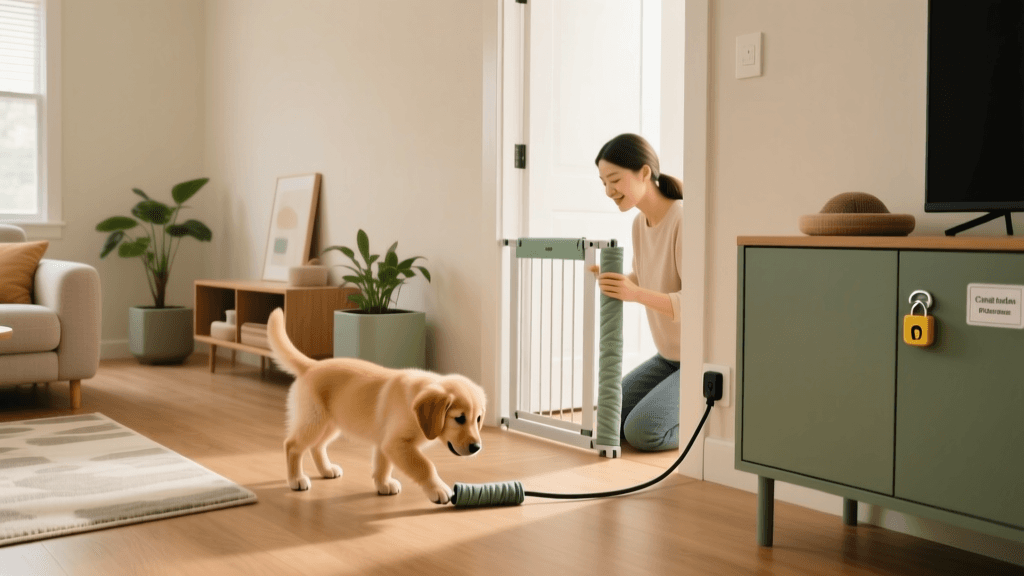
Electrical cords are a major chewing hazard that can result in severe burns or electrocution. Use cord concealers or bitter-tasting anti-chew sprays to protect wires. Secure loose rugs to prevent slipping and sliding, which can lead to joint injuries in growing puppies. Finally, ensure that all cleaning supplies, medications, and small choking hazards (like children's toys, coins, or hair ties) are locked away in high cabinets.
Setting Up a 'Safe Zone'
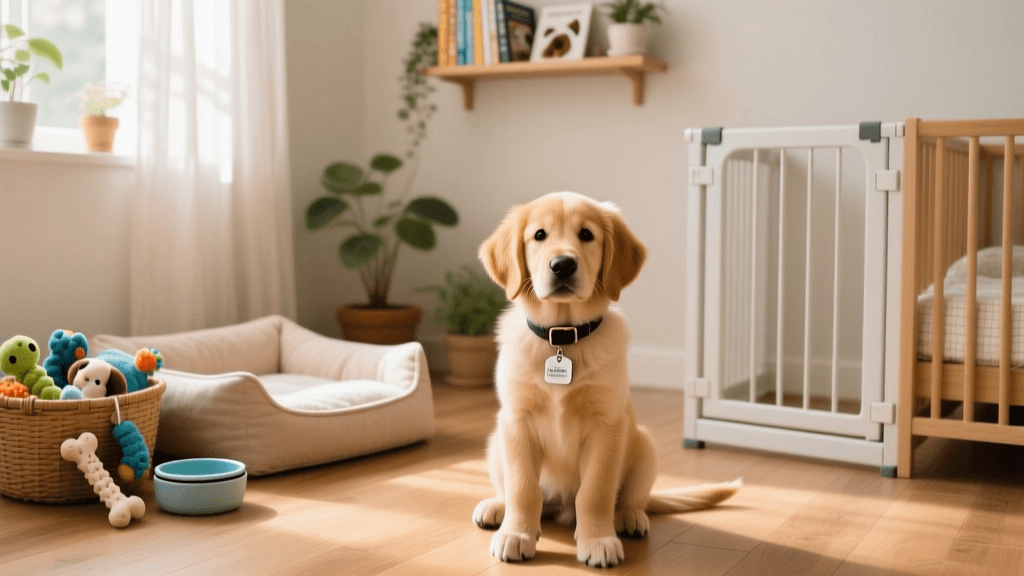
One of the biggest mistakes first-time owners make is giving a new puppy free roam of the entire house. This leads to overstimulation, anxiety, and inevitable accidents. Instead, create a designated 'Safe Zone' using an exercise pen (x-pen) attached to your puppy's open crate. This enclosed area should be located in a common part of the house, like the living room or kitchen, so the puppy can observe family life without being underfoot. Place their water bowl, a few safe chew toys, and a potty pad (if you are pad-training) in the pen. This zone provides a secure boundary that prevents the puppy from making bad choices when you cannot actively supervise them.
The First 24 Hours: A Timeline for Success
The way you handle the first day sets the tone for your puppy's adjustment period. Follow this structured timeline to keep stress to a minimum.
Arrival and Immediate Potty Break
When you arrive home, do not carry the puppy inside. Place them on the ground in your designated outdoor potty area immediately. The car ride is likely to have stimulated their digestive system. Wait patiently, and the moment they eliminate, offer enthusiastic praise and a small training treat. This begins the housebreaking process from minute one.
The Leashed Tour and Decompression
After the potty break, bring the puppy inside on their leash. Allow them to sniff and explore their new Safe Zone. Keep the environment calm; avoid inviting neighbors or extended family over for a 'meet and greet' on the first day. Overstimulation can lead to fear-based behaviors and excessive biting. Let them decompress, offering a stuffed Kong or chew toy to help soothe their nerves.
Feeding and Hydration
Stick strictly to the food the breeder or shelter was feeding them. Sudden diet changes are a primary cause of puppy diarrhea. If you plan to switch brands, do so gradually over a week by mixing the new food with the old. Offer fresh water frequently, but pick up the water bowl two hours before bedtime to help them sleep through the night.
The First Night and Crate Training
Bedtime is often the hardest part of the first day. Place the crate in your bedroom or just outside your door so the puppy can hear and smell you; this reduces feelings of isolation. Expect some whining. If you are certain they do not need to eliminate, ignore the whining to avoid teaching them that crying equals freedom. For a detailed schedule on nighttime wake-ups and crate acclimation, refer to the American Kennel Club's expert guide on potty training. Be prepared to set an alarm for a midnight potty break, as young puppies physically cannot hold their bladders for eight hours.
Managing Expectations: The 3-3-3 Rule
While the 3-3-3 rule is frequently cited for rescue dogs, it is equally applicable to puppies adjusting to a brand-new environment. Understanding this timeline will help you practice patience when your puppy seems overwhelmed or acts out.
- 3 Days to Decompress: Your puppy may sleep excessively, hide, or refuse to eat much. They are processing a massive environmental shift.
- 3 Weeks to Learn the Routine: By this point, your puppy will understand where they sleep, eat, and potty. Their true personality will start to emerge, and testing boundaries will begin.
- 3 Months to Feel at Home: Trust and a deep bond are established. The puppy feels secure in their environment and understands the household rules.
Patience is the most important tool in your puppy-raising arsenal. Every mistake is an opportunity to teach, not a reason to punish. Consistency and positive reinforcement will yield the best results.
Finally, remember that maintaining a clean and safe environment is vital for both your health and your dog's. Routine handwashing after handling your puppy, especially before preparing human food, is a critical habit to establish early on, as outlined by the Centers for Disease Control and Prevention (CDC) guidelines on healthy dog ownership. By preparing thoroughly, investing in the right gear, and approaching the first day with a calm, structured plan, you are well on your way to raising a happy, confident, and well-adjusted canine companion.
aaron-whyte
All our authors care for dogs every day — read more of their work on the authors page.