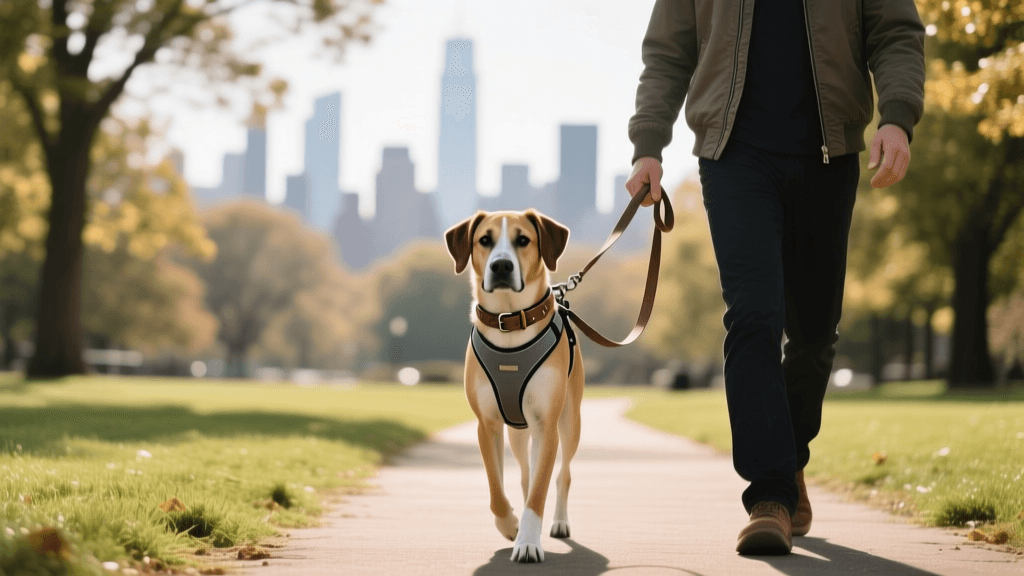
Expert Q&A: Curing Leash Reactivity and Lunging in Dogs
Discover expert vet and trainer advice on curing leash reactivity and lunging. Learn actionable desensitization techniques, gear tips, and timing.

Expert Q&A: Overcoming Leash Reactivity and Lunging
Leash reactivity is one of the most common, yet deeply frustrating, behavioral challenges dog owners face. A dog that is perfectly sweet at home can transform into a barking, lunging, and pulling nightmare the moment they spot another dog or stranger on a walk. To tackle this complex issue, we sat down with two leading experts: Dr. Aris Thorne, a Board-Certified Veterinary Behaviorist, and Elena Rostova, a Certified Professional Dog Trainer (CPDT-KA) specializing in fear-free methods. Together, they break down the science of reactivity, the exact gear you need, and step-by-step training protocols to help your dog find peace on the pavement.
Q1: Why Does My Dog Lunge on a Leash but Plays Fine Off-Leash?
Elena Rostova (Trainer): This is the most common question I hear. Owners often assume their dog is 'aggressive' or 'mean,' but in 90% of cases, leash reactivity is rooted in either barrier frustration or fear. When a dog is off-leash, they have the autonomy to approach, sniff, and retreat using natural canine body language. When clipped to a 6-foot leash, that autonomy is stripped away. The leash creates physical tension, which translates to psychological tension. If a dog feels trapped and cannot perform a natural 'flight' response, they default to 'fight'—barking and lunging to make the scary trigger go away. We call this being 'over threshold.' Once the amygdala hijacks the brain, your dog is physically incapable of learning or listening to commands.
'Reactivity is not bad behavior; it is a panic response. Our job is to change the emotional response, not just suppress the symptom with force.'
Dr. Aris Thorne (Vet): Elena is exactly right. From a veterinary perspective, chronic reactivity keeps a dog's nervous system flooded with cortisol and adrenaline. This is why punishment-based training fails. If a dog is lunging out of fear, adding a shock or prong collar only validates their belief that the approaching dog is indeed a threat, because pain immediately follows the appearance of the trigger. The American Veterinary Society of Animal Behavior (AVSAB) strongly advises against the use of punishment tools for behavior modification due to the high risk of worsening fear and anxiety.
Q2: What Is the Best Gear to Stop Pulling and Lunging?
Elena Rostova: Ditch the retractable leash immediately. It teaches dogs that pulling gets them more freedom, and the thin cord can cause severe friction burns. You need a sturdy 6-foot leather or biothane leash. For the harness, the goal is to redirect forward momentum without causing tracheal damage. Here is a comparison of the most effective tools for reactive dogs:
| Gear Type | Recommended Brand | Average Cost | Pros and Cons |
|---|---|---|---|
| Front-Clip Harness | Rabbitgoo No-Pull Dog Harness | $25 - $35 | Pros: Gently redirects chest; easy to fit. Cons: Strong dogs can still pull handlers off balance. |
| Head Halter | PetSafe Gentle Leader | $18 - $25 | Pros: Excellent steering control for large dogs. Cons: Requires slow conditioning; dogs may paw at it. |
| Flat Martingale | The Company of Animals | $15 - $20 | Pros: Prevents slipping for narrow-headed breeds. Cons: Offers zero leverage against heavy lunging. |
| Dual-Clip Harness | Freedom No-Pull Harness | $35 - $45 | Pros: Allows front and back leash attachment. Cons: Requires a specialized double-ended leash. |
Dr. Aris Thorne: I always recommend pairing a front-clip harness with a dual-ended leash. Clip one end to the front chest ring and the other to the back ring. This gives you steering and braking power, reducing the physical strain on your shoulders and preventing the dog from choking themselves when they lunge.
Q3: How Do I Execute the 'Engage-Disengage' Game?
Elena Rostova: This is the gold standard for reactivity training. It teaches the dog that seeing a trigger means good things happen, rather than panic. You will need a treat pouch loaded with high-value rewards—skip the dry kibble. Use Stella & Chewy's Freeze-Dried Beef Liver or Zuke's Mini Naturals (approx. $8 per bag). Keep training sessions to exactly 15 minutes to prevent cognitive fatigue.
Step-by-Step Protocol:
- Step 1: Find the Threshold Distance. Stand far enough away from a trigger (e.g., another dog) so your dog notices it but does not bark or lunge. This might be 50 feet or 100 feet.
- Step 2: Mark the 'Engage'. The exact second your dog looks at the trigger, use a marker word like 'Yes!' or click a clicker. Timing is critical: you must mark within 1.5 seconds.
- Step 3: Reward the 'Disengage'. Immediately deliver the treat to your dog's mouth. They must turn away from the trigger to get the food. This builds a neurological pathway: 'Looking at the dog = chicken liver from my human.'
- Step 4: Wait for the Voluntary Check-In. After a few repetitions, stop marking. Wait for your dog to look at the trigger, and then voluntarily turn back to look at you. Mark and reward that voluntary disengagement heavily.
- Step 5: Decrease Distance Slowly. Only move 2 to 3 feet closer when your dog is consistently offering voluntary check-ins at the current distance. If they react, you moved too fast. Retreat and increase the distance.
Q4: How Does Environmental Management at Home Help?
Dr. Aris Thorne: Training on the street is useless if the dog is practicing reactivity at home all day. If your dog barks at the window every time the mail carrier or a neighborhood dog walks by, their baseline cortisol levels are already maxed out before you even clip on the leash. We call this 'trigger stacking.'
Elena Rostova: Management is your best friend. Apply opaque window film (about $15 per roll on Amazon) to the bottom half of your front windows. Leave a white noise machine or a fan running near the front door to mask outdoor sounds. Furthermore, swap standard neighborhood walks for 'decompression walks' in nature. Use a 15-foot long line in an empty field or wooded area and let your dog sniff for 45 minutes. Sniffing lowers a dog's heart rate and mimics natural foraging behaviors, actively reducing systemic anxiety.
Q5: When Should We Consider Anxiety Medication?
Dr. Aris Thorne: Medication is not a failure; it is a bridge to learning. If your dog is so panicked that they will not eat high-value treats, or if they are injuring themselves trying to escape the harness, their brain chemistry is blocking the training process. In these cases, I prescribe daily SSRIs like Fluoxetine (Prozac) to raise the baseline threshold, paired with situational fast-acting medications like Trazodone or Gabapentin to be given 90 minutes before a stressful walk. Medication costs typically range from $30 to $80 per month, depending on the dog's weight.
If your general veterinarian is unsure about behavioral pharmacology, I strongly urge owners to consult the American College of Veterinary Behaviorists (ACVB) directory to find a board-certified specialist in your area. A behavioral consult usually costs between $200 and $400, but it can completely change your dog's quality of life.
Q6: What Is a Realistic Timeline for Success?
Elena Rostova: I tell my clients to expect a 3 to 6 month timeline for significant improvement. Reactivity is a deeply ingrained survival habit. You are essentially rewiring years of neurological pathways. Some days will be amazing, and some days your dog will react to a blowing leaf. That is normal. The goal is not to create a robot dog that ignores everything; the goal is to create a dog that feels safe enough to look to you for guidance when the world gets overwhelming.
Final Thoughts
Overcoming leash reactivity requires patience, premium treats, the right biomechanical gear, and a deep well of empathy for your dog's emotional state. By managing the environment, utilizing front-clip harnesses, and applying the Engage-Disengage protocol, you can transform your stressful walks into peaceful bonding experiences. For more comprehensive guides on canine behavior, refer to the ASPCA's resources on common dog behavior issues and always advocate for your dog's need for space and safety.
anouk-beaumont
All our authors care for dogs every day — read more of their work on the authors page.