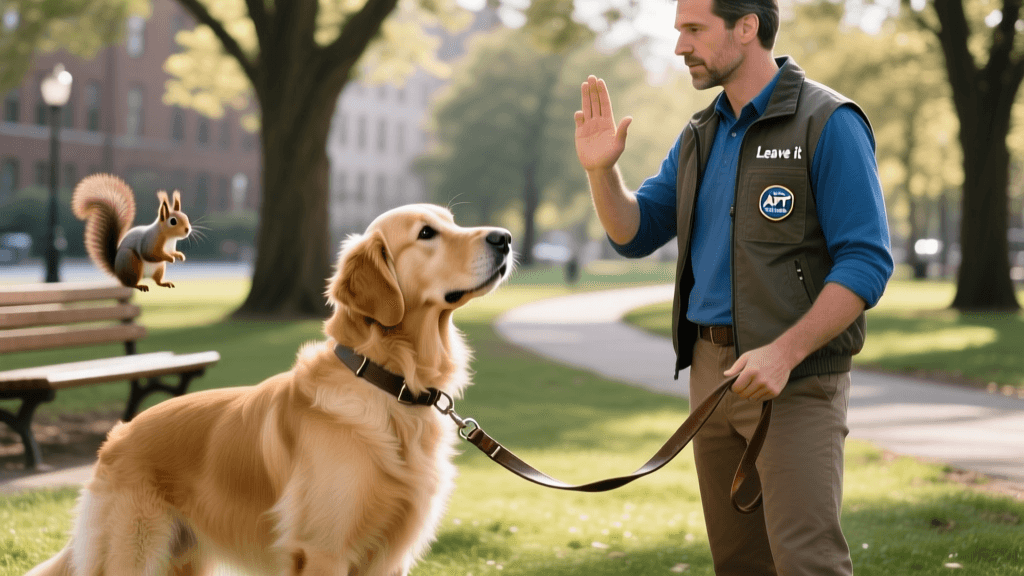
Expert Behavior Analysis for Dog Reactivity Training
Discover how applied behavior analysis and antecedent arrangement can reduce canine reactivity. Expert tips on thresholds, reinforcement, and tools.

The Science of Canine Reactivity: An Applied Behavior Analysis Perspective
Canine reactivity—often manifested as barking, lunging, or growling toward other dogs, humans, or environmental stimuli—is one of the most prevalent behavioral challenges reported by pet owners. While traditional training models often rely on outdated dominance hierarchies or punitive suppression, modern expert behavior analysis approaches reactivity through the lens of Applied Behavior Analysis (ABA). ABA provides a scientific, data-driven framework for understanding why a behavior occurs and how to systematically modify it without compromising the dog's emotional welfare.
According to the American Veterinary Society of Animal Behavior (AVSAB), the use of aversive tools and punishment can exacerbate underlying fear and anxiety, often leading to an increase in aggressive responses. Instead, behavior analysts focus on altering the environment and the consequences of behavior to foster long-term, reliable changes in the dog's emotional and behavioral responses.
The ABCs of Canine Behavior
To modify reactive behavior, we must first deconstruct it using the three-term contingency, commonly known as the ABCs:
- Antecedent (A): The environmental trigger or stimulus that precedes the behavior. For a leash-reactive dog, this might be the sight of an unfamiliar dog at a distance of 40 feet.
- Behavior (B): The observable, measurable action the dog performs. In this case, barking, lunging, and pulling on the leash.
- Consequence (C): What happens immediately after the behavior, which dictates the future probability of the behavior occurring again.
In many reactivity cases, the consequence is negative reinforcement. The dog barks and lunges (Behavior), the trigger dog moves away or the owner pulls the reactive dog away (Consequence), and the reactive dog experiences relief from the stressful stimulus. Because the behavior successfully increased the distance from the trigger, the lunging behavior is reinforced and highly likely to occur again in the future.
Functional Behavior Assessment (FBA) and Data Collection
Before implementing a modification protocol, an expert behavior analyst conducts a Functional Behavior Assessment (FBA). This involves tracking the ABCs over a period of 7 to 14 days to identify patterns. Owners are instructed to log the time of day, the exact distance to the trigger (measured in feet), the trigger's intensity (e.g., stationary vs. moving directly toward the dog), and the dog's latency to respond (how many seconds pass between noticing the trigger and reacting).
This data reveals the dog's specific threshold. The threshold is the exact distance and intensity level at which the dog transitions from a state of cognitive processing (sub-threshold) to a state of sympathetic nervous system arousal, or 'fight-or-flight' (over-threshold). Training can only occur when the dog is sub-threshold. As noted by the ASPCA, managing the dog's environment to keep them under their threshold is the foundational step of any reactivity protocol.
Antecedent Arrangement and Management Tools
Antecedent arrangement involves manipulating the environment to prevent the reactive behavior from being rehearsed. Every time a dog practices lunging, the neural pathways associated with that behavior are strengthened. By using specific management tools, we can control the dog's exposure to triggers while we build new, incompatible behaviors.
| Management Tool | Behavioral Purpose | Estimated Cost | Expert Specifications |
|---|---|---|---|
| Front-Clip Harness | Prevents opposition reflex; redirects forward momentum | $35 - $45 | Ruffwear Front Range; dual-clip points for leash leverage |
| Biothane Long Line | Allows safe distance management without leash tension | $25 - $40 | 15 to 30 feet length; 1/2-inch width; waterproof grip |
| Visual Barrier Film | Blocks visual antecedents for territorial window reactivity | $15 - $25 | Static cling frosted film; applied to bottom 36 inches of windows |
| Magnetic Treat Pouch | Facilitates rapid reinforcement delivery (<0.5 seconds) | $20 - $30 | Doggone Good Trainer's Pouch; open-top magnetic closure |
Differential Reinforcement of Incompatible Behavior (DRI)
Once antecedents are managed, we apply operant conditioning techniques. A highly effective protocol for reactivity is Differential Reinforcement of Incompatible Behavior (DRI). This involves reinforcing a behavior that is physically incompatible with the reactive behavior. A dog cannot simultaneously lunge at the end of a leash and perform a structured hand-target ('touch') or a 'look at that' (LAT) disengagement behavior.
Timing, Markers, and Reinforcement Schedules
The success of DRI relies entirely on precision timing. The marker signal (a clicker or a sharp verbal 'Yes!') must occur within 0.5 seconds of the dog noticing the trigger but before the dog reacts. This marks the exact moment of sub-threshold cognitive processing.
During the acquisition phase of this new behavior, trainers must utilize a continuous reinforcement schedule (CRF), delivering a high-value reward (such as boiled chicken or Zuke's Mini Naturals, cut into 2-gram, pea-sized pieces) immediately after the marker. The Rate of Reinforcement (ROR) should be high—approximately 10 to 15 treats per minute—to maintain the dog's focus and create a strong positive emotional association with the trigger, a process known as classical counter-conditioning.
Advanced ABA: The Premack Principle in Reactivity
Expert behavior analysts often leverage the Premack Principle, which states that a high-probability behavior can be used to reinforce a low-probability behavior. For a reactive dog, looking at the trigger is a high-probability behavior, while looking back at the handler is a low-probability behavior.
By using 'engagement' as the behavior and 'briefly observing the trigger from a safe distance' as the reward, we flip the traditional paradigm. The dog learns that offering calm engagement with the handler is the only way to earn access to environmental information. This drastically reduces frustration and builds a robust reinforcement history for handler focus.
Navigating Extinction Bursts
When implementing management and altering consequences, owners must be prepared for an extinction burst. If a dog is accustomed to barking to make a trigger go away, and the handler suddenly prevents the barking while the trigger remains stationary, the dog will initially escalate the behavior. The barking may become louder, and the dog may introduce new behaviors like jumping or biting the leash.
'An extinction burst is a predictable, temporary increase in the frequency, duration, or intensity of a behavior when the reinforcement maintaining it is removed. It is a sign that the behavioral intervention is working, not that it is failing.' - Principles of Applied Behavior Analysis
Understanding this phenomenon is critical. If the owner gives in during an extinction burst, they inadvertently reinforce the escalated behavior, making it significantly harder to modify in the future. Maintaining strict antecedent management and utilizing positive reinforcement techniques recommended by The Humane Society ensures the dog can navigate this frustrating learning phase safely.
Conclusion
Treating canine reactivity requires moving beyond basic obedience commands and embracing the science of Applied Behavior Analysis. By conducting thorough functional assessments, meticulously arranging antecedents, and applying precise differential reinforcement protocols, behavior professionals can systematically dismantle reactive responses. Patience, data collection, and a commitment to sub-threshold training are the cornerstones of rehabilitating the reactive dog, ultimately replacing fear and frustration with confidence and cognitive flexibility.
robin-maitland
All our authors care for dogs every day — read more of their work on the authors page.