Step-by-Step Guide to Fixing Resource Guarding in Dogs
Learn why dogs resource guard and follow our step-by-step training guide to safely modify this behavior using desensitization and counterconditioning.
The Psychology Behind Resource Guarding
Resource guarding is one of the most misunderstood behaviors in canine psychology. When a dog growls, snaps, or stiffens over a food bowl, a favorite toy, or even a specific person, many owners mistakenly label the dog as 'dominant' or 'aggressive.' In reality, resource guarding is rooted in fear and survival instincts. According to the American Kennel Club, resource guarding is a natural evolutionary trait designed to protect valuable assets from being stolen by competitors.
From a psychological perspective, a dog does not guard resources out of malice or a desire to control the household. They guard because they perceive a genuine threat of loss. If a dog has experienced food scarcity in the past, or if they have learned that humans approaching their bowl results in the bowl being taken away, their anxiety spikes. Understanding this fear-based motivation is the crucial first step in modifying the behavior. Punishing a dog for guarding only suppresses the warning signs (like growling) and increases the underlying anxiety, which can lead to a dog that bites without warning.
Assessing the Severity of Resource Guarding
Before beginning any training protocol, it is vital to assess where your dog falls on the guarding severity scale. This helps determine your starting distance and whether you need immediate professional intervention. Below is a structured chart to help you identify your dog's current threshold.
| Level | Canine Body Language & Signals | Action Required |
|---|---|---|
| Level 1 | Freezes, hard stare, eats faster when approached. | Begin Step-by-Step DS/CC protocol immediately. |
| Level 2 | Lip licking, yawning, 'whale eye', low rumble. | Start DS/CC; increase management and safe distances. |
| Level 3 | Audible growling, snarling, showing teeth. | Strict management; consult a certified behaviorist. |
| Level 4 | Snapping, air bites, lunging without contact. | Immediate professional intervention required. |
| Level 5 | Biting, making physical contact, puncture wounds. | Emergency behaviorist consult; strict safety protocols. |
If your dog is displaying Level 4 or Level 5 behaviors, do not attempt DIY training. Seek help from a certified applied animal behaviorist immediately to ensure human and canine safety.
Essential Tools for Training
Successful behavior modification requires the right equipment to keep you safe and your dog highly motivated. Budget approximately $80 to $100 for the following foundational tools:
- High-Value Treats (Approx. $15 - $25): Kibble will not work for counterconditioning. You need single-ingredient, high-smell treats like freeze-dried beef liver or cooked plain chicken breast. The treat must be significantly more valuable than the guarded item.
- Treat Pouch (Approx. $30): A dedicated, easy-access pouch like the Ruffwear Treat Trader allows you to deliver rewards within a 1-second window, which is critical for marking the desired behavior.
- Long-Handled Wooden Spoon (Approx. $5): Used for safe distance trading and delivering treats without putting your hands near the dog's mouth.
- Baby Gate (Approx. $40): A hardware-mounted gate like the Regalo Easy Step Walk Thru Gate is essential for environmental management, allowing you to separate the dog from guests or children during meal times.
Step-by-Step Training Protocol
The following protocol utilizes Desensitization and Counterconditioning (DS/CC). The goal is to change the dog's emotional response from 'Oh no, they are going to take my thing' to 'Yay, a human approaching means I get something amazing.' As noted by VCA Animal Hospitals, patience and consistency are paramount; rushing the process will cause the dog to regress.
Step 1: Establish a Baseline and Safe Distance
Identify your dog's 'threshold distance.' This is the distance at which your dog notices you approaching but does not show any guarding signals (no stiffening, no whale eye). For some dogs, this is 3 feet; for others, it is 15 feet.
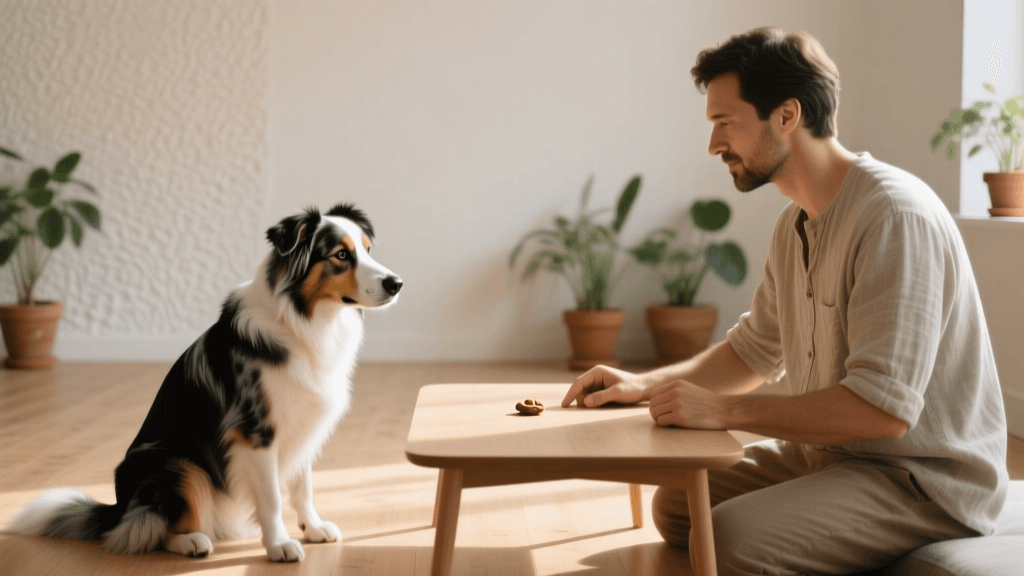
The Exercise: Give your dog their meal or a low-value chew in a quiet room. Stand exactly at their threshold distance. Every 10 to 15 seconds, toss a high-value treat (like a piece of chicken) toward their bowl, then calmly walk away. Do not make eye contact. Repeat this for 5 minutes. You are teaching the dog that your presence at this specific distance predicts the arrival of high-value food, not the theft of their current food.
Step 2: The 'Trade-Up' Game
This step teaches the dog that giving up an item results in an immediate upgrade, removing the fear of loss. Never forcibly take an item from your dog's mouth.
The Exercise: Offer your dog a low-value toy. Once they take it, present a high-value treat (e.g., freeze-dried liver) near their nose using your long-handled wooden spoon or an open flat palm. When they drop the toy to eat the treat, mark the behavior with a verbal 'Yes!' After they eat the treat, give the original toy back. This 'give and return' mechanic is crucial; if the dog learns that dropping an item means it is gone forever, guarding will worsen. Practice this 5 times in a row, twice a day.
Step 3: Desensitizing Your Approach
Once your dog is happily anticipating your tosses from the baseline distance, you can begin to close the gap. This must be done in micro-increments.
The Exercise: Decrease your distance by just 1 to 2 feet. If you were standing 10 feet away, move to 8 feet. Toss the high-value treat. If the dog remains relaxed (soft eyes, loose body, normal eating pace), stay at 8 feet for three consecutive days of successful sessions. If the dog stiffens or eats faster, you have moved too close, too fast. Immediately take two steps back and return to the previous successful distance. According to the ASPCA, pushing a dog past their threshold during DS/CC will only reinforce the guarding behavior.
Step 4: Adding the Human Element to the Bowl
This is the final stage, where you transition from tossing treats to interacting directly with the food bowl. Only proceed to this step if your dog is completely relaxed when you stand right next to them while they eat.
The Exercise: Instead of feeding the dog their entire meal at once, hold the empty bowl. Hand-feed a small handful of kibble. When they finish, add another handful. Next, place the bowl on the floor with a small amount of food. While they eat, calmly drop a piece of high-value chicken into the bowl. Eventually, you will progress to picking the bowl up, adding a 'jackpot' of chicken, and placing it right back down. This solidifies the psychological association that human hands near the bowl always result in a net positive gain.
What to Avoid: Common Mistakes
When dealing with resource guarding, human error can escalate a manageable issue into a dangerous liability. Avoid these common pitfalls:
- Punishing the Growl: The growl is a vital communication tool. If you scold or shock a dog for growling, they will learn to skip the warning and go straight to the bite.
- The 'Alpha' Roll or Bowl Removal: Forcibly taking a dog's bowl away to 'show them who is boss' is an outdated and dangerous myth. It validates the dog's fear that you are a thief, thereby increasing their need to guard.
- Inconsistent Management: If you train the dog for 20 minutes a day but allow toddlers to harass the dog while they are chewing a bone for the rest of the day, the training will fail. Use your baby gates and crates to manage the environment 100% of the time when you are not actively training.
When to Seek Professional Help
While mild to moderate resource guarding (Levels 1 and 2) can often be resolved with dedicated at-home training, severe guarding requires professional eyes. If your dog has a history of biting, if the guarding extends to multiple unpredictable items (like dropped socks or furniture spaces), or if you feel fearful in your own home, it is time to hire a professional. Look for a Certified Professional Dog Trainer (CPDT-KA) or a Veterinary Behaviorist who strictly uses force-free, positive reinforcement methodologies. Understanding your dog's psychology is a lifelong journey, and seeking expert guidance is a sign of responsible, empathetic ownership.
hannah-wickes
All our authors care for dogs every day — read more of their work on the authors page.