Top Agility Dog Breeds for 2026: Puppy Selection Guide
Discover how to choose the perfect puppy for dog agility in 2026. Learn about breed selection, structural evaluation, and temperament testing for sports.
Introduction to Canine Athletics in 2026
Welcome to the exciting world of dog sports. As we navigate the 2026 competitive season, dog agility, flyball, and competitive obedience have evolved into highly technical, fast-paced athletic events. Getting a dog with the intention of competing requires a vastly different approach than selecting a family companion. You are not just looking for a cute face; you are evaluating a future canine athlete. The decision-making process involves rigorous breed research, structural analysis, and advanced temperament testing to ensure your future partner can handle the physical and mental demands of the sport.
According to the American Kennel Club (AKC), agility is one of the fastest-growing dog sports globally, requiring dogs to navigate complex obstacle courses with speed, precision, and off-leash reliability. Choosing the right puppy is the foundational step in a long, successful, and injury-free competitive career. This comprehensive guide will walk you through the exact criteria you need to evaluate when selecting a puppy for dog sports in 2026.
Understanding the Athletic Demands of Modern Agility
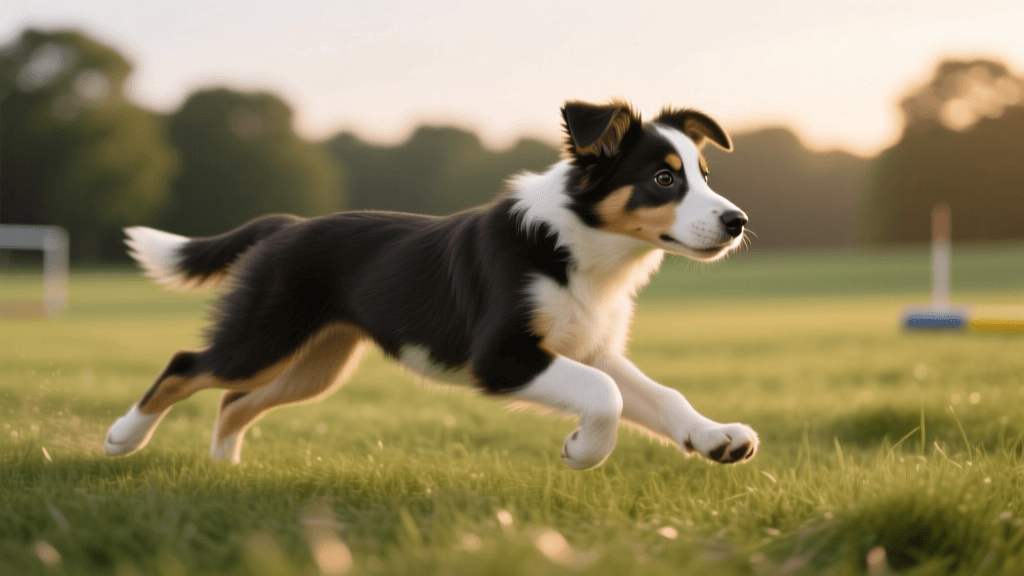
Modern agility courses in 2026 are significantly faster and more physically demanding than they were a decade ago. Dogs are required to execute tight wrapping turns on jumps, decelerate rapidly for weave pole entries, and absorb massive amounts of kinetic energy when descending from the A-frame and dog walk. This means that structural soundness is no longer optional; it is an absolute necessity. A puppy with poor angulation or weak pasterns will not only struggle to win but is at a high risk for early-onset joint degradation and soft tissue injuries.
Furthermore, the mental demands are equally intense. A successful sports dog must possess high 'drive' (the desire to work and play) combined with 'biddability' (the willingness to follow human direction) and an 'off-switch' (the ability to settle and rest between runs). Finding this delicate balance during the puppy selection process is the hallmark of a successful handler-breeder partnership.
Top Breeds for Agility Competitions
While mixed breeds and rescue dogs can certainly excel in agility, certain purebreds have been selectively bred for the exact physical and mental traits required in the sport. Below is a comparison of the top agility breeds dominating the 2026 competition circuits.
| Breed | Energy Level | Trainability | Structural Considerations | Best For |
|---|---|---|---|---|
| Border Collie | Extremely High | Exceptional | Prone to shoulder strains; requires excellent front assembly. | Elite, highly competitive handlers. |
| Shetland Sheepdog | High | Very High | Smaller stride length requires more strides between jumps. | Handlers seeking a responsive, vocal, medium-sized dog. |
| Standard Poodle | High | High | Excellent jumpers; watch for patellar luxation. | Handlers wanting an athletic, low-shedding, versatile partner. |
| Belgian Tervuren | Very High | High | Requires strong topline to prevent back injuries on contacts. | Experienced handlers who understand herding breed temperaments. |
| Whippet | Burst High | Moderate | Incredible speed but fragile skin/bones; needs careful warm-ups. | Fast courses, Gamblers, and Jumpers classes. |
Evaluating Puppy Structure for Longevity
When visiting a breeder to evaluate a litter for sports potential, you must look beyond the puppy's personality and examine its biomechanics. The Orthopedic Foundation for Animals (OFA) provides extensive guidelines on canine structure and joint health, emphasizing that proper angulation is critical for shock absorption. In 2026, top sports breeders routinely utilize digital gait analysis and advanced orthopedic screening to ensure their breeding stock is structurally sound.
Key Structural Traits to Assess
- Front Assembly: The shoulder blade (scapula) should be well laid back at approximately a 45-degree angle. This allows for maximum forward reach and absorbs the impact of landing from jumps. A straight front will lead to concussive forces traveling directly up the dog's neck and spine.
- Rear Angulation: The hindquarters provide the dog's propulsion. Look for a well-bent stifle and short, strong hocks. Puppies with 'sickle hocks' or overly straight rears will struggle to generate explosive speed out of the start line or weave poles.
- Pasterns: The pasterns act as the dog's shock absorbers. They should be short, strong, and slightly sloping. Weak or overly long pasterns will collapse under the high-speed demands of modern agility.
- Topline and Core: A level, strong topline indicates good core stability, which is vital for maintaining balance on the teeter-totter and dog walk.
Temperament Testing: Finding the Perfect Drive
A structurally perfect puppy is useless in the agility ring if it lacks the mental fortitude to handle the environment. Sports puppies need to be environmentally stable, confident, and highly motivated by both toys and food. In 2026, reputable sports breeders utilize standardized temperament testing protocols, often adapted from the Volhard Puppy Aptitude Test, specifically tailored for high-drive environments.
When evaluating a 7-to-8-week-old puppy, observe its reaction to novel stimuli. Drop a metal pan or introduce a wobble board. A good sports puppy might startle but should quickly recover and investigate the object, rather than fleeing or shutting down. You also want to test the puppy's 'prey drive' by dragging a flirt pole or a fleece tug toy. The ideal candidate will chase, grab, and hold the toy with tenacity, showing a willingness to engage in a game of tug—a crucial trait for building agility drive and rewarding ring runs.
"The ultimate goal in selecting a sports puppy is finding the balance between high working drive and the ability to process complex information without becoming overstimulated. A dog that cannot think through arousal will struggle with technical course challenges."
The Role of Genetic Testing in 2026
Advancements in canine genomics have revolutionized how we select sports dogs. It is no longer acceptable to rely solely on visual health clearances. When reviewing a breeder's health testing portfolio, ensure they have utilized comprehensive 2026 DNA panels to screen for breed-specific genetic mutations that could derail a sports career. Key mutations to screen for include:
- MDR1 (Multi-Drug Resistance 1): Common in herding breeds; affects how the dog processes certain medications, which is critical information if your dog ever requires veterinary care for a sports injury.
- CEA (Collie Eye Anomaly) and PRA (Progressive Retinal Atrophy): Vision is paramount in agility. A dog must be able to see jump cups, contact zones, and handler body language clearly at high speeds.
- EIC (Exercise-Induced Collapse): A genetic mutation that causes muscle weakness and collapse after intense exercise. This is an absolute disqualifier for any high-level sports prospect.
Always request to see the official laboratory results (from providers like Embark or Paw Print Genetics) for both the sire and the dam, not just a verbal assurance from the breeder.
First Steps After Bringing Your Sports Puppy Home
Once you have selected and brought your sports prospect home, your training should immediately focus on foundational skills that do not involve actual agility equipment. Introducing jumps or contact obstacles too early can severely damage a puppy's developing growth plates. Instead, the 2026 standard for puppy rearing focuses heavily on proprioception and flatwork.
Proprioception and Core Strength
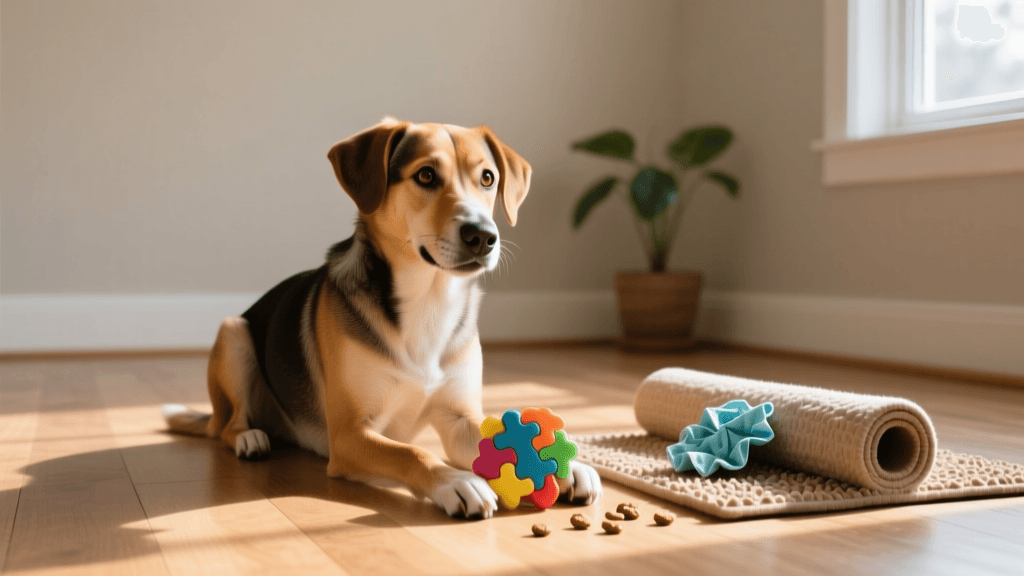
Proprioception is the dog's awareness of its body in space. You can build this by encouraging your puppy to walk over different textures, such as grates, sand, and inflatable fitness equipment like the FitPaws K9 Fitness Mat or peanut. Teaching a puppy to target a mat with its front paws, and later its hind paws, builds the hind-end awareness necessary for backing up into a 2-on/2-off contact position later in life.
Engagement and Relationship Building
Before your dog can navigate a weave pole entry, it must view you as the most rewarding element in its environment. Spend your first months building a robust reinforcement history. Teach your puppy that focus on you yields high-value rewards. Practice 'engagement' in increasingly distracting environments—from your quiet living room to the edge of a busy park. A dog that can maintain eye contact and play a vigorous game of tug in a busy park is a dog that will eventually succeed in the chaotic environment of an agility trial.
Conclusion
Getting a dog for sports and competition is a profound commitment that extends far beyond the typical pet ownership experience. By carefully selecting a breed that matches your handling style, rigorously evaluating structural soundness, leveraging modern genetic testing, and prioritizing early proprioception, you are setting the stage for a lifetime of athletic success. The agility ring in 2026 demands excellence, but with the right foundation, the bond you build with your canine athlete will be the most rewarding victory of all.
beth-carrasco
All our authors care for dogs every day — read more of their work on the authors page.