Leash Reactivity Training 2026: The Engage-Disengage Protocol
Master leash reactivity in 2026 with the Engage-Disengage protocol. Learn threshold management, timing, and reward strategies for anxious dogs.
Understanding Leash Reactivity and Anxiety in 2026
As urban environments become denser and our lives increasingly intersect with shared public spaces, leash reactivity remains one of the most common behavioral challenges faced by dog owners. In 2026, veterinary behaviorists note a significant rise in anxiety-driven reactivity, often stemming from inadequate early socialization or trigger-stacking in high-stimulus neighborhoods. Leash reactivity is rarely about true aggression; rather, it is a distance-increasing behavior driven by fear, frustration, or anxiety. When a dog feels trapped by the physical constraint of a leash, their natural fight-or-flight response is skewed toward 'fight' because the 'flight' option has been removed.
According to the ASPCA's guidelines on common dog behavior issues, reactivity is best managed not through punishment or dominance-based suppression, but through systematic desensitization and counter-conditioning. Punishing a reactive dog only confirms their suspicion that the presence of a trigger (like another dog or a loud truck) predicts bad outcomes, thereby increasing their underlying anxiety. Instead, modern behavioral science advocates for changing the dog's emotional response to the trigger. The most effective, widely endorsed method for achieving this is the Engage-Disengage protocol.
The Neurobiology of the Threshold
Before diving into the training steps, it is crucial to understand the concept of the 'threshold.' Your dog's threshold is the invisible bubble surrounding them. When a trigger is outside this bubble, your dog is under threshold—they can think, learn, and accept treats. When a trigger crosses into the bubble, your dog goes over threshold. At this point, the amygdala hijacks the brain, cortisol and adrenaline flood the nervous system, and the learning center of the brain effectively shuts down.
The Humane Society's resource on helping fearful dogs emphasizes that forcing a dog to confront triggers while over threshold will only deepen the neural pathways associated with fear. Therefore, the golden rule of the Engage-Disengage game is that it must always be played under threshold. If your dog is barking, lunging, or refusing high-value food, you are too close to the trigger, and the training session must be aborted in favor of increasing distance.
The Engage-Disengage Protocol: Step-by-Step
Originally developed by certified dog behavior consultant Leslie McDevitt, the Engage-Disengage game teaches your dog that looking at a trigger predicts a wonderful reward, and that they have the agency to voluntarily look away from the trigger to earn that reward.
Phase 1: Engage (Classical Conditioning)
In Phase 1, you are simply pairing the sight of the trigger with a high-value reward. You are not asking your dog to do anything; you are acting as a treat dispenser triggered by the environment.
- Step 1: Stand with your dog at a sub-threshold distance from a trigger (e.g., 50 feet away from a calm, leashed dog).
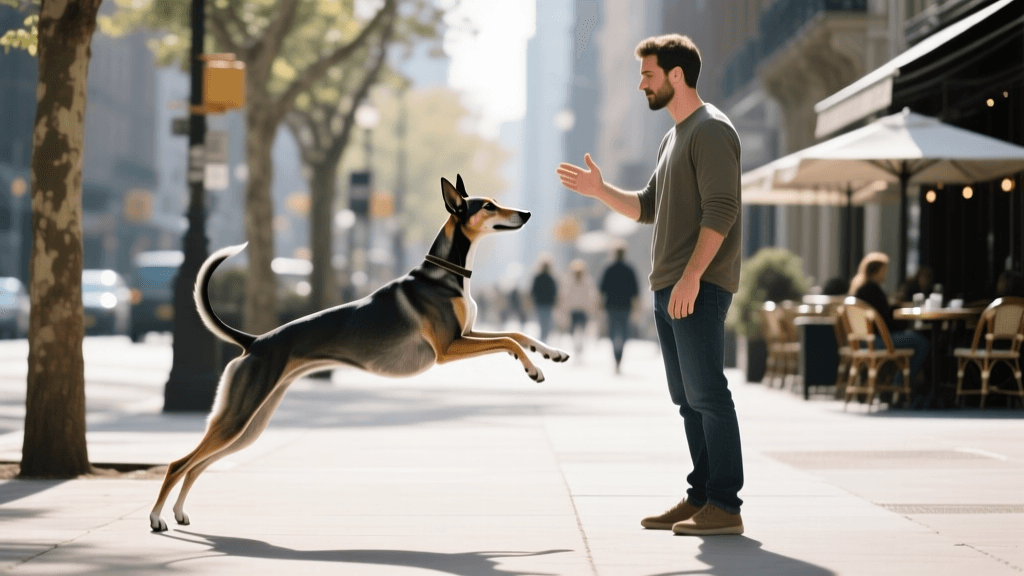
- Step 2: The moment your dog looks at the trigger (Engage), immediately mark the behavior with a clicker or a verbal marker like 'Yes!'
- Step 3: Deliver a high-value treat directly to your dog's mouth. The treat must be delivered within 1 to 2 seconds of the marker.
- Step 4: Repeat this process. The dog looks at the trigger, you mark, and you feed. If your dog stares intensely and ignores the food, you are too close. Increase your distance immediately.
Phase 2: Disengage (Operant Conditioning)
Once your dog begins to anticipate the treat upon seeing the trigger—often indicated by them looking at the trigger and then quickly snapping their head back to you—you are ready for Phase 2.
- Step 1: Wait for your dog to look at the trigger.
- Step 2: Do NOT mark immediately. Wait silently for 1 to 3 seconds.
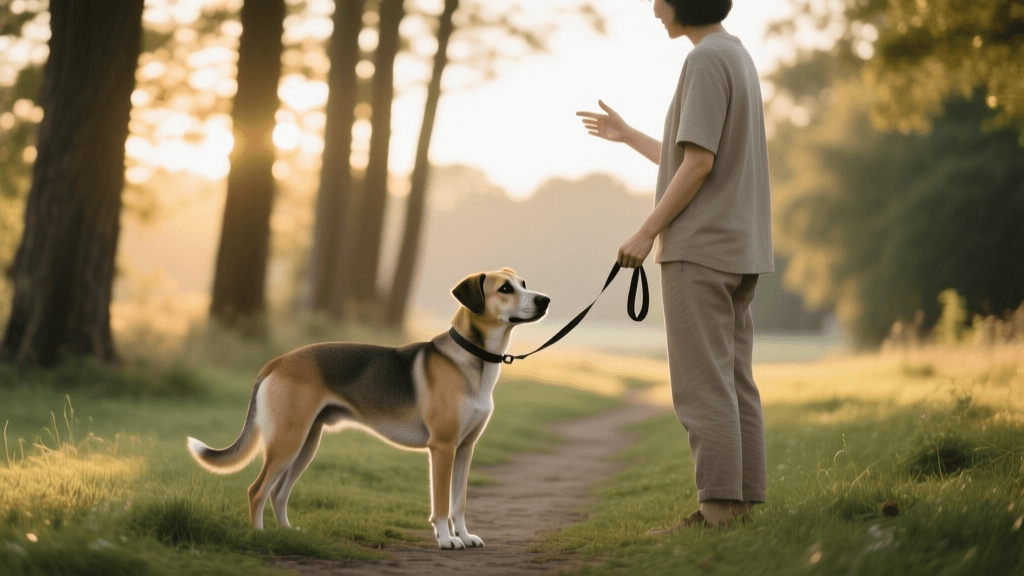
- Step 3: When your dog voluntarily turns their head away from the trigger to look at you (Disengage), mark with a 'Yes!' or a click.
- Step 4: Deliver the treat. You are now rewarding the dog's choice to disengage from the trigger and check in with you.
High-Value Reward Hierarchies in 2026
For anxious and reactive dogs, standard kibble will not suffice when competing with environmental triggers. You must utilize high-value rewards that trigger a strong dopamine response. In 2026, sustainable and novel protein treats have become highly popular for dogs with common poultry or beef allergies, which can exacerbate systemic inflammation and anxiety.
- Tier 1 (Low Distraction): Boiled sweet potatoes, commercial training biscuits, or kibble mixed with a dash of bone broth.
- Tier 2 (Medium Distraction): Shredded boiled chicken breast, low-sodium string cheese, or freeze-dried minnows.
- Tier 3 (High Distraction / Over-Threshold Prevention): Freeze-dried beef liver, sustainable insect-protein pastes (loaded in a squeeze tube for rapid delivery), or real tripe.
Essential Gear for Reactive Dog Management
Using the correct equipment is vital for safety and for preventing the physical discomfort that can exacerbate reactivity. Neck collars and retractable leashes are strongly discouraged for reactive dogs, as they can cause tracheal damage and provide zero leverage during a lunge. Below is a breakdown of recommended gear and average market costs for 2026.
| Gear Item | 2026 Recommended Specification | Average Cost (2026) |
|---|---|---|
| Front-Clip Harness | Y-shaped chest plate, padded, no shoulder restriction | $55 - $90 |
| Fixed-Length Leash | 6-foot biothane or leather, 1-inch width, dual-handle | $35 - $65 |
| Long Line (Decompression) | 15-foot to 20-foot biothane, 1/2-inch width | $40 - $60 |
| Treat Pouch | Silicone or wipeable nylon, magnetic quick-close | $25 - $45 |
| Visual Barrier | Umbrella (for blocking line-of-sight to sudden triggers) | $20 - $30 |
Decompression Walks and Cortisol Management
Training sessions are mentally exhausting for a reactive dog. When a dog experiences a reactive outburst, their body is flooded with cortisol. It can take anywhere from 24 to 72 hours for cortisol levels to return to baseline. If you take your dog for daily walks where they repeatedly react to triggers, they are living in a state of chronic trigger-stacking.
To combat this, incorporate 'Decompression Walks' or 'Sniffaris' into your weekly routine. Drive your dog to a quiet, open field or a wooded trail where triggers are scarce. Attach their 15-foot long line and allow them to sniff, wander, and explore at their own pace. Sniffing lowers a dog's heart rate and engages the parasympathetic nervous system, promoting deep relaxation and mental fatigue that is far more beneficial than a brisk, stressful neighborhood walk.
Emergency U-Turn Mechanics
Even with meticulous threshold management, you will inevitably encounter surprise triggers—a dog rushing out from behind a fence or a loud delivery drone dropping a package nearby. You must have an Emergency U-Turn protocol drilled into your dog's muscle memory.
- The Cue: Choose a cheerful, distinct cue word like 'Let's Go!' or 'Oops!' Never use an angry tone, as this will heighten the dog's panic.
- The Pivot: The moment you say the cue, immediately pivot 180 degrees away from the trigger.
- The Lure: Toss a handful of high-value treats directly into your dog's face to break their visual lock on the trigger, then scatter them on the ground behind you as you jog away.
- The Reward: Once you have created 20 feet of distance and your dog is eating off the ground, praise them heavily. This turns a potential reactive incident into a fun, rewarding game of chase.
Sample 4-Week Progression Schedule
Consistency is the cornerstone of behavioral modification. Here is a structured 4-week plan to implement the Engage-Disengage protocol safely.
- Week 1: Observation and Baseline. Do not train near real triggers. Practice the mechanics of marking and treating in your living room. Identify your dog's exact threshold distance in your neighborhood (e.g., 60 feet). End every session before the dog shows signs of stress.
- Week 2: Sub-Threshold Engagement. Set up controlled sessions with a trusted friend and their calm dog, or find a distant vantage point near a park. Play Phase 1 of Engage-Disengage for 10-minute blocks, 3 times a week.
- Week 3: Transitioning to Disengage. If your dog is consistently offering voluntary check-ins, move to Phase 2. Delay your marker by 1 second, then 2 seconds, rewarding the dog for looking away from the trigger.
- Week 4: Decreasing Distance. If your dog remains relaxed and eagerly accepts treats, decrease the distance to the trigger by 5 feet. If reactivity returns, immediately increase the distance back to the previous week's baseline.
Conclusion: Patience and Advocacy
Rehabilitating a leash-reactive dog is a marathon, not a sprint. In 2026, the most successful owners are those who act as fierce advocates for their dogs, willingly walking away from greetings, crossing the street to avoid triggers, and prioritizing their dog's emotional state over societal expectations. By utilizing the Engage-Disengage protocol, managing thresholds, and providing ample decompression, you can help your anxious dog navigate the world with confidence and peace.
anouk-beaumont
All our authors care for dogs every day — read more of their work on the authors page.